
Wick: The Herring Capital That Became the NC500’s Northern Hub
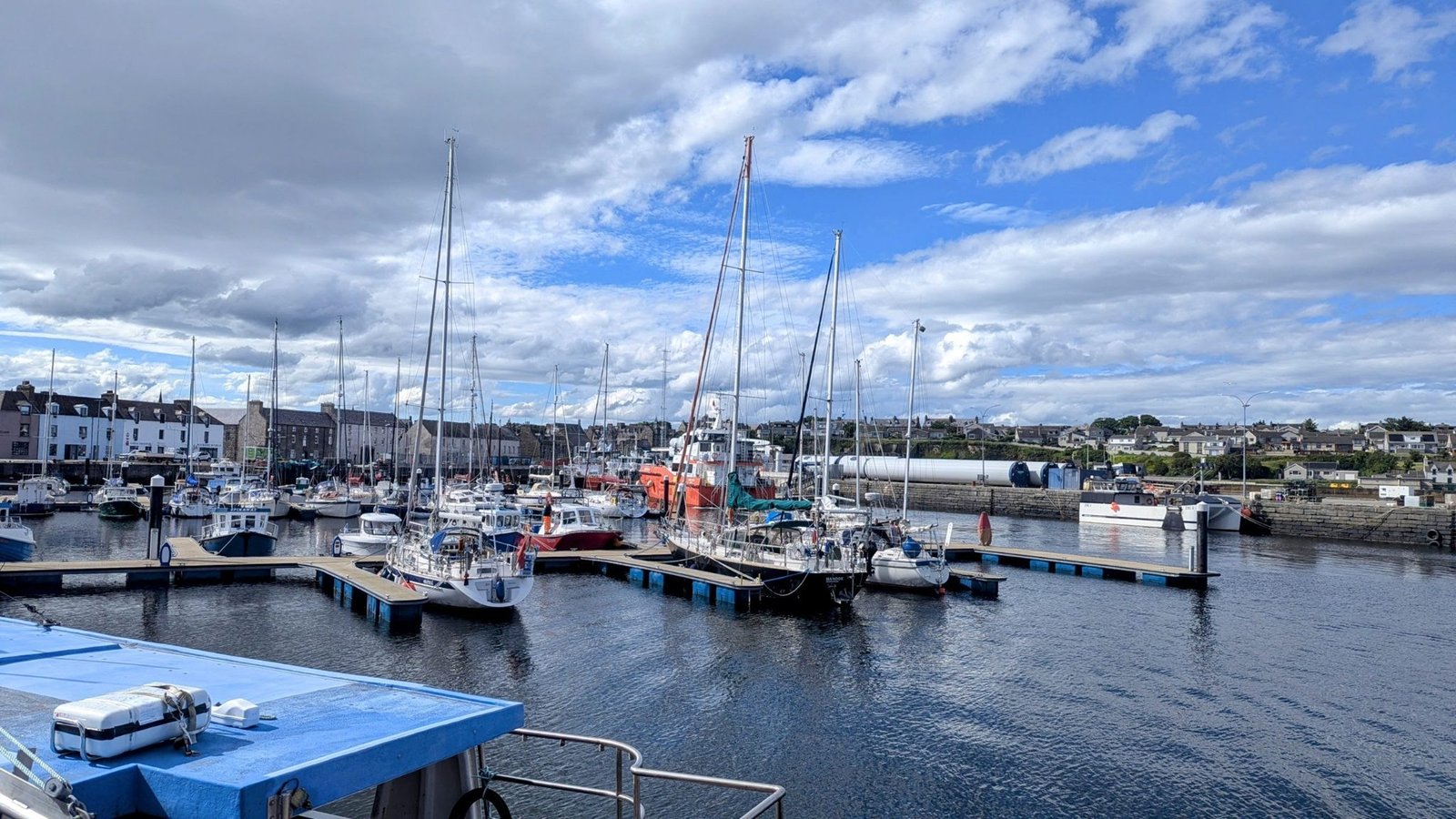
Overview — the town that runs on the sea
Wick doesn’t get the postcard love of the west coast, and that’s exactly why we like it. It’s a real, working Caithness town — the practical hub of the far north-east, the place you actually stock up, sleep, fuel up and get your bearings on the NC500. But scratch the surface and Wick has one of the most extraordinary stories on the whole route: for a few decades in the 1800s this was one of the busiest herring ports in all of Europe.
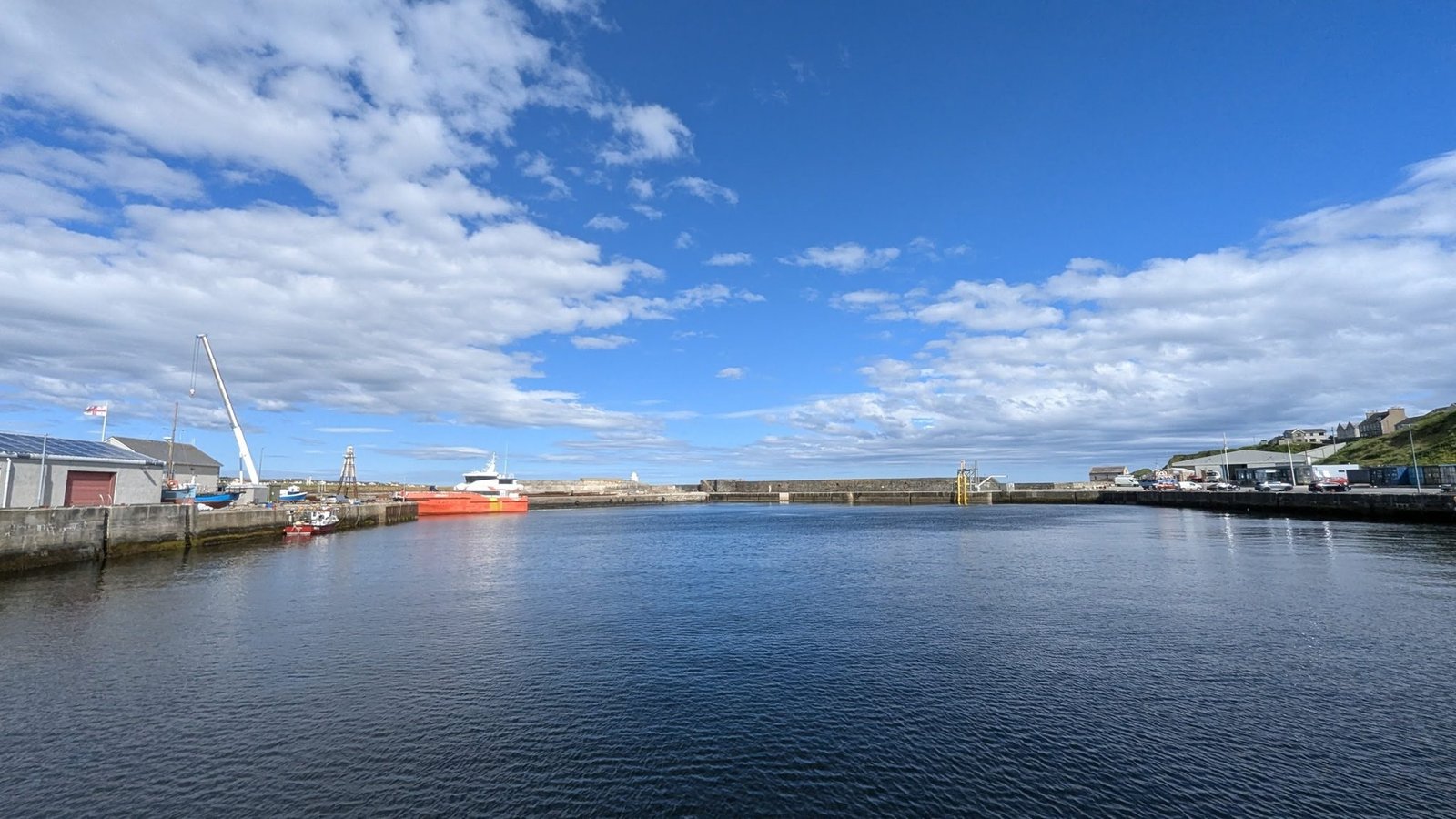
Today its harbour has reinvented itself again — part marina, part base for the offshore wind farms out in the Moray Firth — and its distillery, Old Pulteney, quietly turns out one of Scotland’s great coastal malts. Give Wick an afternoon and it’ll surprise you.
Where it is (and where on the route)
Wick sits at the mouth of the River Wick on the Caithness east coast, on the A99. It’s the biggest town on the northern NC500 — the hinge between Section 2 (down to Helmsdale and the Sutherland coast) and Section 3 (Wick → John o’ Groats). Whichever way you’re going round the loop, you’ll pass through; it’s worth stopping.
The history — “Herringopolis”
Wick’s boom was built on the silver darlings — herring. In the early 1800s the British Fisheries Society commissioned the great engineer Thomas Telford to lay out a brand-new model fishing town on the south side of the river: Pulteneytown (named after Sir William Pulteney), with a planned grid of streets and a proper harbour. It worked spectacularly. By the mid-19th century, in the summer herring season, over a thousand boats crowded Wick’s harbour, and the quays swarmed with coopers, gutters and curers packing barrels of salted herring for export across Europe. They called it “Herringopolis.”
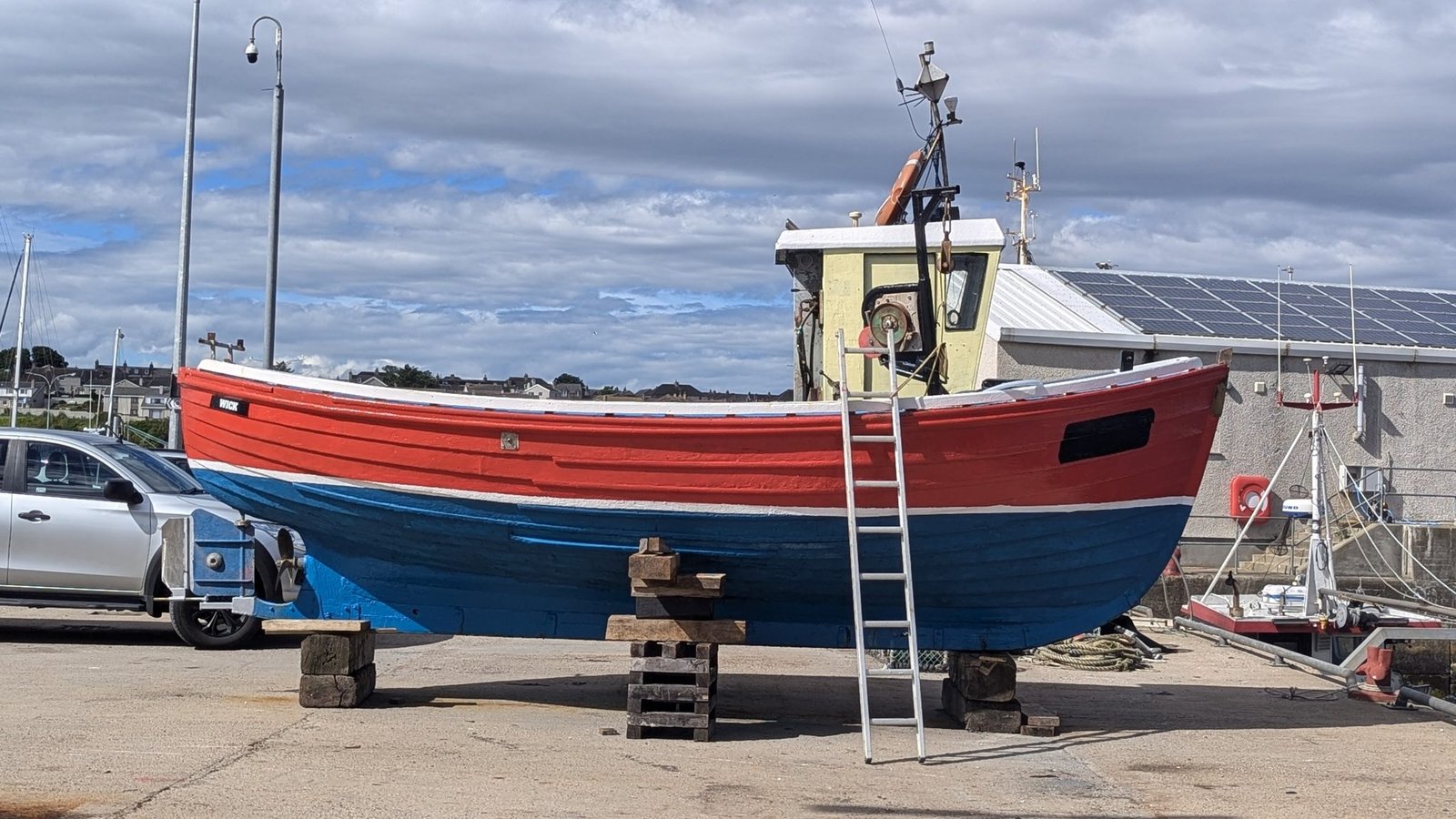
The herring eventually collapsed, as fish stocks do, but the bones of that boom are everywhere — in Telford’s Pulteneytown streets, the great stone harbour walls, and the superb Wick Heritage Museum (run by the Wick Society), whose Johnston photographic collection captures the port at its heaving peak.
Old Pulteney — “The Maritime Malt”
The pick of Wick’s attractions is Old Pulteney distillery, founded in 1826 in the heart of Pulteneytown. Nicknamed the “Maritime Malt,” its whisky is shaped by the salt air of the harbour it was built to serve — the brand even prints the port’s coordinates (58.4392°N) on its signage. It’s one of mainland Scotland’s most northerly distilleries.
It has a great twist of a backstory, too: Wick voted itself “dry” in the 1920s, banning alcohol in the town for around 25 years — and Old Pulteney fell silent for much of that time before reopening in the 1950s. A distillery in a town that outlawed drink: very Caithness.
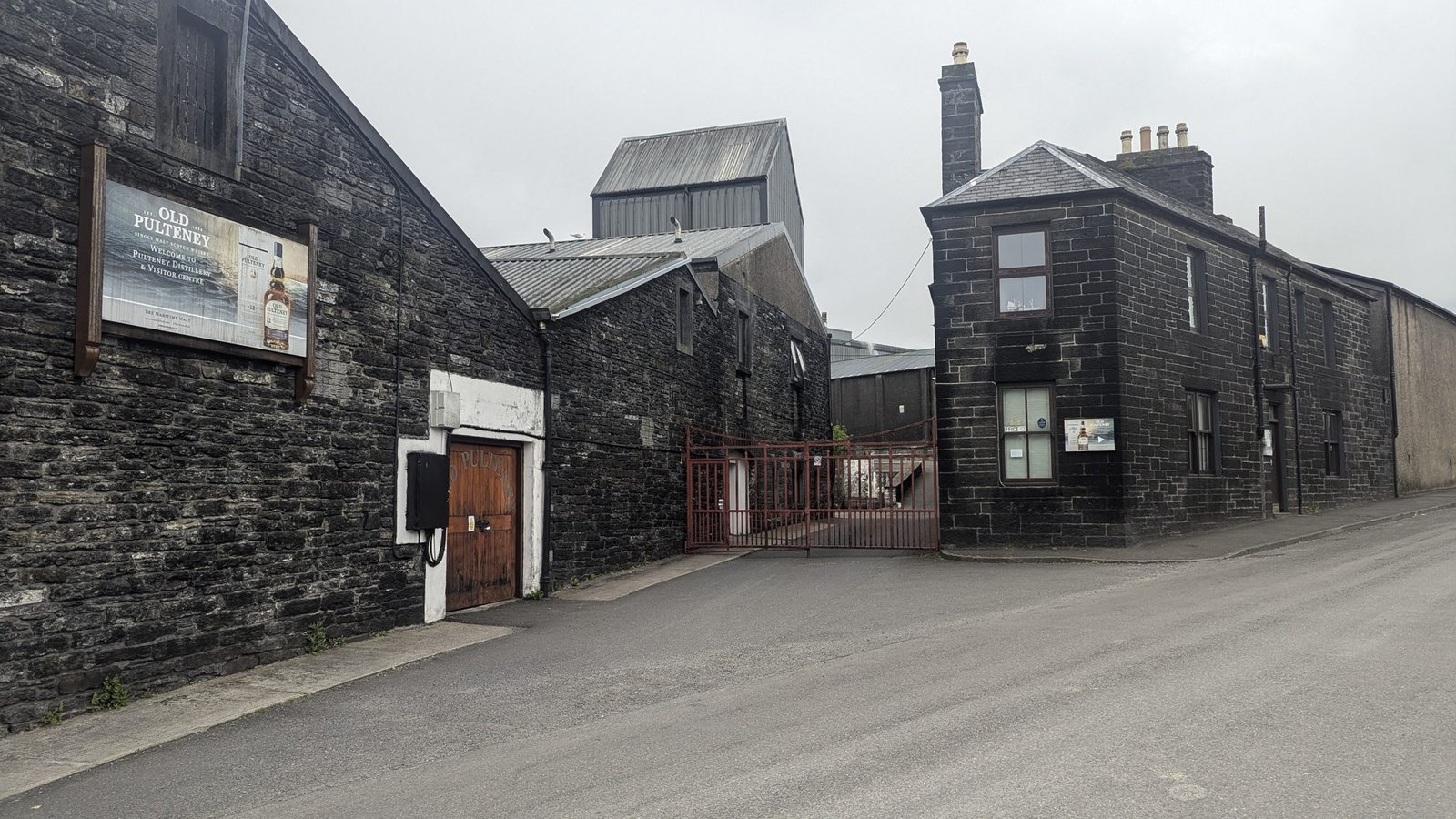
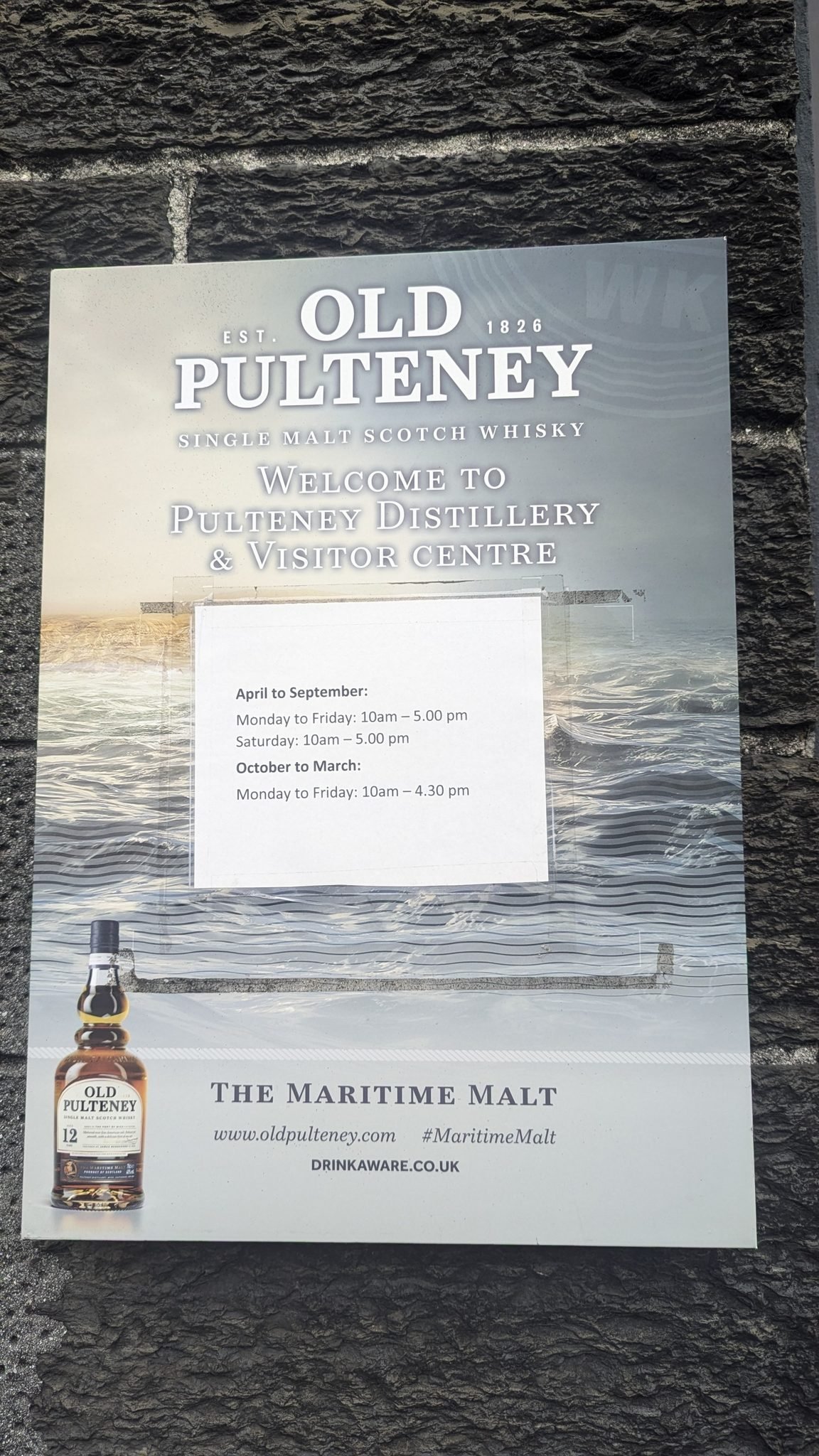
Visiting (as displayed on our visit — confirm current before travelling): Visitor Centre, Apr–Sep Mon–Sat 10am–5pm; Oct–Mar Mon–Fri 10am–4.30pm. Tours and tastings usually need booking. [Confirm current hours/booking + whether the driver gets a driver’s dram to take away.]
What else to see & do in and around Wick
- Wick Heritage Museum — the herring story, brilliantly told.
- Ebenezer Place — the world’s shortest street — officially just 2.06m long (Guinness World Record), at Mackays Hotel. A daft, delightful two-minute stop.
- Castle of Old Wick (“the Old Man of Wick”) — a gaunt ruined tower on the cliffs just south of town, one of the oldest castles in Scotland (12th–14th century).
- The Trinkie — a much-loved open-air seawater swimming pool on the rocks south of town (for the hardy).
- Castle Sinclair Girnigoe — the spectacular clifftop Sinclair ruin at Noss Head, just north (don’t confuse it with Keiss Castle).
Best time to visit
Wick is a year-round working town, so it’s not season-dependent like the honeypots. Summer gives you the long Caithness daylight (near-midnight dusk in June); spring and autumn are quieter. The distillery and museum are the weather-proof options for a grey day.
Practicalities — the Scottish Outposts bit
Wick is where you sort yourself out on the northern NC500: supermarkets, fuel, cash, garages, chemists, food. It has an airport (flights to the central belt) and is a natural overnight.
Scottish Outposts note: [Kevin — where did you park/stay in Wick on 24 June? Harbour area, a campsite, an aire? Any 594/motorhome overnight notes and services (fill/empty) worth listing?]
Reality notes
- 🚐 Motorhome/parking: [confirm parking + overnight options; services].
- 🥃 Distillery: book tours ahead; driver’s dram available to take away (confirm).
- 🏰 Castle of Old Wick: unfenced clifftop ruin — great, but keep back from edges.
- 🦟 Midges: low — coastal and breezy.
- 🐕 Dogs: fine around the harbour and cliffs (lead near roads/edges/livestock).
- ⚓ Working port: mind the live quayside — it’s a real harbour, not a theme park.