
Keiss Castle: A Ruined Tower on the Edge of the Sea
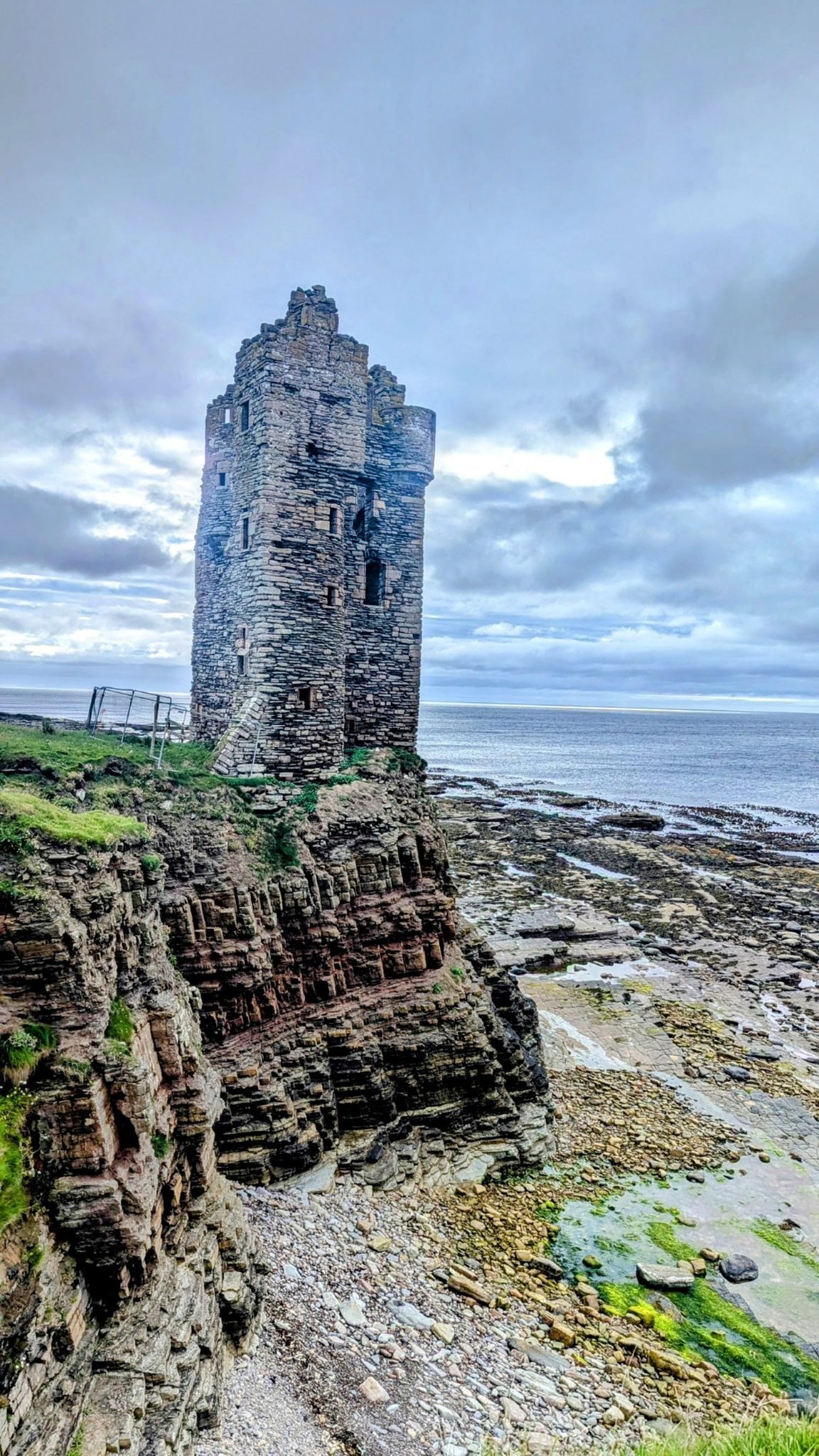
Overview — the castle that’s slowly falling into the sea
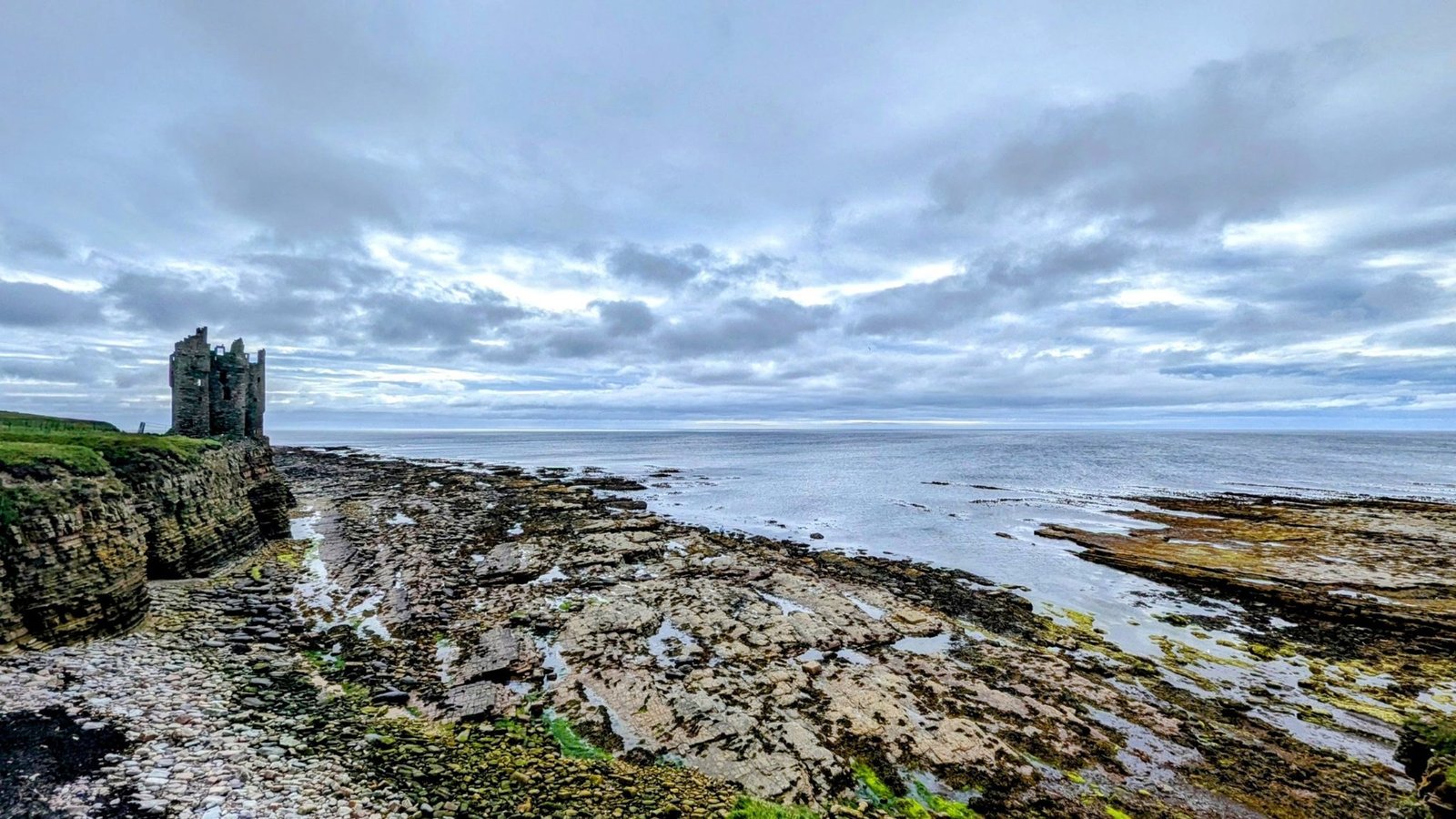
Some castles sit safely back from the shore. Keiss Castle does the opposite: it stands right on the crumbling edge of a Caithness sea cliff, its tall, gaunt tower staring straight out at the North Sea, looking for all the world like it might topple onto the rocks below at any moment. It very nearly has.
We came at dawn on a still June morning — at this latitude the sun’s up by four, so by seven the light was already washing over the flagstone cliffs and the tide was right out, exposing great ribbed platforms of rock. It’s one of the most atmospheric, un-touristy castle stops on the whole NC500, and almost nobody pulls in for it. Their loss.
There are, confusingly, two Keiss Castles — the ruined old tower on the cliff, and the later Baronial mansion just inland. This is the story of both.
Where it is (and where on the route)
Keiss Castle stands on the north shore of Sinclair’s Bay, in Caithness, just off the A99 — the NC500’s east coast. It’s about 8 miles north of Wick and 9 miles south of John o’ Groats, placing it in NC500 Section 3 (Wick → John o’ Groats), and a short walk from Keiss village and harbour.
The history — full story
The old castle: a Sinclair tower on the cliff
The ruin is old Keiss Castle, a tower house built by the Sinclairs, Earls of Caithness. It’s usually dated to the late 16th or early 17th century — most often credited to George Sinclair, 5th Earl of Caithness, around 1600 (exact date uncertain — see confirm note). In plan it’s a Z-plan tower house: a tall main block with projecting towers (you can see the corbelled-out round turret near the top in the photos), designed as much for status as defence, with small windows and gun-loops.
For a couple of centuries it was the seat of the Sinclairs of Keiss. Then, as fashions and comfort changed, the family abandoned the draughty clifftop tower for a new house inland (below), and the old castle was left to the weather and the sea. Today it’s a roofless, precarious ruin — propped and partly consolidated (you can spot modern access steps and railings in the photos), but standing on an actively eroding cliff. It’s a protected historic structure (listed/scheduled — confirm exact designation).
The Baptist laird of Keiss
Keiss has one genuinely remarkable footnote. Sir William Sinclair of Keiss (c.1704–1768), the local baronet, converted to the Baptist faith and is remembered as founding the first Baptist congregation in the north of Scotland — one of the earliest in the country — at Keiss around 1750. By tradition he preached to his tenants and baptised converts in the sea below, and he wrote hymns. A laird turned lay preacher, dunking his flock in the North Sea off his own castle — it’s a story worth telling (nice colour; worth a fact-check line before publish).
The “new” Keiss Castle
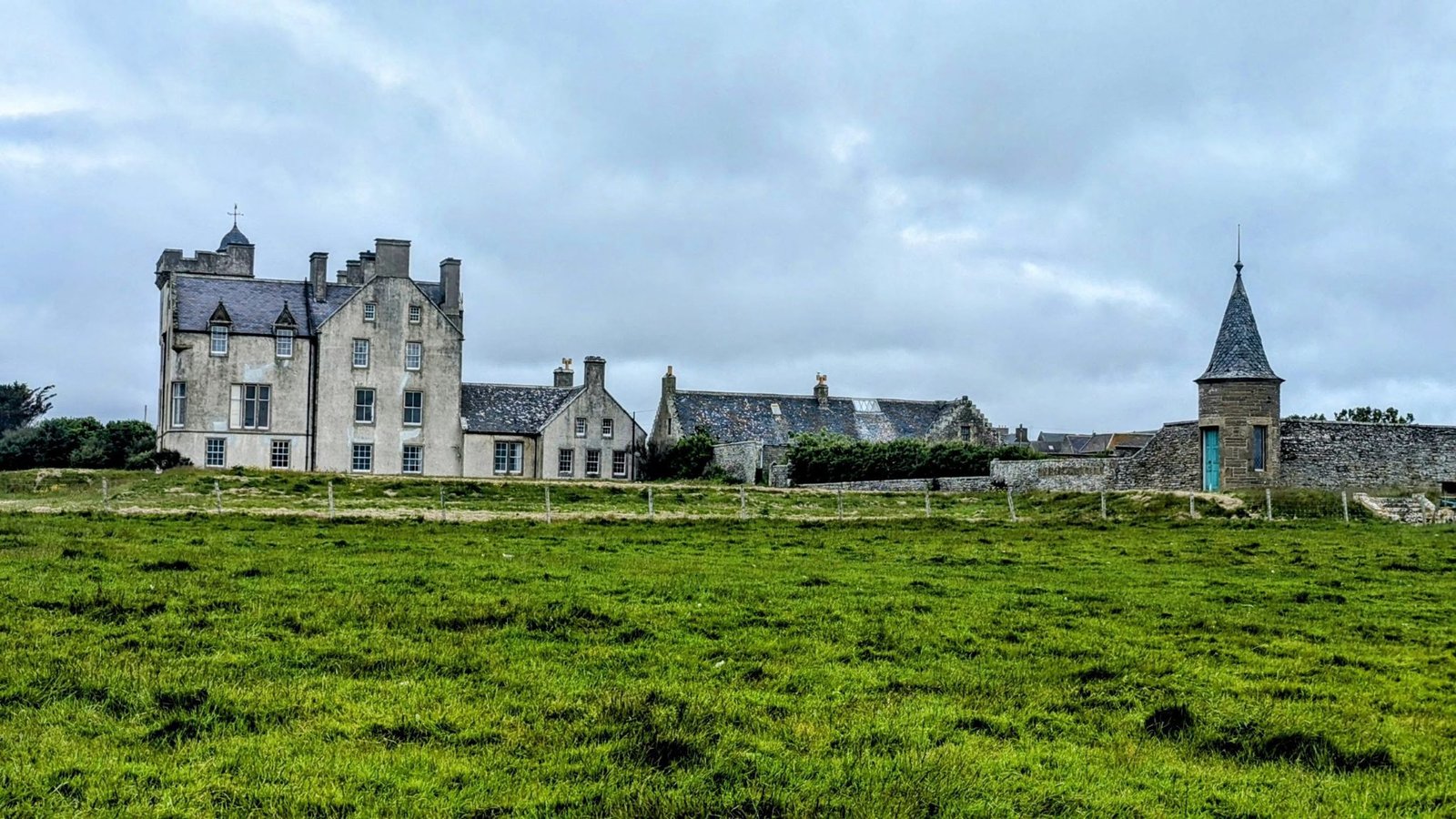
A short way inland stands the other Keiss Castle — a handsome grey Scottish Baronial mansion, crow-stepped and turreted, that replaced the old tower as the family seat. It was built around 1755 and then largely rebuilt in Baronial style in 1860 by the architect David Bryce (dates to confirm). In 1890 it was bought by Sir Francis Tress Barry, the copper-fortune antiquarian who spent his summers here and dug the famous Keiss brochs — which is how the Iron Age, the Sinclairs and the Victorians all tie together in one small parish. The mansion is a private residence — admire it from the road/field, no access.
The cliffs themselves
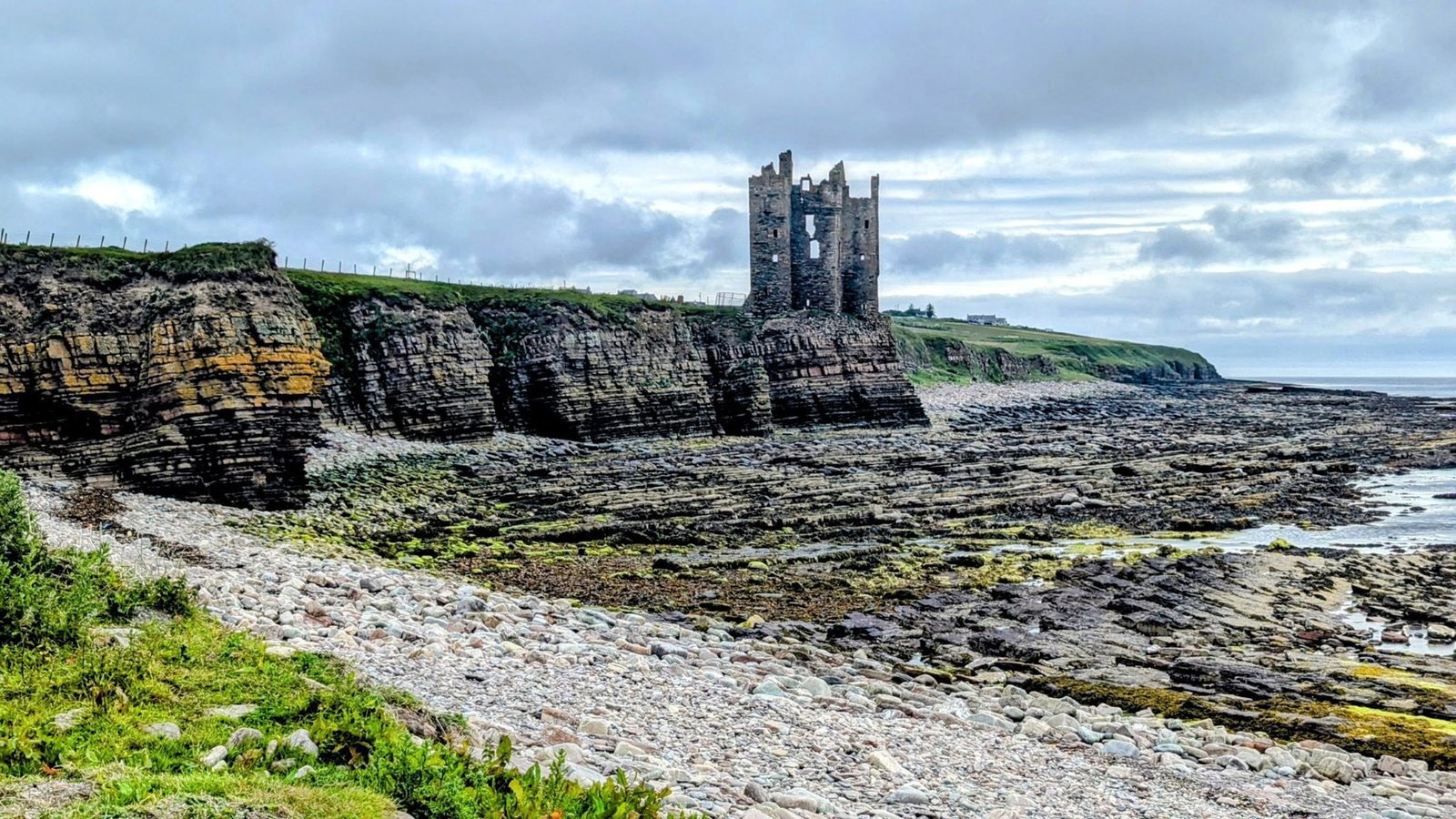
Even the rock is history. These are Caithness flagstones — finely layered Old Red Sandstone laid down in an ancient lake around 370 million years ago. The same stone was split and shipped worldwide as paving, and it’s what gives this coast its extraordinary ribbed, stacked-slate appearance at low tide.
What you’ll actually see and do
- The old tower — walk the clifftop path for the classic side-on view; the ruin is dramatic from every angle (keep well back from the edge and the structure).
- The low-tide rock platforms — time it right and the sea pulls back to reveal huge flagstone shelves and pools below the castle.
- The dawn/dusk light — this east-facing coast is made for sunrise; in midsummer that’s stupidly early, but worth the alarm.
- The new castle — spot the Baronial mansion inland to complete the story.
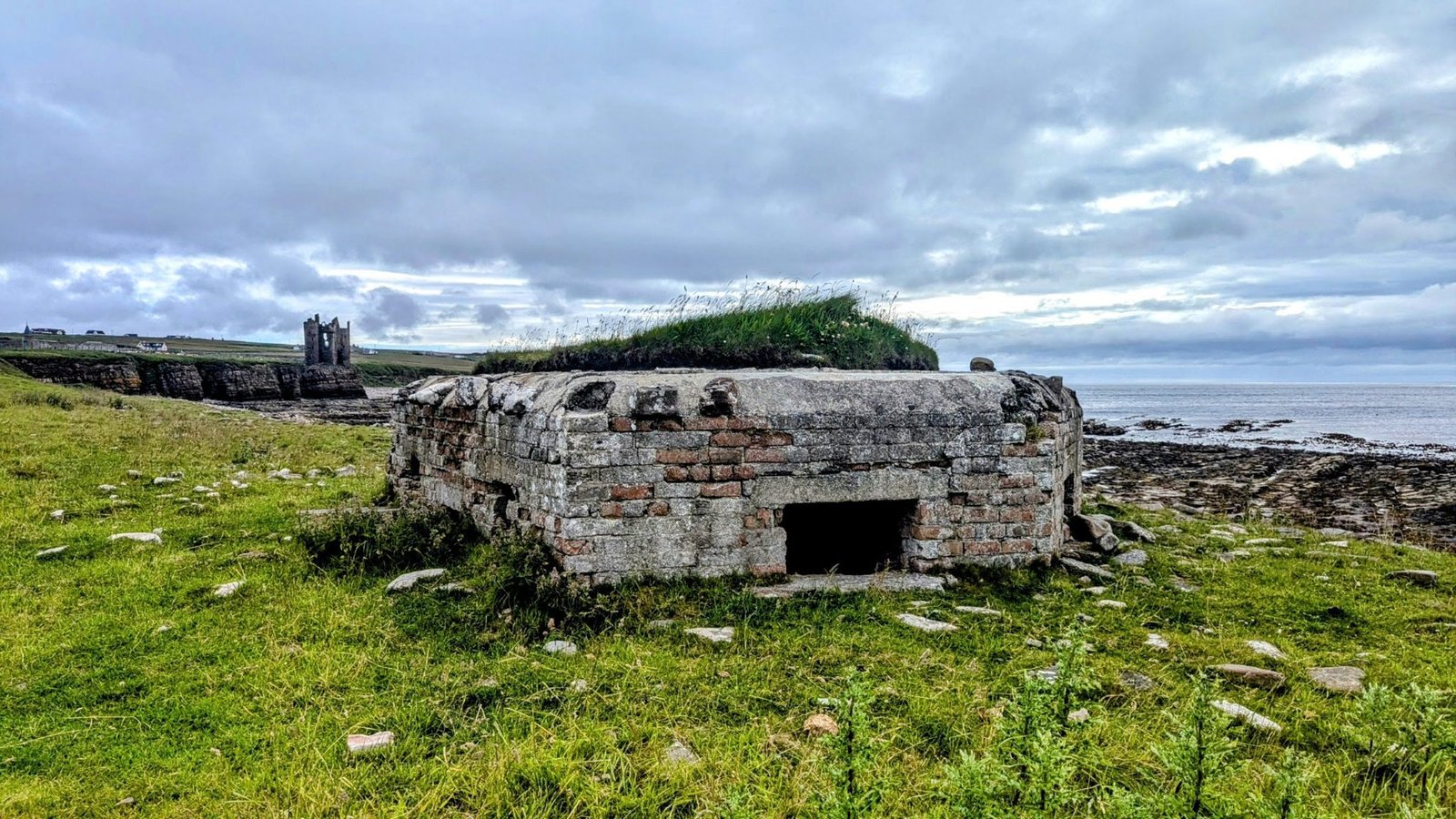
- Combine with the wider Keiss walk — harbour, brochs and WWII pillbox are all within a few hundred metres.
Best time to visit
- Sunrise for the drama and the light (midsummer = very early; spring/autumn dawns are more civilised).
- Low tide to see the rock platforms and get the shore-level angles — check tide times.
- Any season — it’s exposed and moody in all weathers, and the open coast keeps midges away.
Getting there, parking & practicalities
- Access: on foot from Keiss village/harbour along the clifftop — [confirm exact path, distance and best parking spot; Kevin, where did you leave the 594?].
- 🚐 Vehicle/parking: [confirm — village parking and suitability for larger motorhomes on the narrow lanes].
- Nearest services: Wick (8 miles south) for fuel, food and shops.
Reality notes
- ⚠️ Safety first: the ruin sits on an eroding cliff and is unstable — view it, photograph it, but do not climb on or into it, and keep back from the cliff edge. Especially with kids and dogs.
- 🌊 Tides: the foreshore floods — don’t get cut off on the rock platforms.
- 🏰 New castle: private home — no access; view from the public road only.
- 🦟 Midges: low — open, breezy coast.
- 🐕 Dogs: fine on the clifftop on a lead (cliff edge + livestock nearby).