
Tarbert: The Stunning Loch Fyne Village at the Gateway to Kintyre
Overview — a proper Scottish gem
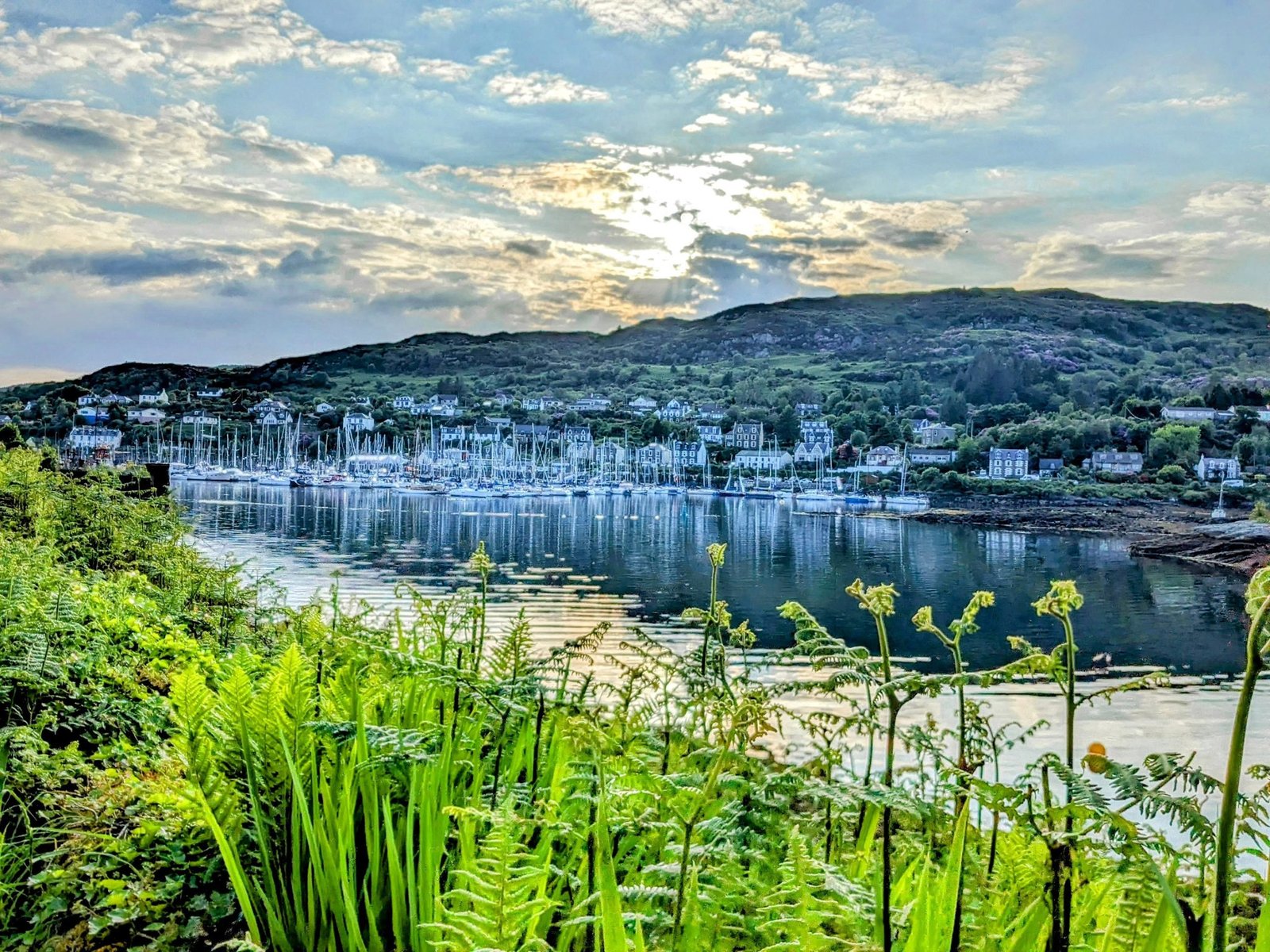
Some places just get everything right, and Tarbert is one of them. A working fishing harbour wrapped in a horseshoe of colourful houses; a royal castle ruin standing guard on the hill; boats and reflections; brilliant coffee and seafood; hills and coast to walk; and a big, generous sense of welcome. It sits at the narrow neck of land — the tairbeart, or isthmus — that joins Kintyre to the rest of Argyll, on the sheltered waters of Loch Fyne.
It’s an absolutely stunning village, and — the best bit — it’s genuinely easy to reach. We keep going back.
Getting there — two (or three) ways in
A couple of gorgeous ways in — and a third when the ferries allow:
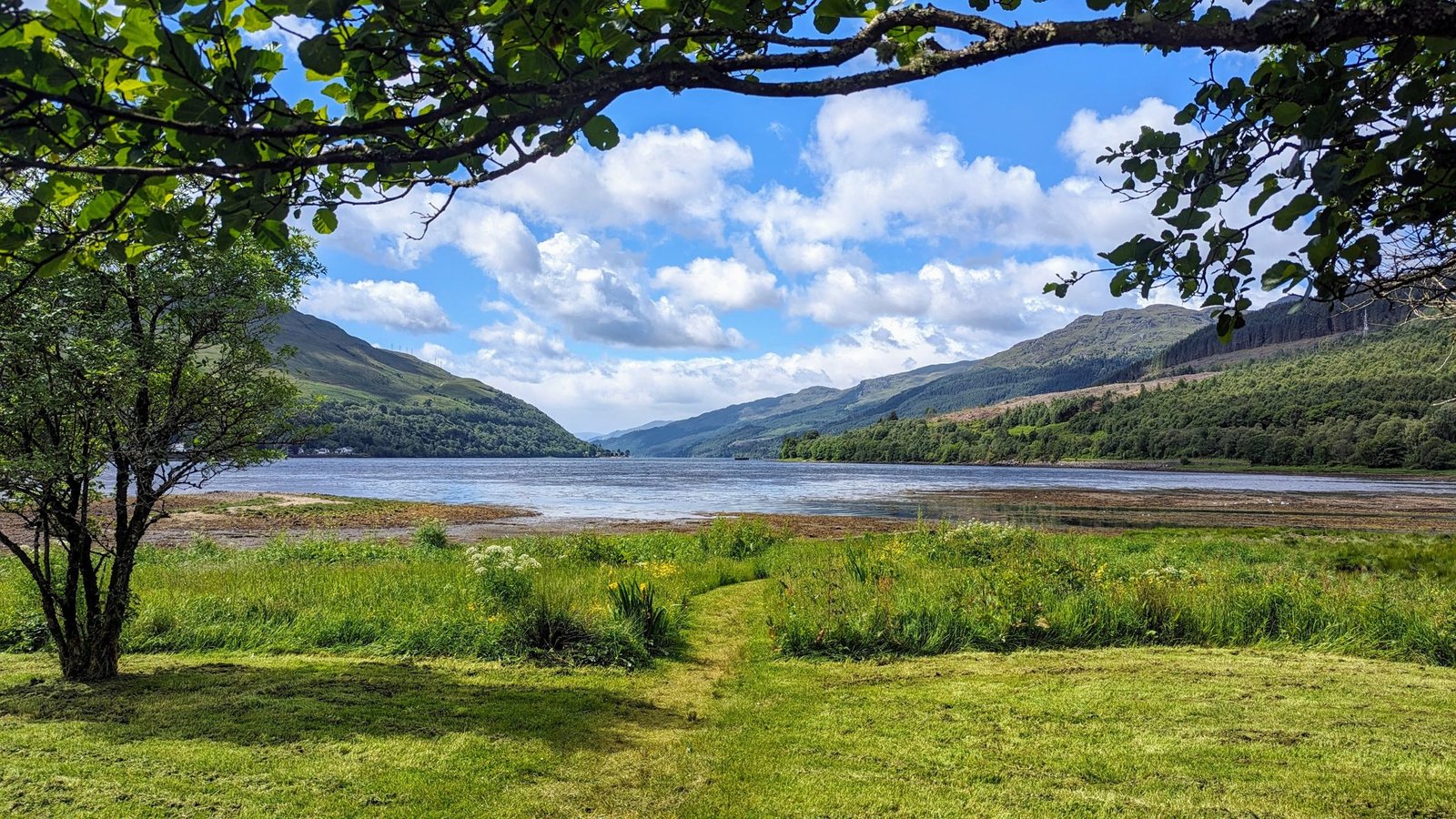
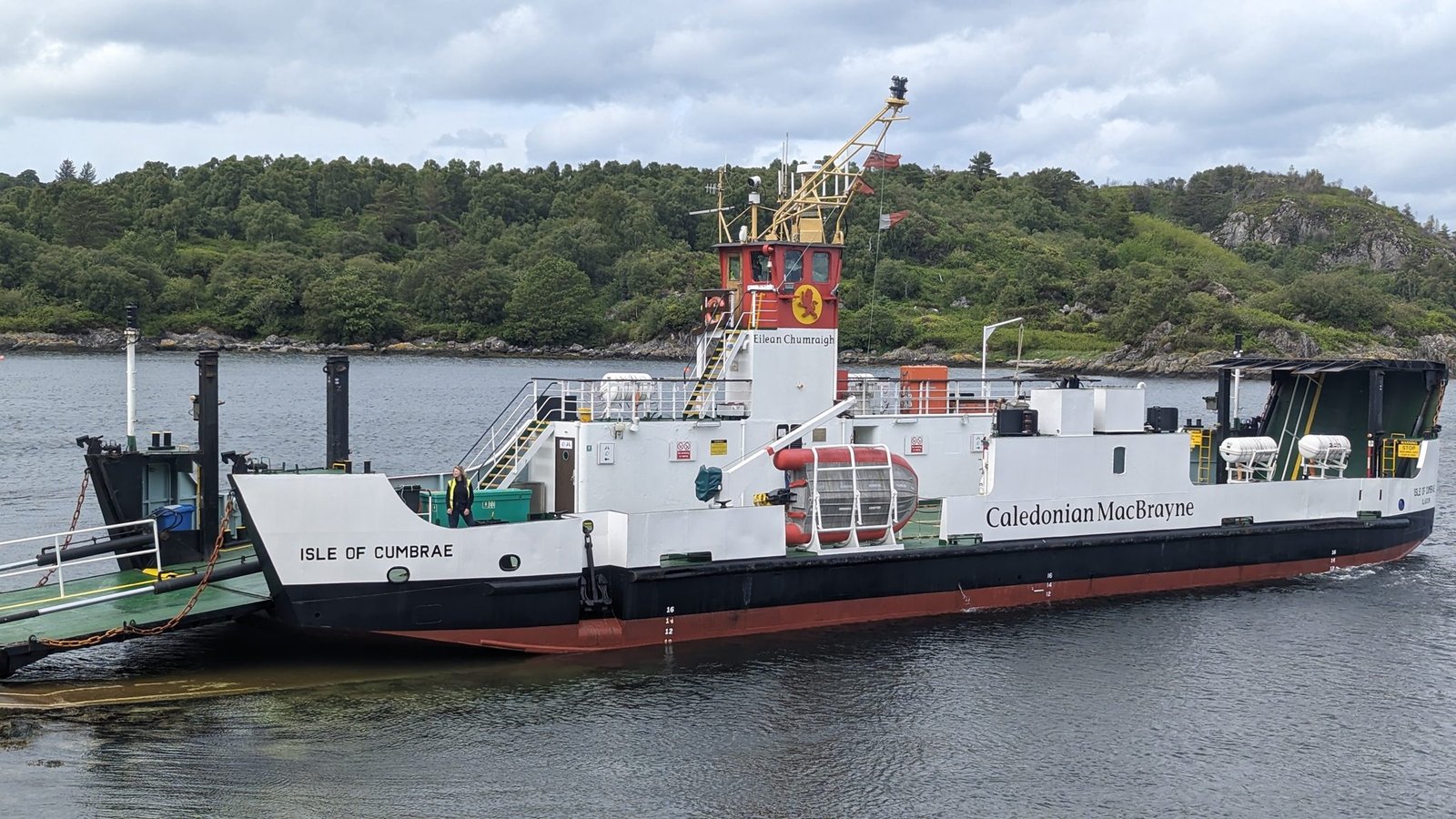
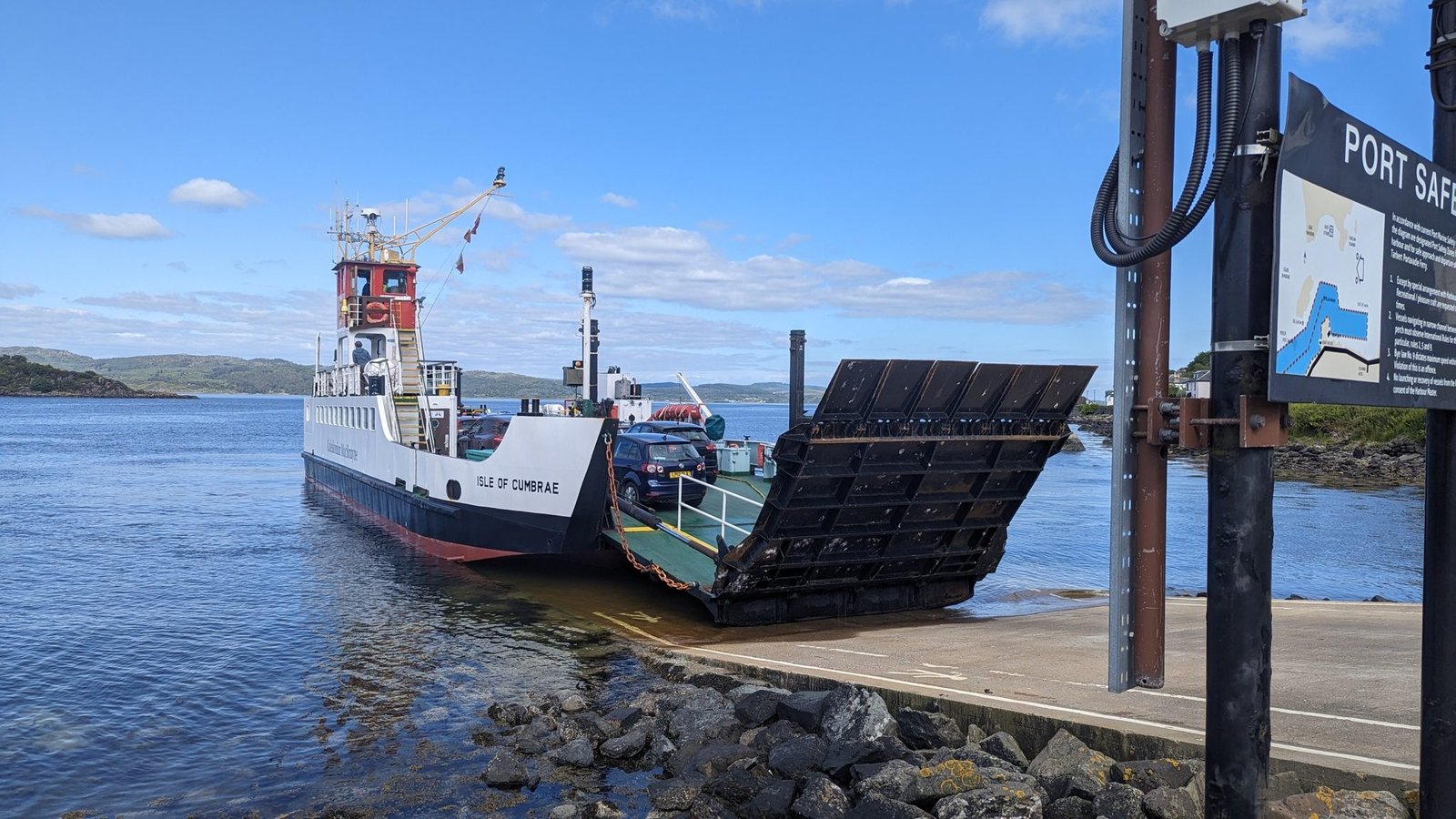
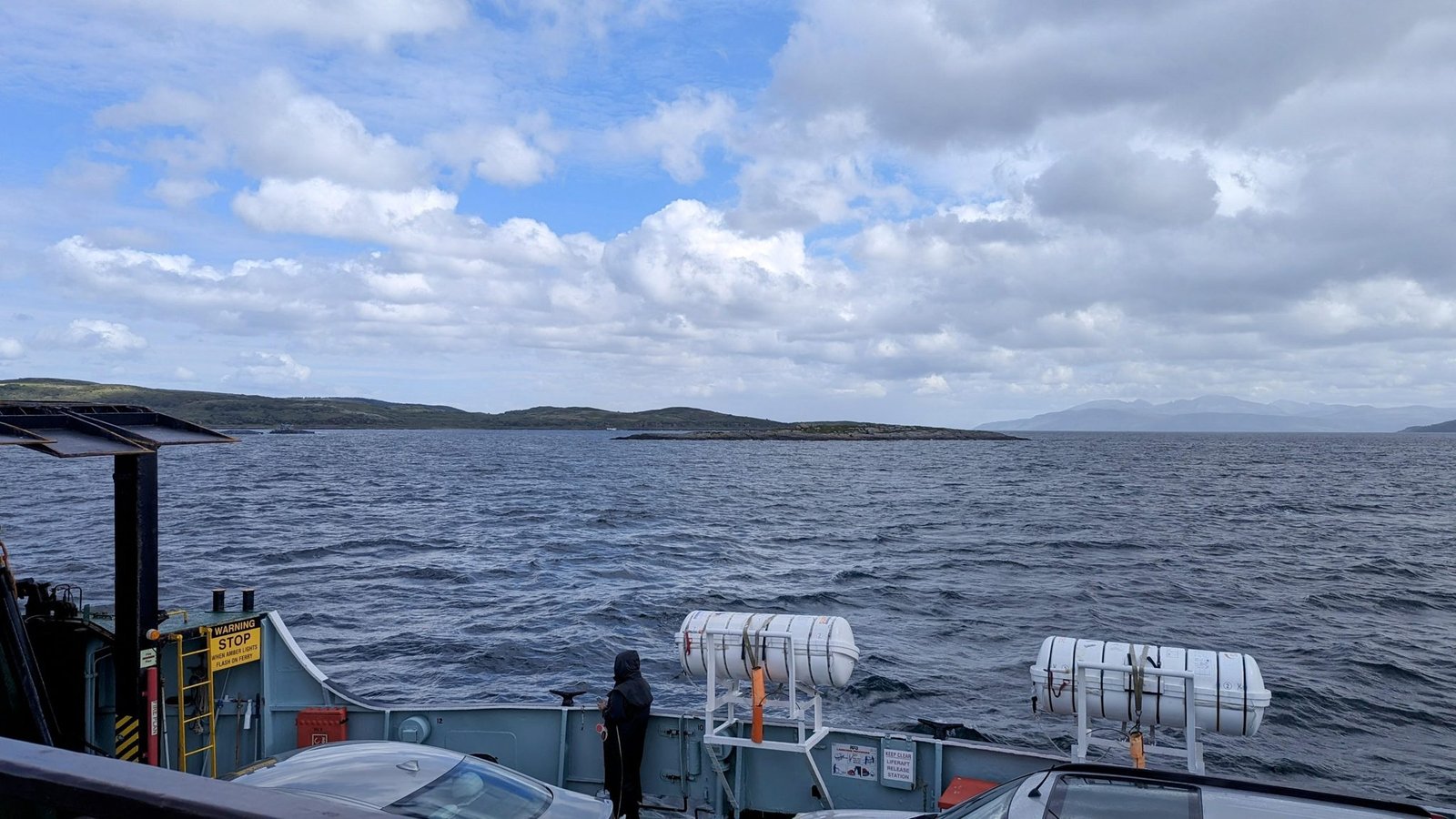
- ⛴️ The ferry way (from Glasgow): hop across the Clyde into Cowal (Gourock–Dunoon, or Wemyss Bay–Rothesay), drive over the peninsula to Portavadie, and take the little Isle of Cumbrae ferry across Loch Fyne to Tarbert. A proper island-hopping arrival, and quicker than it sounds.
- 🚗 The scenic drive: up Loch Lomond, over the Rest and Be Thankful, through Inveraray, and down the shore of Loch Fyne — one of the great drives in Scotland, start to finish.
- ⛴️ By CalMac via Campbeltown (when it’s running): the seasonal Ardrossan–Campbeltown ferry links Kintyre to the Ayrshire coast — then it’s a scenic drive north up the peninsula to Tarbert. Treat it as a bonus rather than a banker, mind: it’s been hit hard by Scotland’s ferry-fleet troubles (see the CalMac ferry crisis).
And for the isles, Kennacraig (5 miles south, on West Loch Tarbert) is the ferry port for Islay and Jura.
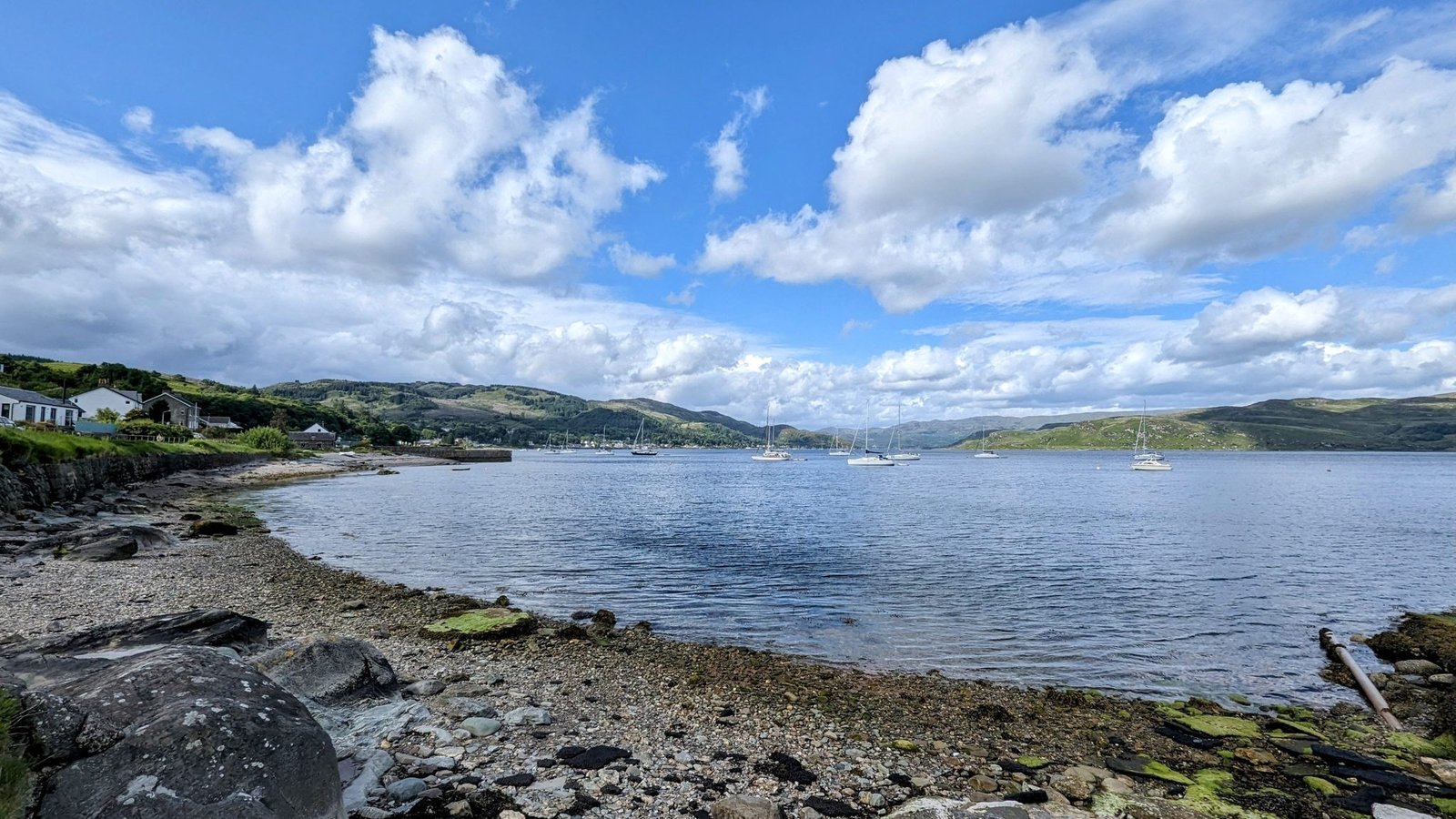
The harbour & the village
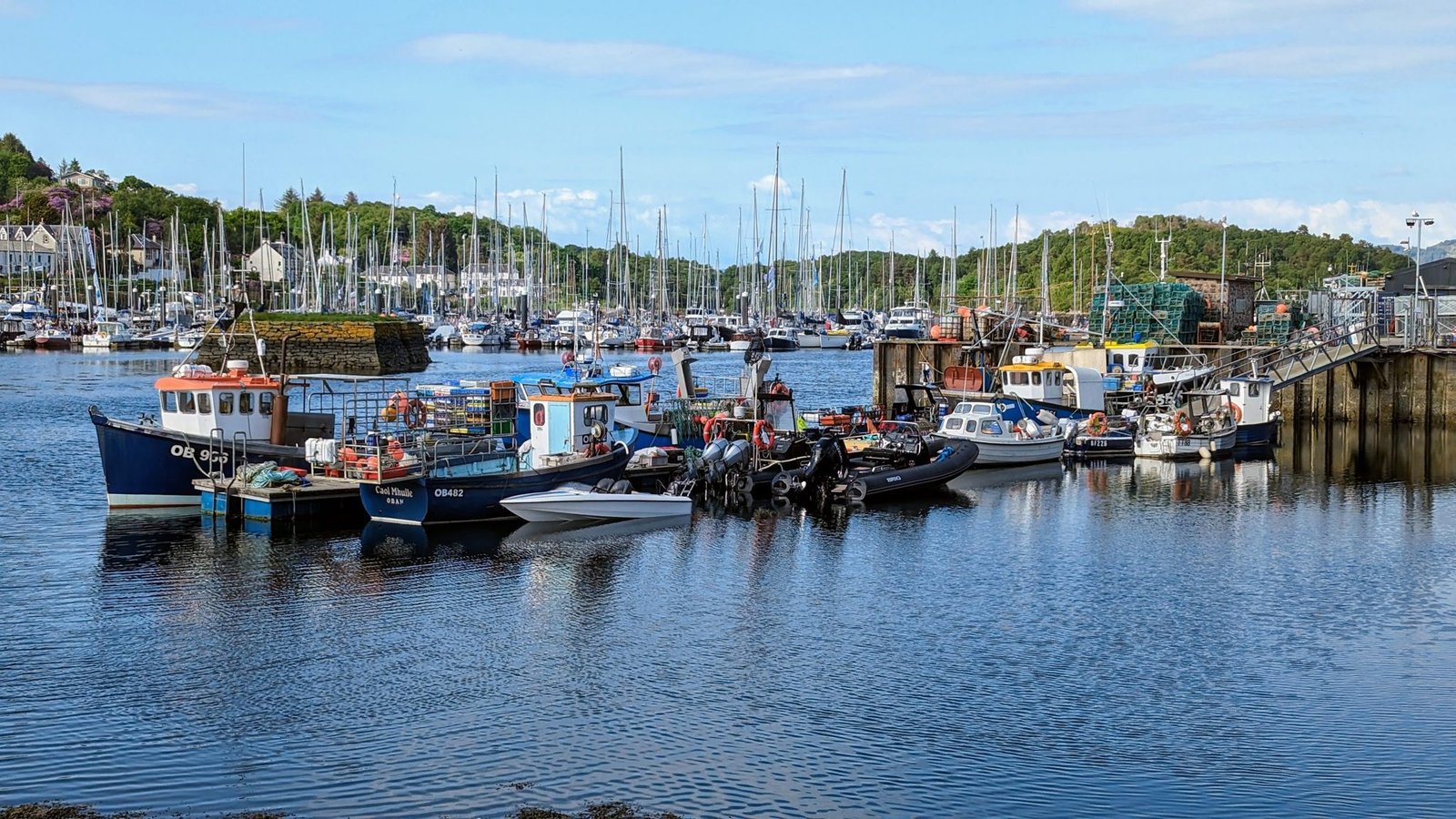
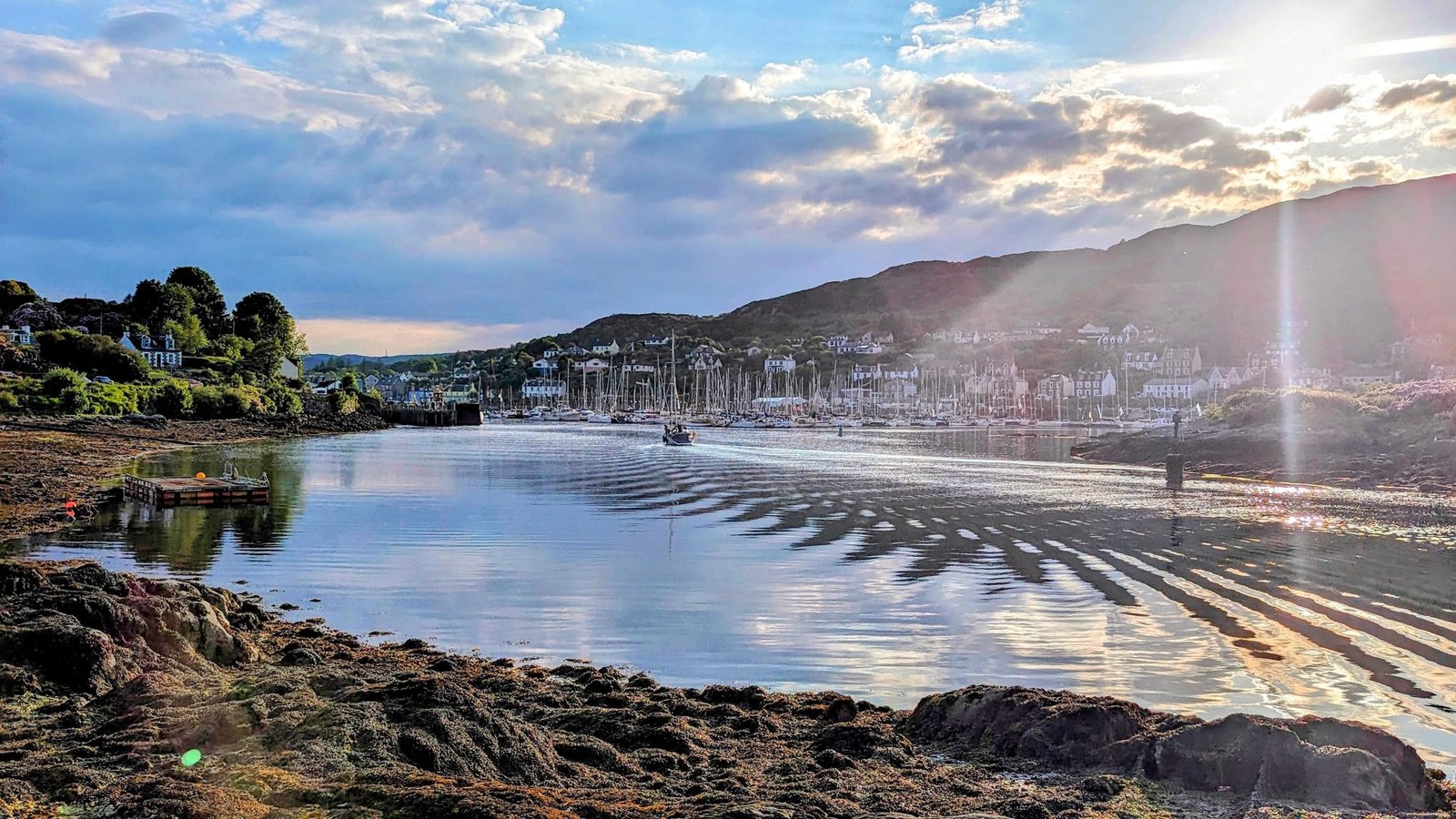
The harbour is the heart of it: fishing boats and yachts at their moorings, the Loch Fyne prawn and langoustine boats coming and going, and a front of cheerful painted houses that glow in the evening light. Wander the quay, watch the boats, and — if you time a still evening — you’ll get reflections that stop you dead.
Tarbert Castle — the Royal Castle on the hill
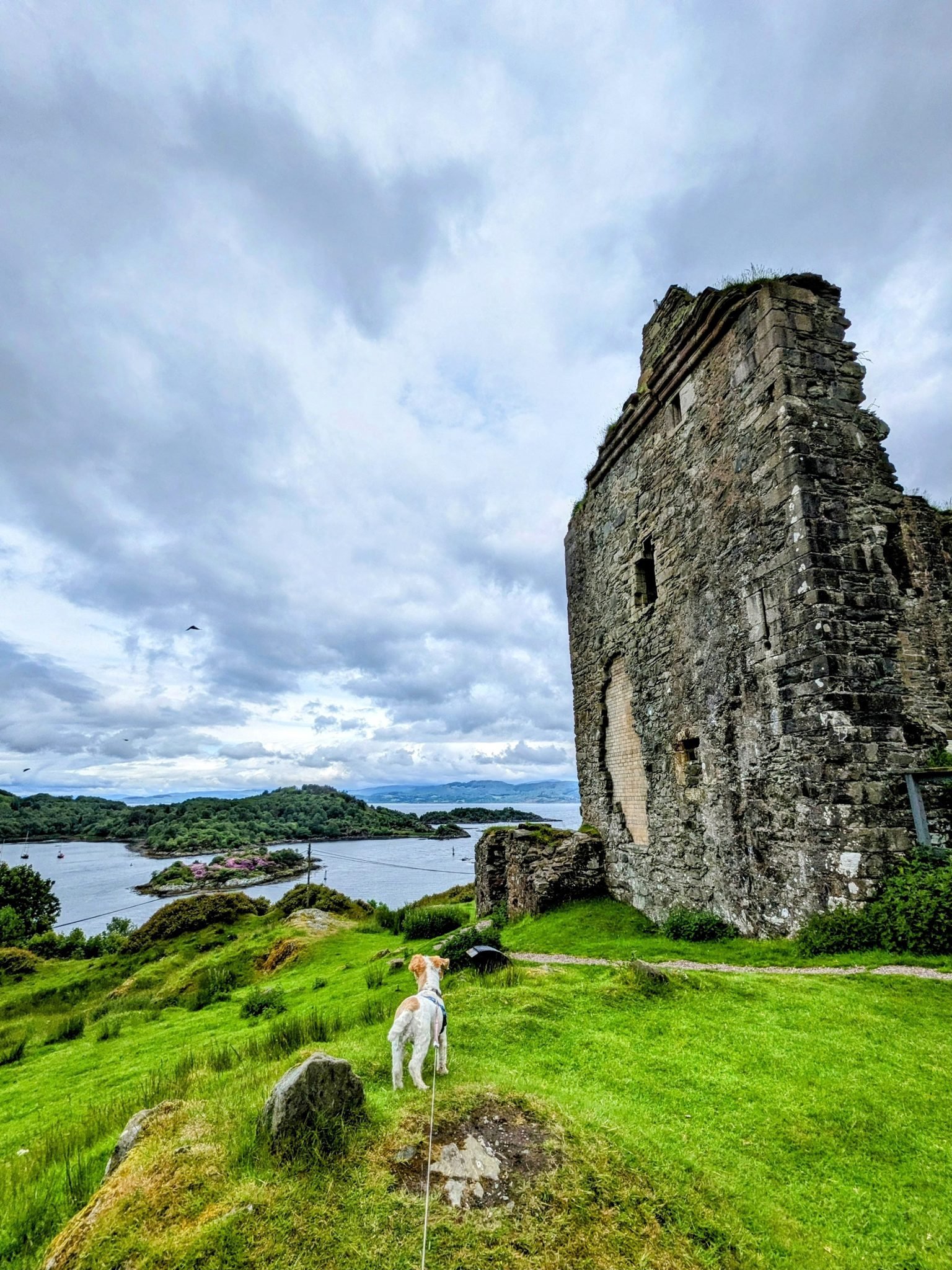
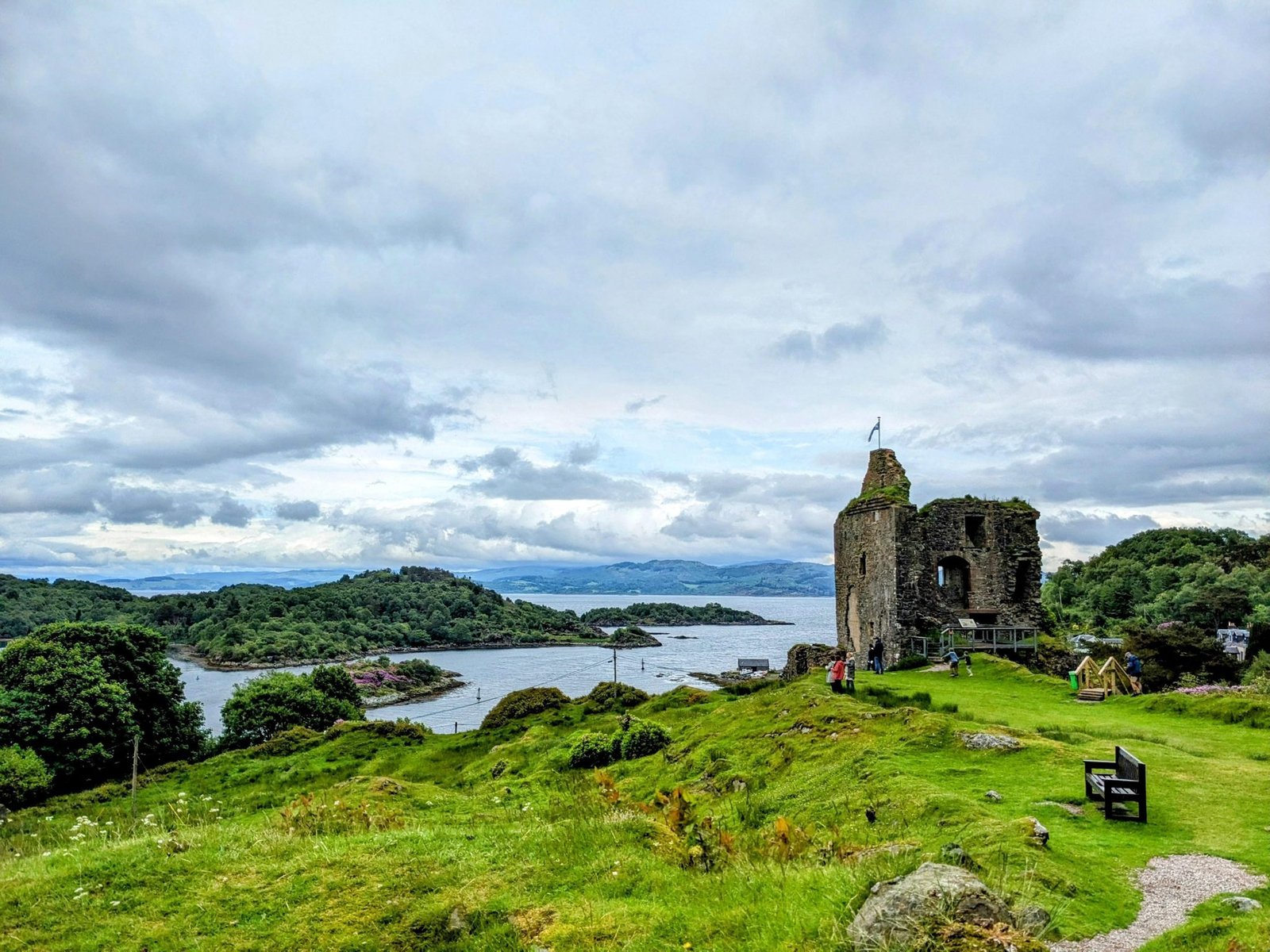
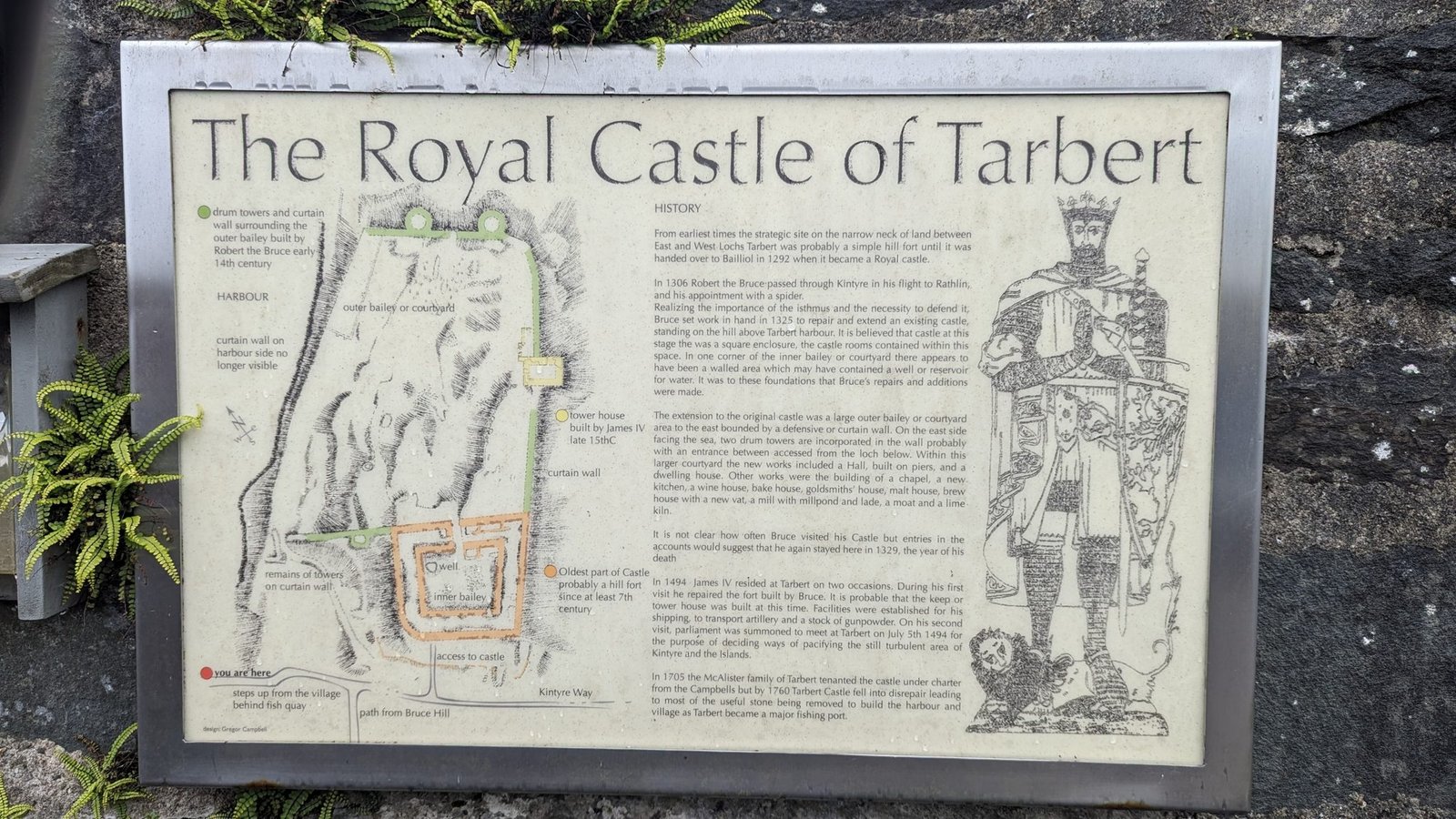
Above the village stand the ruins of Tarbert Castle — and it’s no ordinary ruin. This was a royal castle: a stronghold guarding the isthmus for centuries, greatly extended by King Robert the Bruce in the 1320s, and later strengthened again under James IV. (Long before that, in 1098, the Norse king Magnus Barelegs is said to have had his longship dragged across the Tarbert isthmus so he could claim Kintyre as an “island” won by sea.)
The climb up from the harbour is short and steep, and the reward is superb: the gaunt tower keep, and a panorama back down over the village, the loch and the islands. The path is signed as part of the Kintyre Way.
The Kintyre Way starts here
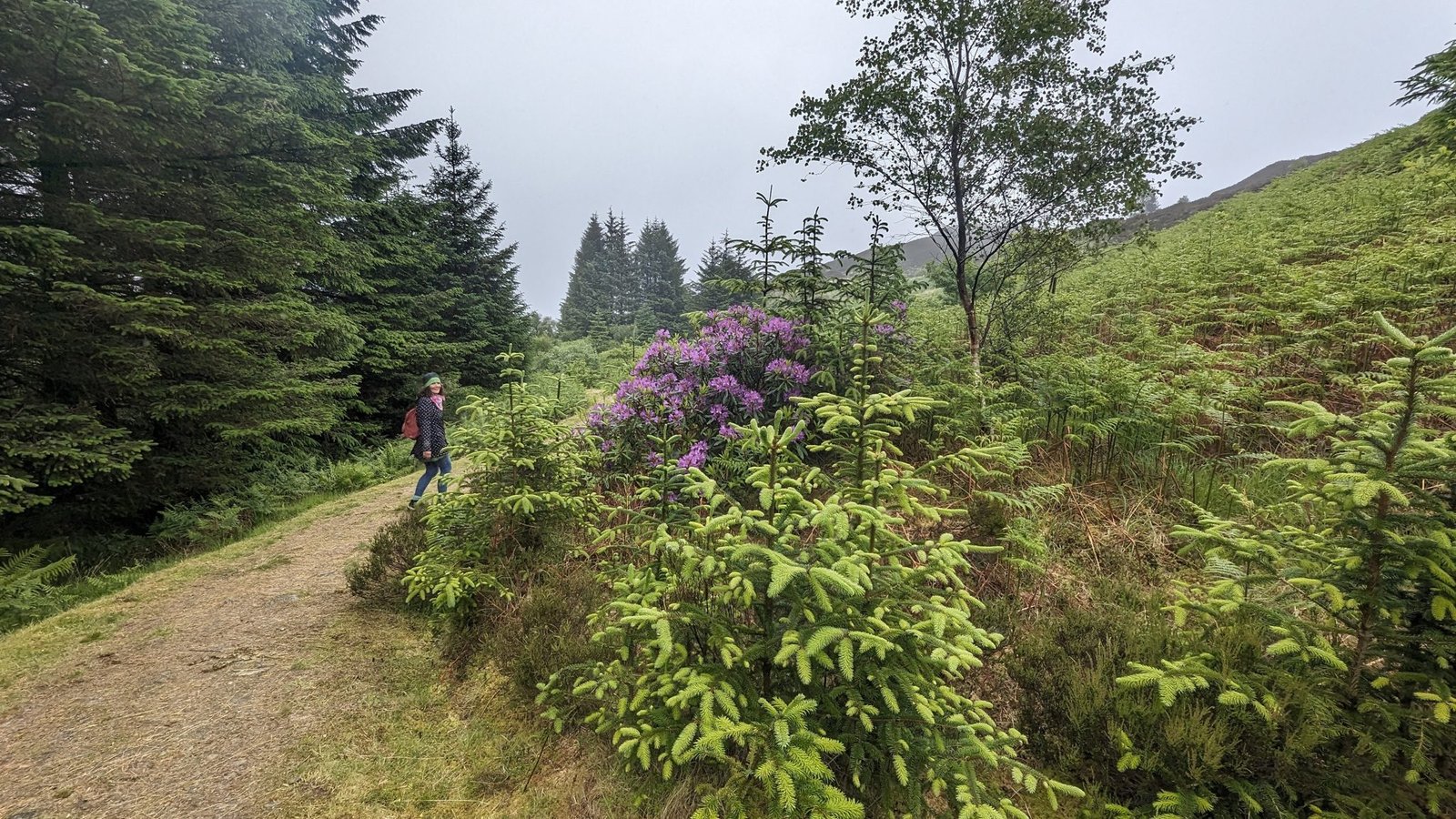
Tarbert is the northern trailhead of the Kintyre Way, the ~100-mile route down the peninsula to Machrihanish and the south. Even if you’re not walking the whole thing, the first stretches out of Tarbert — up to the castle and into the hills and woods — are lovely.
Where we stayed — the campsite
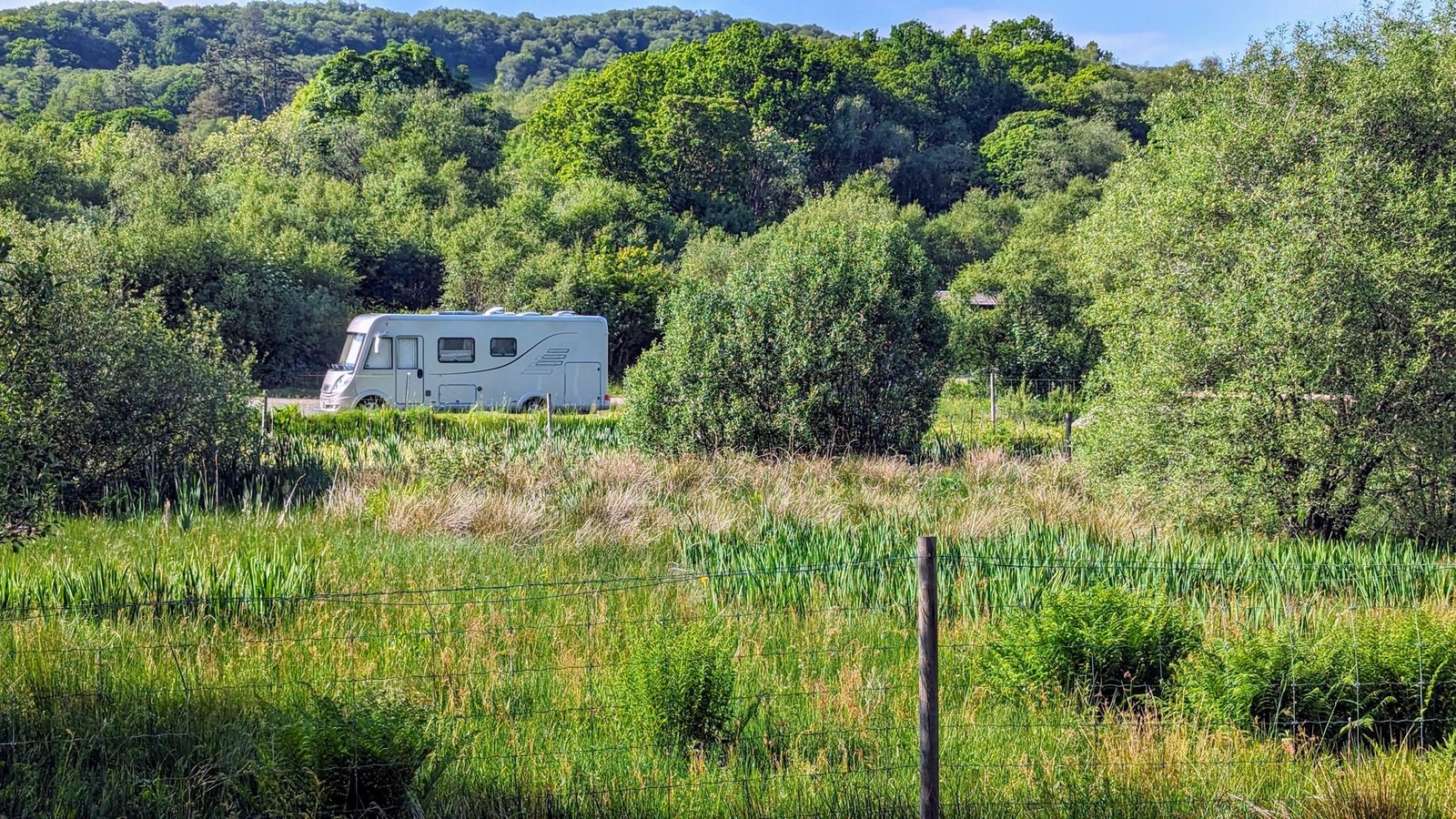
We stayed overnight at a campsite at Tarbert and used it as a base to explore on foot — walk into the village, up to the castle, and back. There was even a coffee to be had at the campground. [Kevin — confirm the campsite name + your verdict (facilities, price, would-return), and where the “campground coffee” was.]
Coffee, fish & chips, and the heritage centre
Tarbert punches above its weight for a wee village:
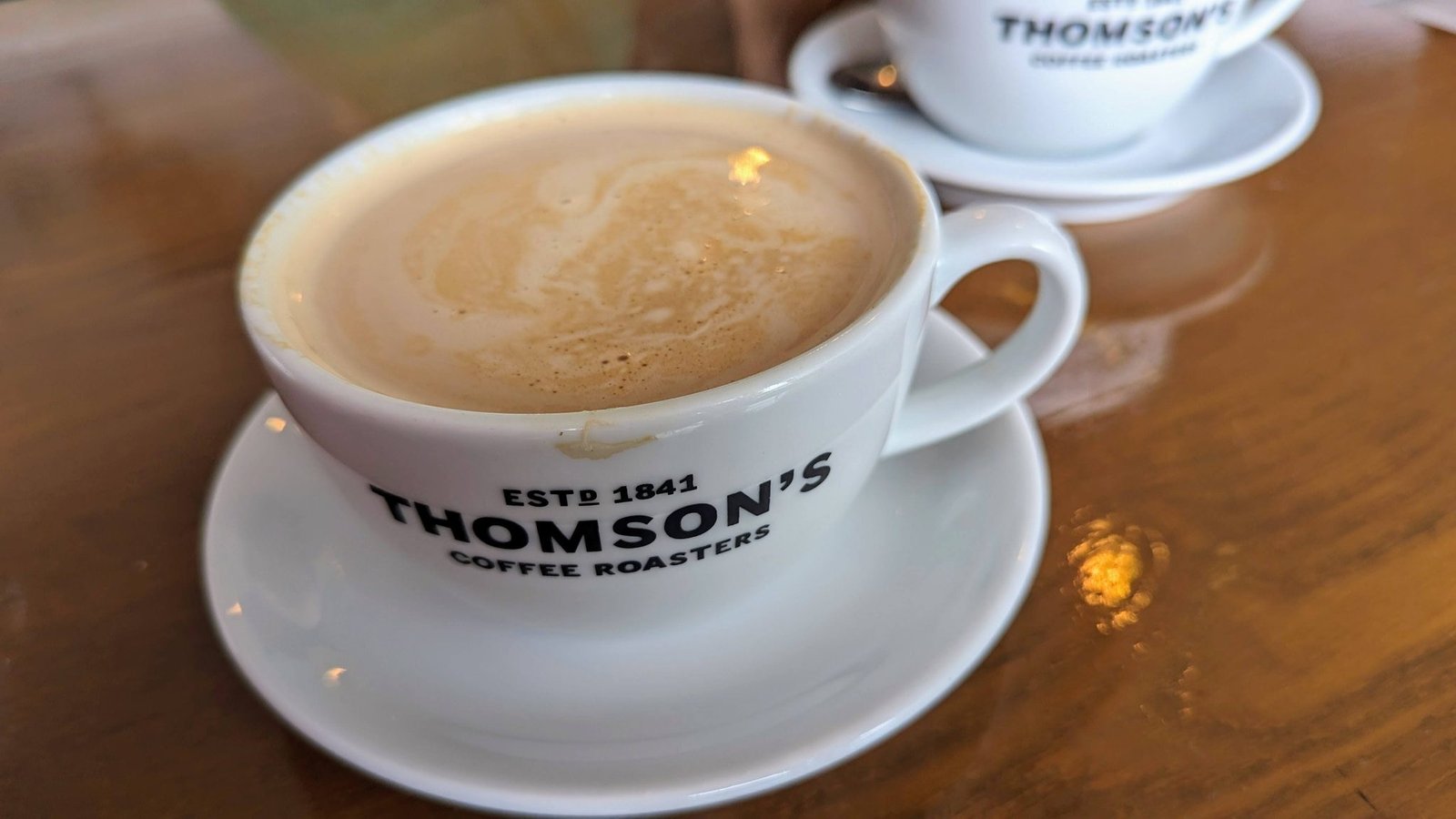
- ☕ Coffee at the local café — proper coffee (Thomson’s), the perfect harbour-walk reward.
- 🍟 Fish & chips — we had a cracking fish supper here too; you can’t beat a chippy tea by a fishing harbour.
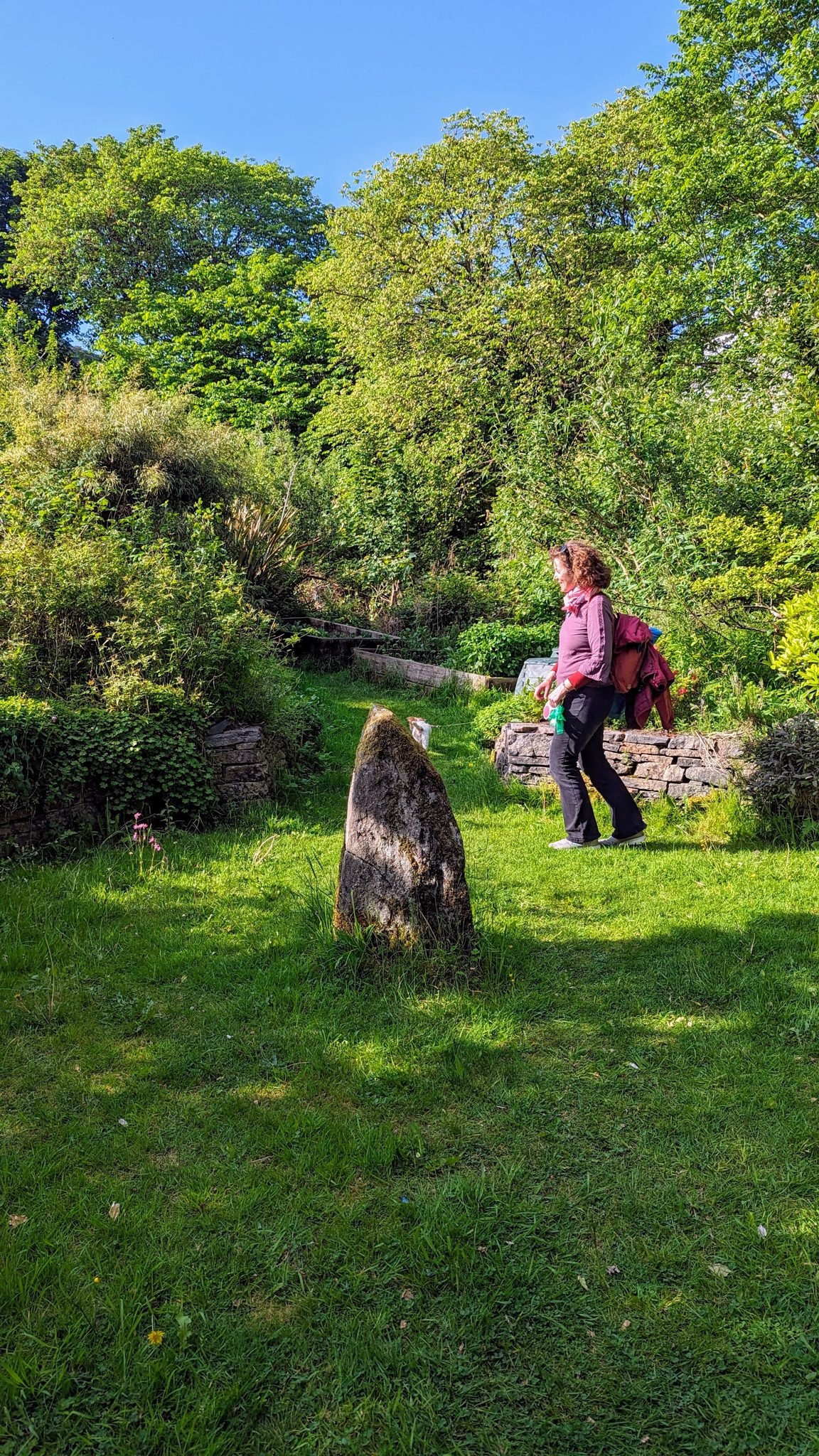
- 🧶 An Tairbeart Heritage Centre — just outside the village: a café (the Loomed Café), crafts, a healing garden and even standing stones to wander. A lovely, gentle stop.
Scottish Outposts note: [Kevin — name the café/chippy you used so I can link them; and confirm the heritage centre / healing garden is An Tairbeart.]
A few Tarbert moments
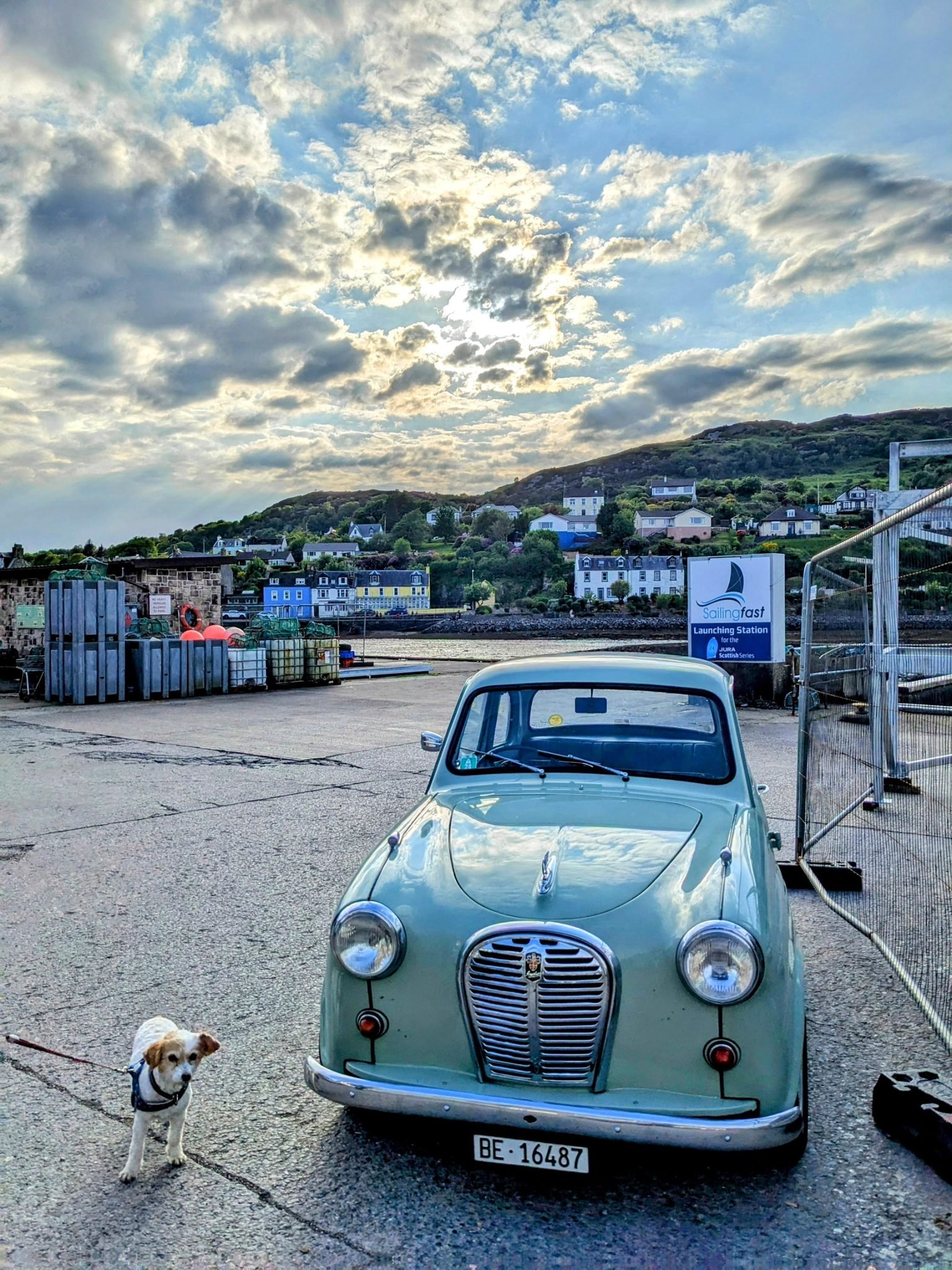
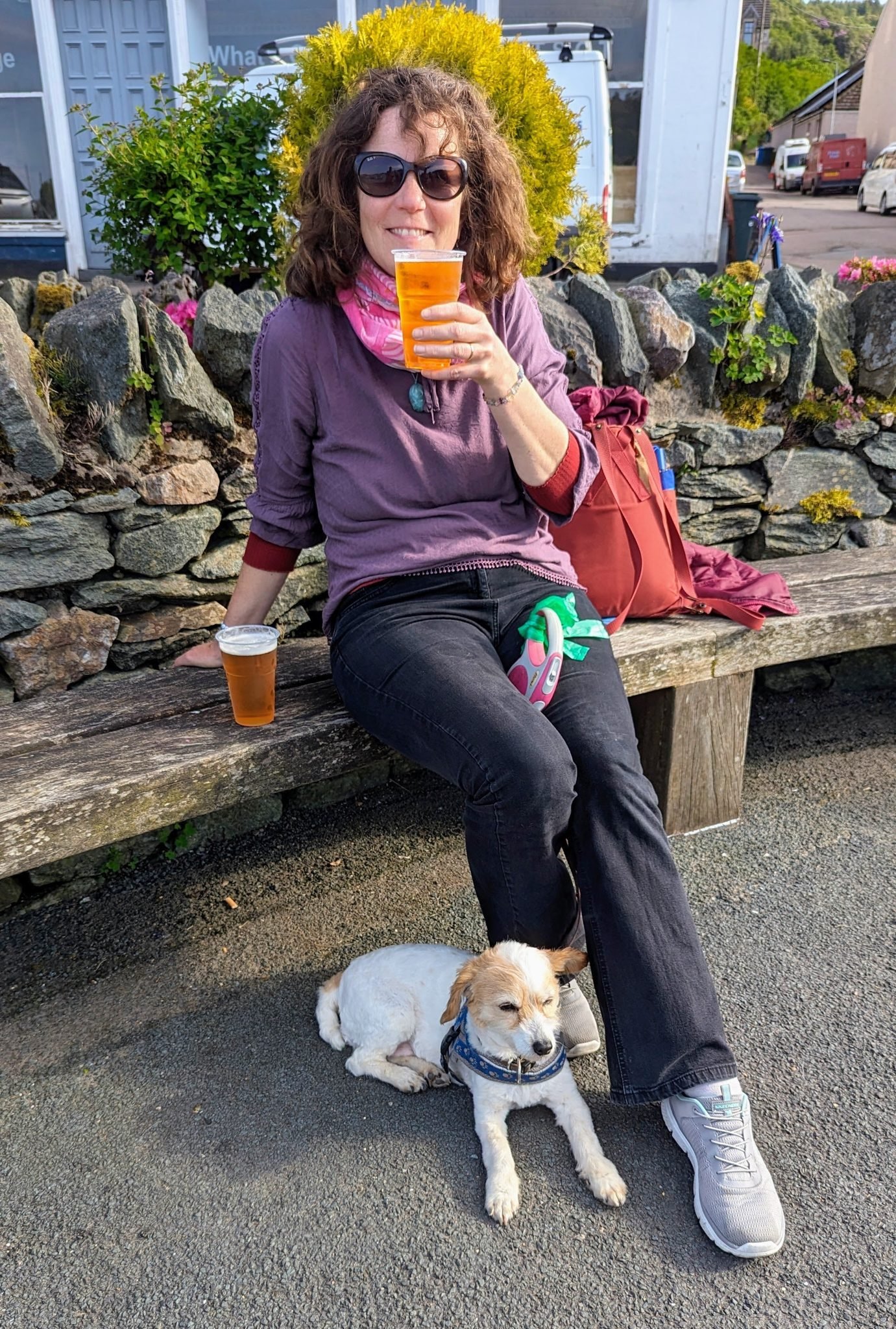
Half the joy of Tarbert is the little things — a vintage car on the quay, the old parish church, a pint on a bench with the dog, and giant gunnera leaves down the lanes.
🗺️ Map — our Tarbert walks (from GPS)
Our recorded tracks around Tarbert — the harbour, up to the castle, and the coast/hill paths.
Best time to visit
Late spring to early autumn for the long light, the boats and the reflections; Tarbert’s Seafood Festival (summer) is a great time to be here. It’s a lovely year-round harbour town, and even a grey day has that painted-house cheer.
Combine it with
- Ferry to Cowal (Portavadie) → Dunoon & Cowal.
- Kennacraig (5 miles) → ferries to Islay & Jura.
- South into Kintyre → Skipness, Campbeltown and beyond.
- North up Loch Fyne → Inveraray, the Crinan Canal and Mid-Argyll.
Reality notes
- ⛴️ Ferries: Tarbert–Portavadie (Isle of Cumbrae) is seasonal/limited — check timetables; Kennacraig for Islay/Jura, book vehicles ahead.
- 🏕️ Campsite: [name + facilities to confirm].
- 🏰 Castle: free, open ruin — short steep climb; mind uneven ground/edges.
- 🐕 Dogs: brilliant dog village — harbour, castle hill, coast paths (leads near roads/livestock).
- 🦟 Midges: west-coast summers — repellent handy.
- 🅿️ Parking: village car parks; busy on festival weekends.
Sources
- On-site: “The Royal Castle of Tarbert” interpretation board (Kevin’s photo)
- Tarbert Castle — Undiscovered Scotland
- Tarbert, Loch Fyne — Undiscovered Scotland