
Springbank Distillery, Campbeltown: The Whisky World’s Great One-Off
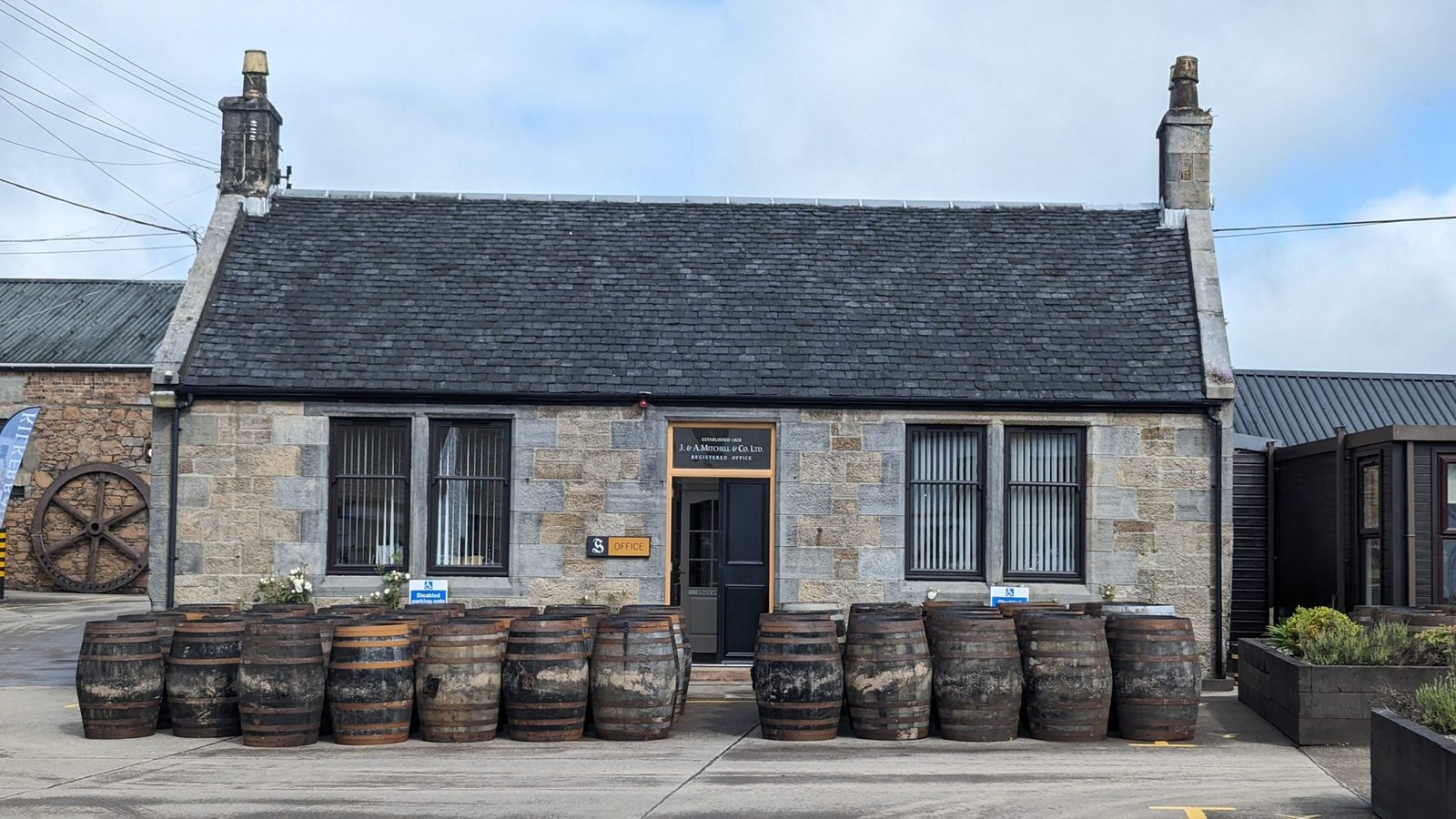
Overview — why Springbank is special
Of all the distilleries in Scotland, Springbank is the one the whisky obsessives revere most — and it’s right here in Campbeltown, at the far end of Kintyre. It’s famous for one remarkable thing: it does the entire whisky-making process on one site — from malting its own barley on traditional malting floors, through mashing, fermentation, distillation and maturation, all the way to bottling — nothing bought in, nothing sent away. It’s the only distillery in Scotland to do 100% of production in-house, the old way. We visited on our Campbeltown days, had a wander, and (of course) came away with a bottle.
A bit of history (sourced)
Springbank was founded in 1828 by the Mitchell family — on the site of an earlier illicit still worked by their forebears — and it’s still owned and run by the same family today, through J & A Mitchell & Co. That makes it one of Scotland’s oldest independent, family-owned distilleries, and it has never lost that old-school character: no big marketing, no corporate owner, just whisky made slowly and traditionally.
At Campbeltown’s late-1800s peak this was the whisky capital of the world, with 30-odd distilleries. Prohibition and overproduction wiped nearly all of them out — but Springbank survived, and today Campbeltown is Scotland’s smallest whisky region, with just three working distilleries: Springbank, Glengyle (Kilkerran) and Glen Scotia.
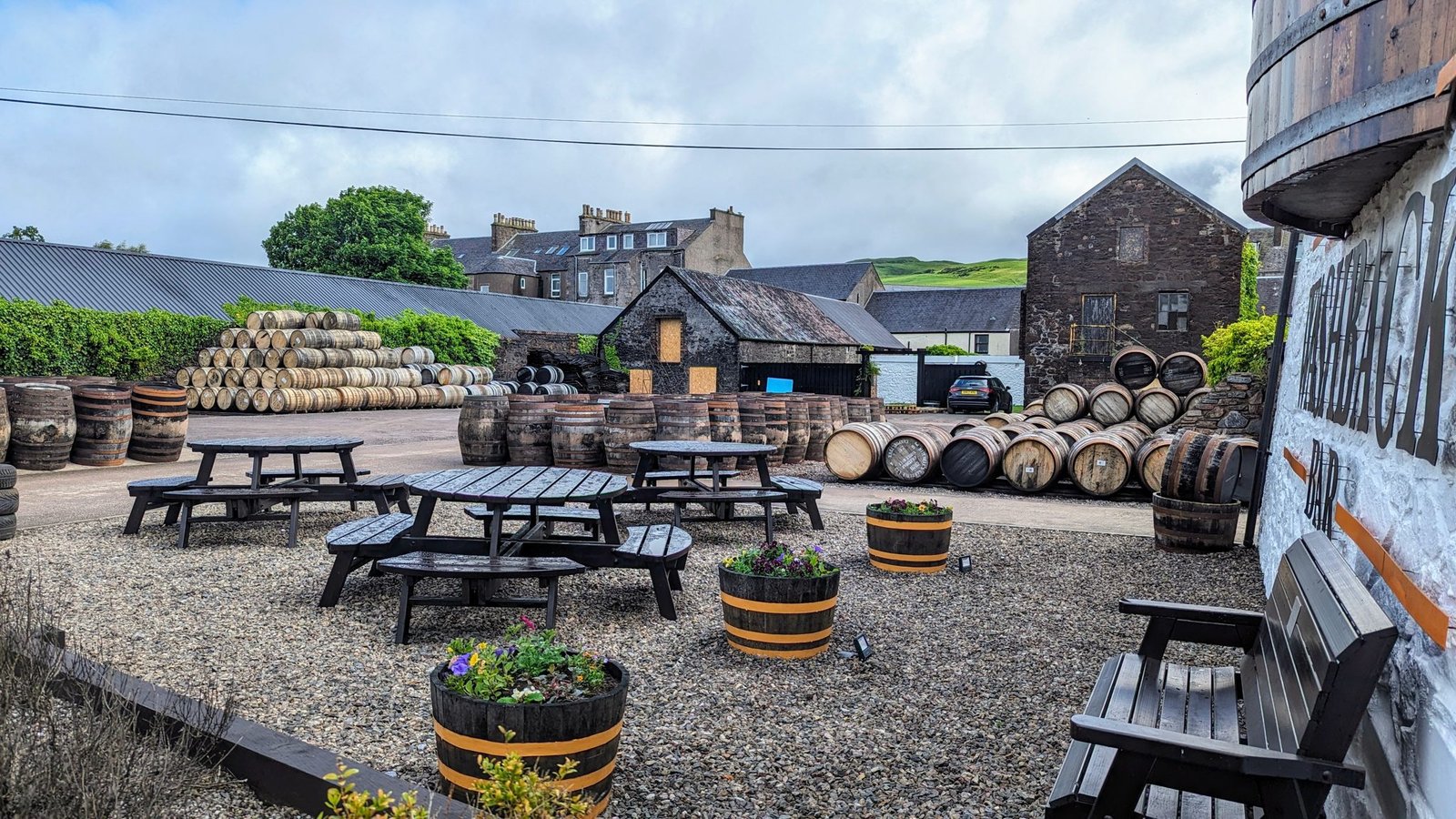
The unique way it’s made
This is the bit that makes whisky lovers travel a long way down the A83:
- Its own floor maltings — Springbank is the only distillery to malt 100% of its barley on-site, by hand, turning it on traditional malting floors.
- Three different single malts from one distillery — almost unheard of, each made a different way:
– Springbank — distilled a distinctive “two-and-a-half times,” lightly peated. The flagship, complex and coastal.
– Longrow — heavily peated, double-distilled — Springbank’s own smoky style.
– Hazelburn — unpeated, triple-distilled, softer and lighter.
- Old methods kept alive — direct-fired still, worm-tub condensers, dunnage warehouses — the traditional kit most distilleries replaced decades ago.
- Bottled on-site — even the bottling is done here, by hand, which is genuinely rare.
The result is releases that are allocated and in huge demand — bottles often sell out the day they arrive.
The whiskies & what they cost (indicative — always check current prices)
Please note: whisky prices move constantly and Springbank is heavily in demand, so shop prices often sit above official RRP. Treat these as rough guides only and check the distillery shop, Cadenhead’s, or a specialist retailer for the real figure.
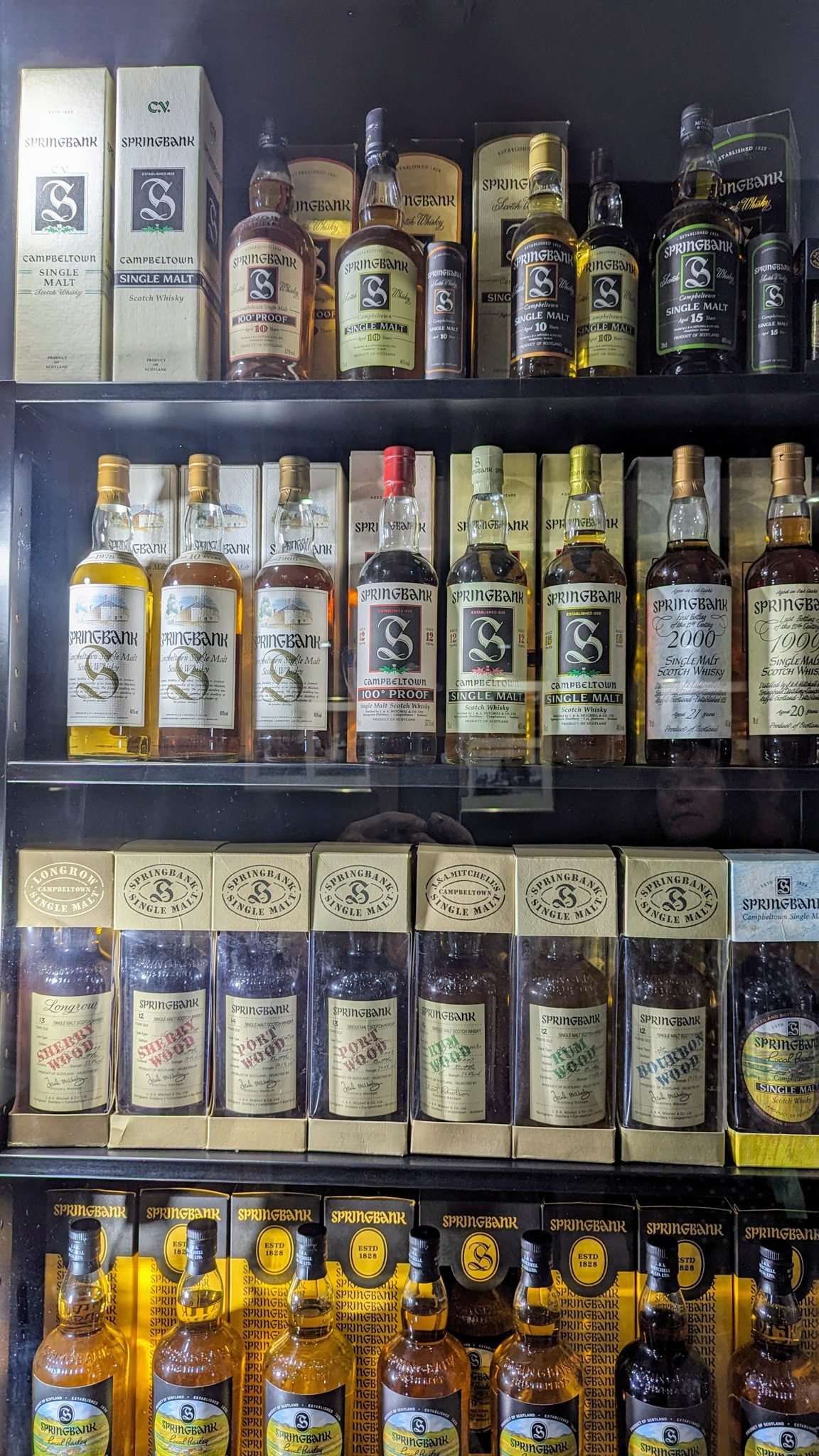
- Springbank 10 Year Old — the entry point; indicative ~£45–£60.
- Springbank 15 Year Old — indicative ~£100–£150.
- Springbank 18 / 21 Year Old — allocated; indicative ~£150–£300+.
- Longrow (peated) & Hazelburn (triple-distilled) — core expressions typically ~£45–£90.
- Limited / Local Barley / cask-strength releases — hundreds of pounds, and much more on the secondary market.
- The seriously expensive end: old and vintage Springbank is genuinely collectible — rare old bottlings change hands for thousands (a famous Springbank 1919 is one of the most valuable Scotches ever sold). [Kevin — I’ve kept these as ranges, not exact figures; want me to firm up the exact current core-range prices from the distillery site?]
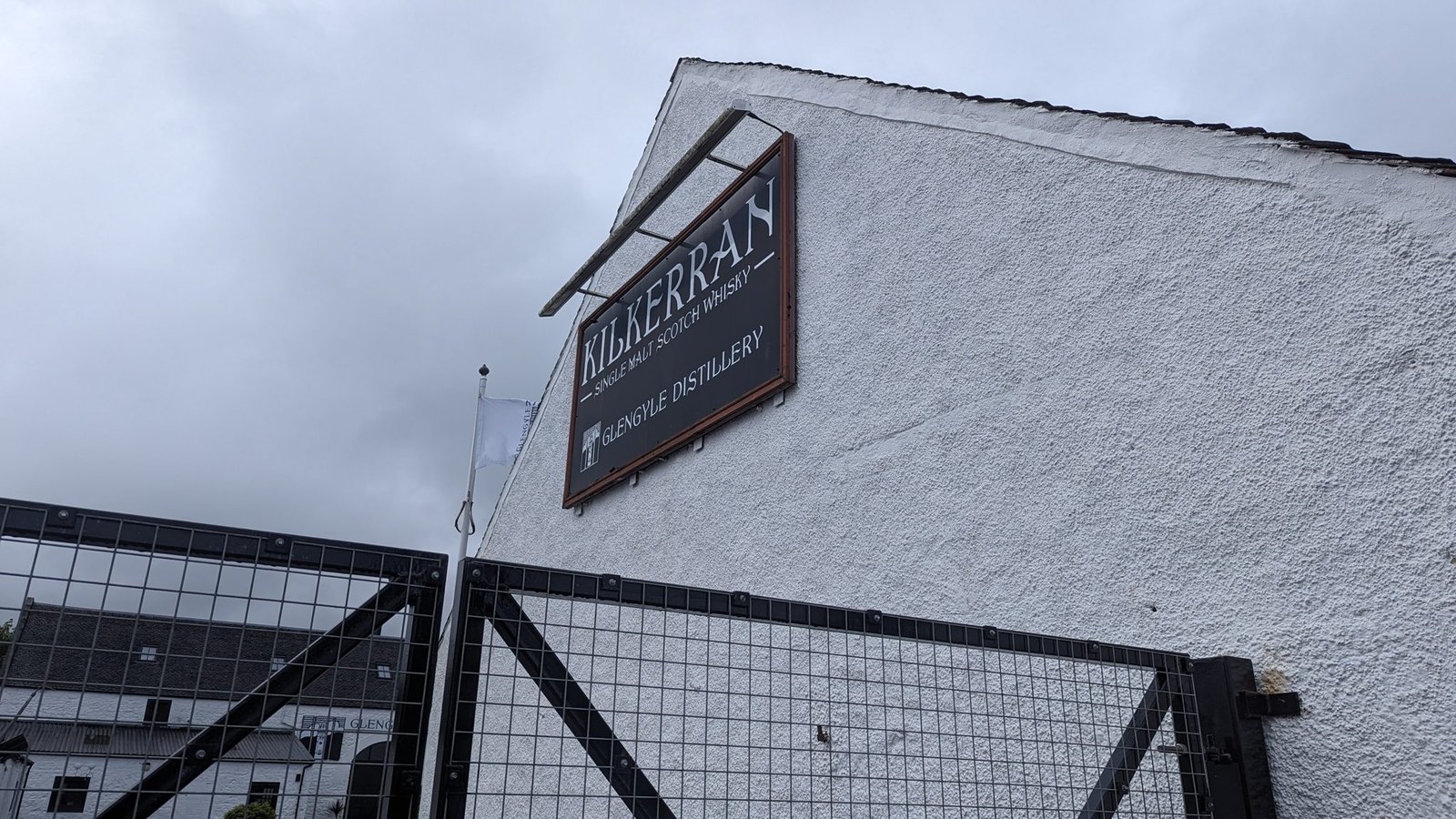
Glengyle — the Kilkerran distillery (same family)
Just along the way, the Mitchell family also revived Glengyle Distillery (originally 1872, reopened 2004) — but because the “Glengyle” name was already used for a blend, its single malt is sold as Kilkerran. Same traditional ethos, and another Campbeltown malt worth seeking out — and it’s where one of our two bottles came from: a Kilkerran Campbeltown Heavily Peated, a cask-strength 59.2% and a proper big smoky dram (this was the smoked one) — a twice-a-year batch release (~45 PPM, mostly bourbon casks) that currently sells for around £50 at UK retailers (indicative — batch and price vary). Our second bottle was a Glen Scotia 15 Year Old from the town’s third distillery — so we came home with one from each side of Campbeltown’s whisky family.
Cadenhead’s — the oldest independent bottler
The same family also owns Wm Cadenhead (founded 1842) — Scotland’s oldest independent bottler — with its shop in Campbeltown. Worth a look for unusual single-cask bottlings you won’t find elsewhere.
Visiting — tours & the shop
Springbank runs tours (they’re popular and old-school hands-on — book well ahead), and the shop sells the current range plus distillery-exclusive bottlings. Don’t drink and drive — if you’re touring in the van, use the driver’s-dram service or buy to take away.
Best time to visit
Distillery and shop are year-round; tours are limited and sell out, so book ahead. Pair it with a day in Campbeltown and the other two distilleries.
Combine it with
- Campbeltown — the “Wee Toon”, harbour and base.
- Glen Scotia — the third surviving Campbeltown distillery, in the middle of town.
- Davaar Island — the tidal island and cave painting.
- Southend & Dunaverty — the wild southern tip.
Reality notes
- 🥃 Tours: limited & popular — book well ahead.
- 💷 Prices: indicative only — Springbank is in high demand; check current prices.
- 🚐 Driving: don’t drink and drive — driver’s dram / buy to take away.
- 🛒 Shop: current range + exclusives (Cadenhead’s shop too).
Sources
- On-site: Springbank / Cadenhead’s shop and distillery buildings (Kevin’s photos)
- Springbank Distillery — official site
- Springbank Distillery — Wikipedia
- Cadenhead’s