
Keil & Southend: Where St Columba First Set Foot in Scotland
Overview — the saint’s landing place
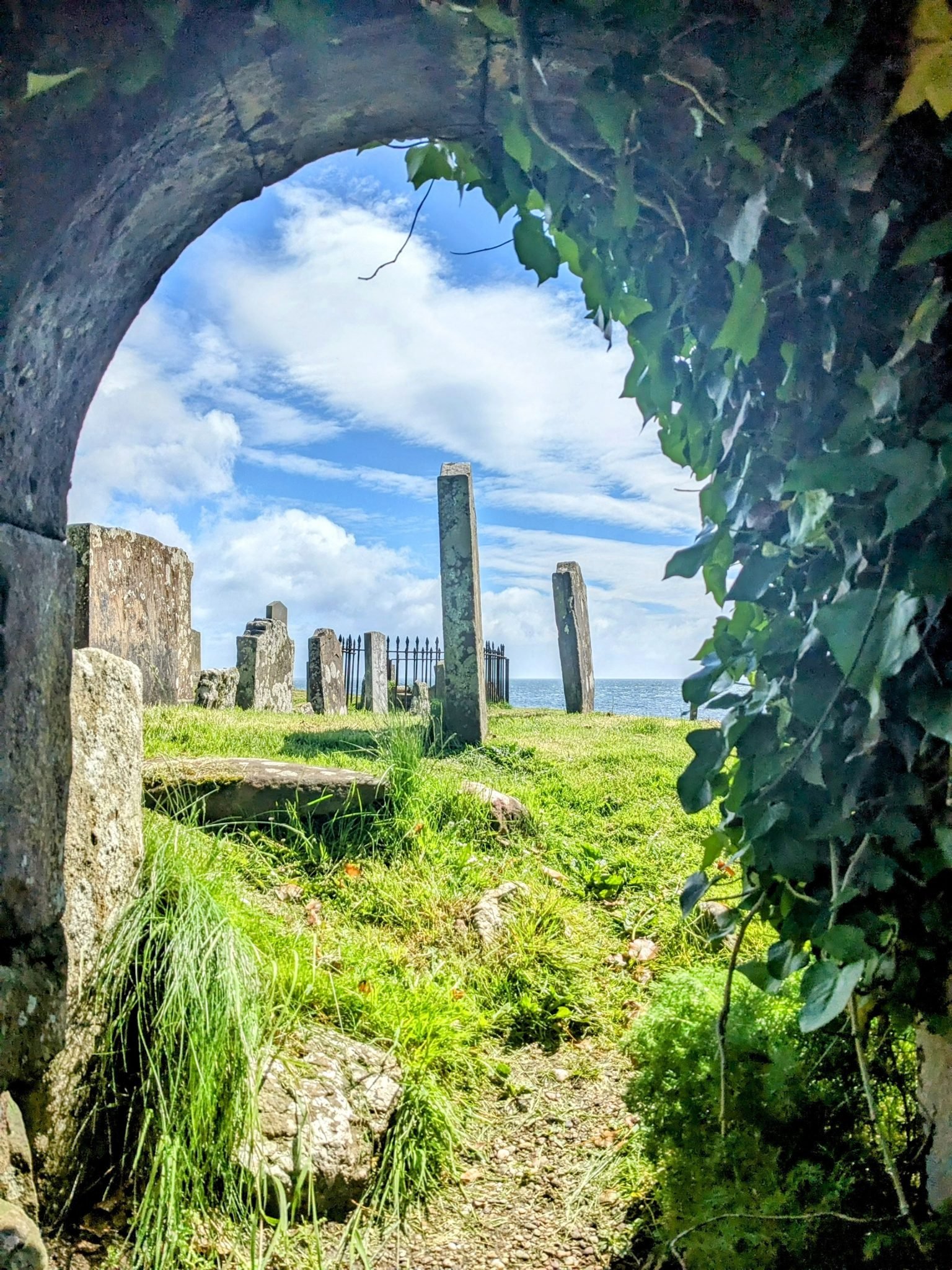
At the very southern tip of Kintyre, a mile or so west of the village of Southend, is one of the most quietly significant spots in Scotland. This is Keil — from the Gaelic Kilcolmkill, “Columba’s cell” — where tradition holds that St Columba first set foot in Scotland in AD 563, at the start of his exile from Ireland, before he ever reached Iona. A ruined chapel, a pair of ancient carved footprints, sea caves and a holy well cluster here on a wild, flower-strewn coast — and we watched one of the best sunsets of the whole trip roll in over the sea toward Ireland.
Where it is (and where on the route)
Keil is just west of Southend, at the southern tip of Kintyre, near the Mull of Kintyre — the far end of Stage 5 of the Argyll Coastal Route, reached down the B842 from Campbeltown.
The history (sourced)
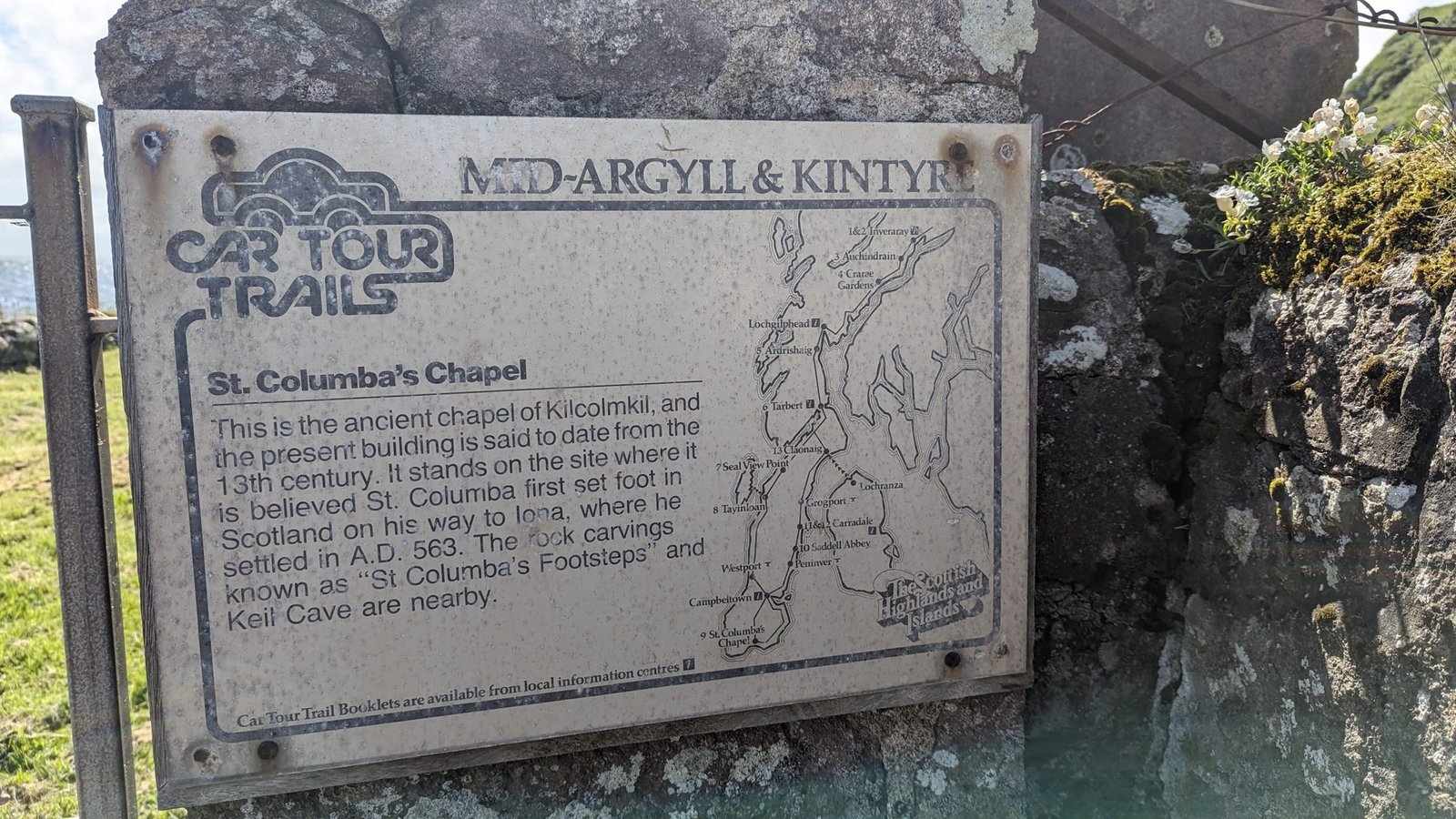
- St Columba, 563. It’s well documented that Columba landed in Kintyre in 563 on leaving Ireland. Because his exile was meant to put Ireland out of sight, he probably didn’t stay long — and he likely came ashore a little to the east at the Dalriadic fortress of Dunaverty, rather than exactly at Keil. But Keil has carried the tradition of his arrival for centuries.
- St Columba’s Footprints. On a rock outcrop above the chapel are two carved footprints. One is genuinely ancient (probably an early inauguration or ritual footprint); the second was carved in 1856 by a local mason, Daniel McIlreavie — who added the (incorrect) date of 564.
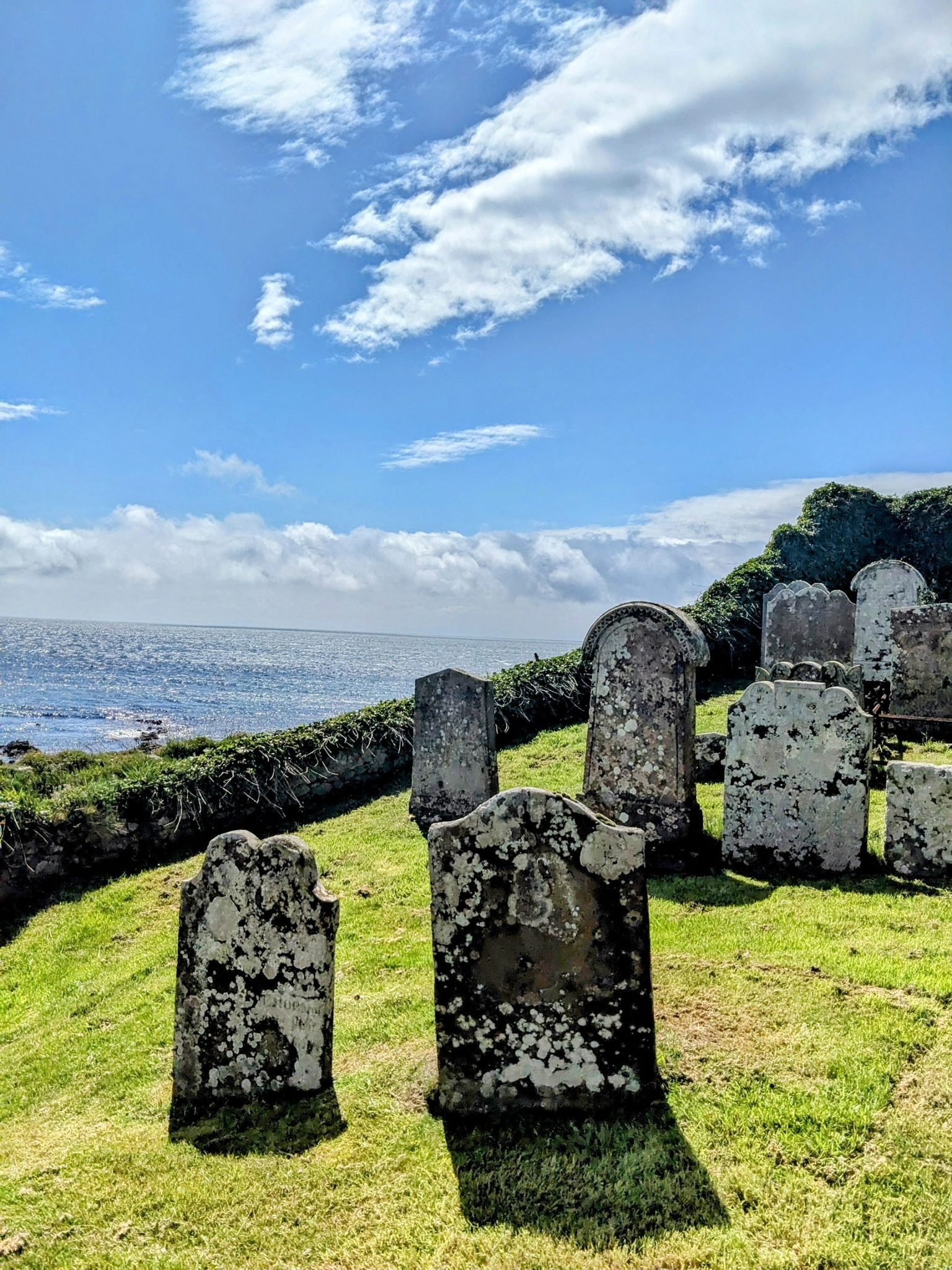
- The chapel. Ruined St Columba’s Chapel (Kilcolmkill) dates mainly from the 13th century — the east end late 1200s, the west end 1400s/1500s — set within Keil cemetery, with old carved gravestones.
- The cluster. Four sites sit together: the chapel, the footprints, a holy well said to have been established by Columba, and the Keil Caves nearby.
What you’ll see & do
- The chapel & graveyard — atmospheric ruins and carved stones.
- St Columba’s Footprints — up on the rock outcrop (we’ve flagged whether we got a close-up — Kevin?).
- Keil Caves — sea caves used since prehistory, a short walk on.
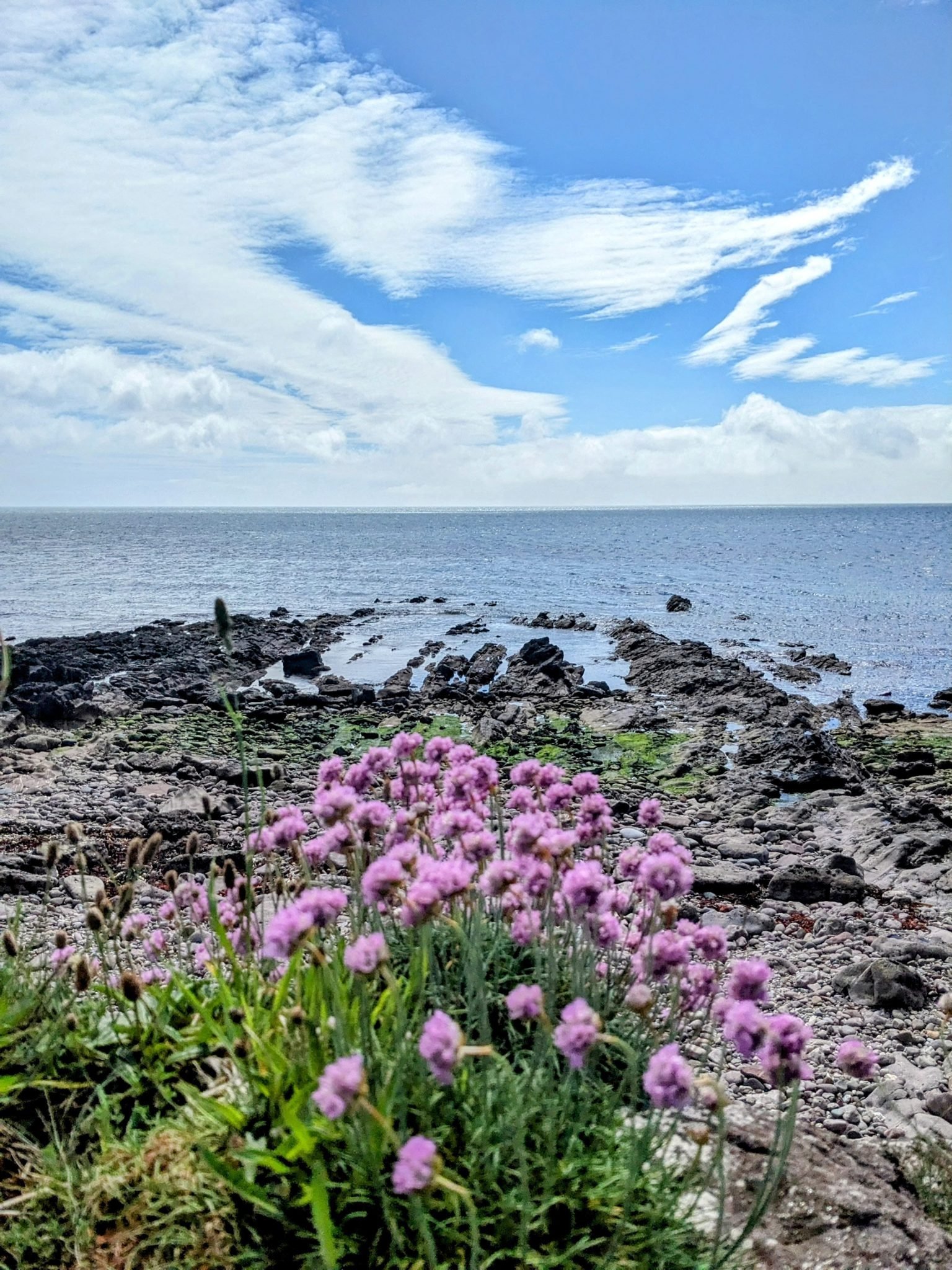
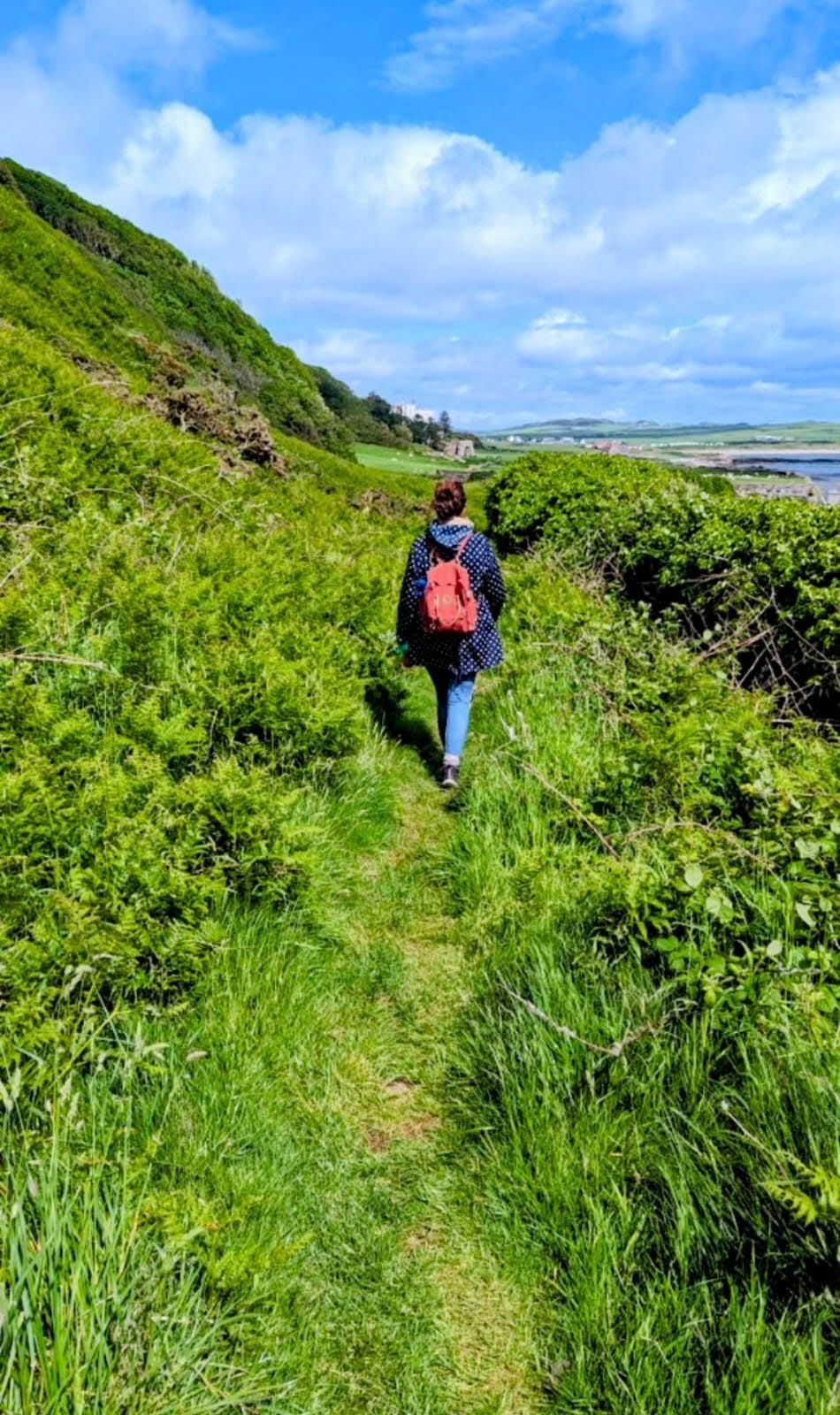
- The coast — a wild, rocky shore blazing with sea pinks (thrift) in early summer, islands offshore, and a proper end-of-the-world feel.
- Sunset — this west-facing tip is made for it.
🗺️ Map — our route at Keil (from GPS)
Best time to visit
Late spring to summer for the sea pinks, the long light and those sunsets; the chapel and coast are atmospheric year-round. A calm, clear evening is the dream.
Combine it with (southern Kintyre — provisional)
Southend is the gateway to the Mull of Kintyre (the famous lighthouse road), with Dunaverty and Machrihanish nearby, and Campbeltown a short drive north. [Kevin — did you do the Mull of Kintyre / Dunaverty? Tell me and I’ll build them.]
Reality notes
- ⛪ Chapel/graveyard: open, respectful access — mind uneven ground.
- 🌊 Coast & caves: rocky and tidal — sensible footwear; mind the tide near the caves.
- 🐕 Dogs: fine on a lead (livestock, cliffs, graveyard).
- 🦟 Midges: possible on still summer evenings.
- 🅿️ Parking: small car park near Keil — [confirm].