
Castle Sinclair Girnigoe: Scotland’s Most Dramatic Cliff Ruin
Overview — a castle on the edge of everything
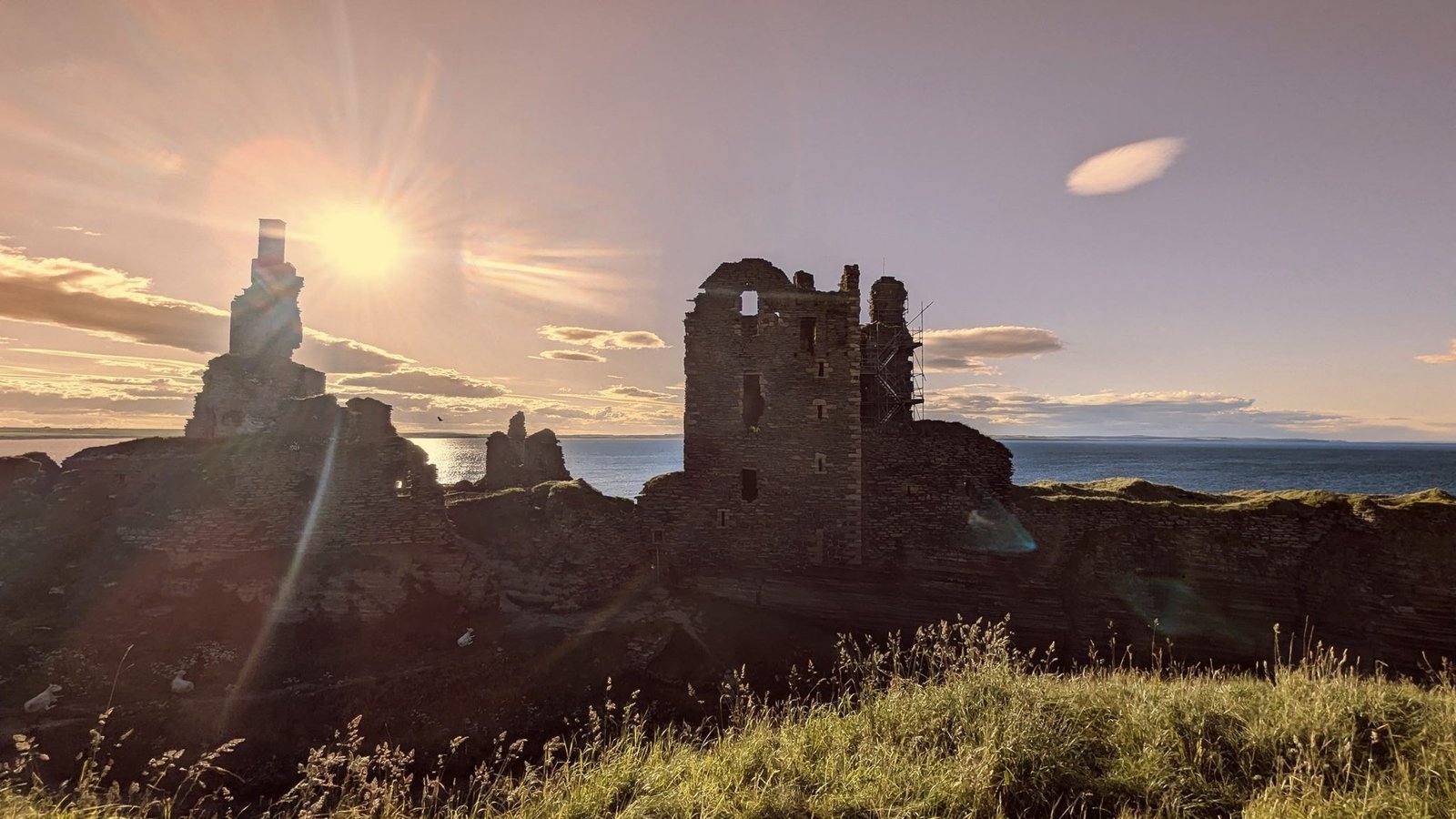
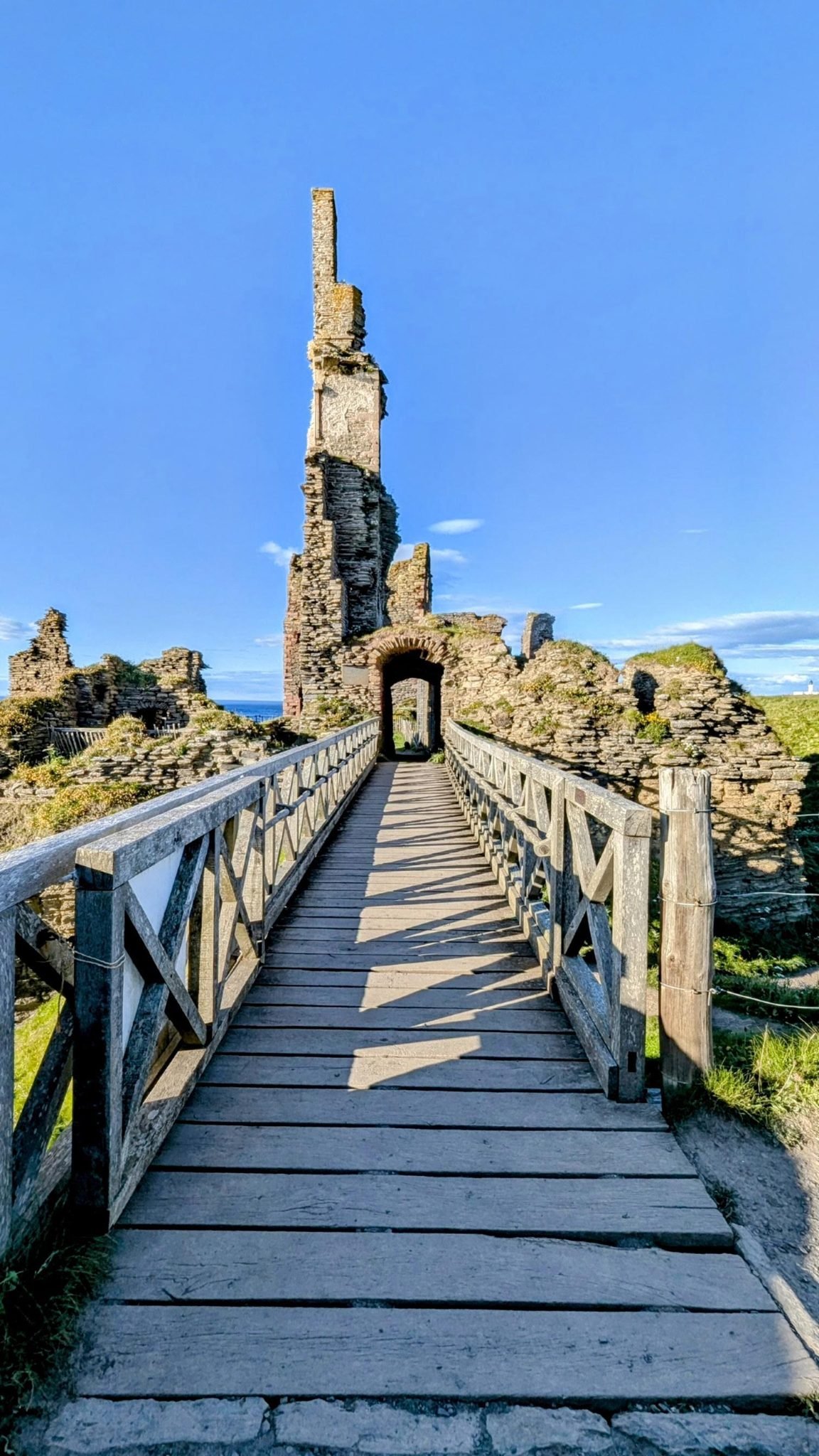
Some castles are impressive. Castle Sinclair Girnigoe is theatrical. It stands on a narrow finger of sea-cliff jutting into the Moray Firth at Noss Head, just north of Wick — a jumble of shattered towers and walls perched over gullies where the sea churns far below. A wooden bridge carries you across a deep rock-cut ditch to the gatehouse, exactly where a drawbridge once was. Come at sunset, as we did on our first evening in the far north, and it’s simply stunning — the walls glowing gold, the sea silver, sheep grazing the headland, and hardly another soul about.
For our money it’s one of the best free stops on the entire NC500, and far less visited than it deserves.
Where it is (and where on the route)
Castle Sinclair Girnigoe sits at Noss Head, about 3 miles north-east of Wick, off the A99 — firmly in NC500 Section 3 (Wick → John o’ Groats). You park at the Noss Head lighthouse car park and walk out across the headland to reach it.
The history — a Sinclair stronghold, a dungeon and a siege
This was the great stronghold of the Sinclair Earls of Caithness. Confusingly, it was long thought to be two castles on the one rock, and you’ll still see both names used:
- Castle Girnigoe — the older, taller part, built in the 15th century (likely around the 1470s–80s by William Sinclair, 2nd Earl of Caithness).
- Castle Sinclair — a newer range/gatehouse added in the early 1600s (around 1606 by George Sinclair, 5th Earl).
Today it’s understood as one continuously developed castle, and officially called Castle Sinclair Girnigoe.
Its history is as dramatic as its setting. In one grim episode, George Sinclair, 4th Earl of Caithness, imprisoned his own son and heir, John (the “Master of Caithness”), in the castle dungeon — where, after years in captivity, he died in 1577 (tradition says driven mad and starved; a dark tale even by Scottish-castle standards).
The castle met its end in the long, bloody feud over the earldom of Caithness between the Sinclairs and the Campbells of Glenorchy. After the Campbells took control, George Sinclair of Keiss retook the castle by force in 1690 — and in the fighting it was wrecked. It was never lived in again, and has stood a ruin ever since.
In modern times the Clan Sinclair Trust has cared for and consolidated the ruin (you’ll spot stabilising scaffold in places), rescuing it from collapse. It’s a scheduled monument, freely open, and one of the north’s great sights.
What you’ll actually see and do
- The approach walk across Noss Head — big skies, sea cliffs, and the castle revealing itself.
- The bridge and gatehouse — cross into the heart of the ruin (watch the drops).
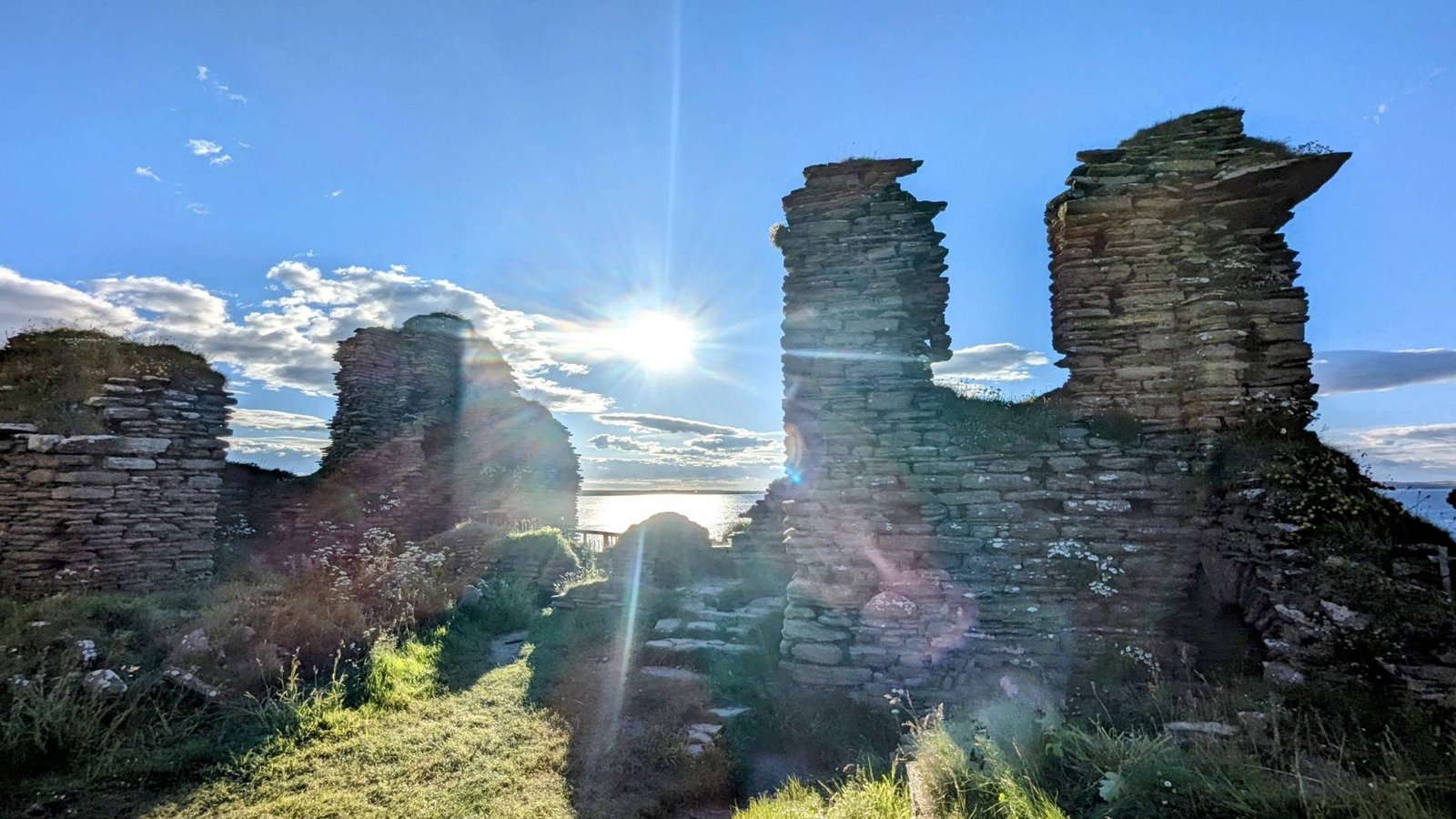
- The towers and gullies — layer upon layer of Sinclair building on a knife-edge of rock.
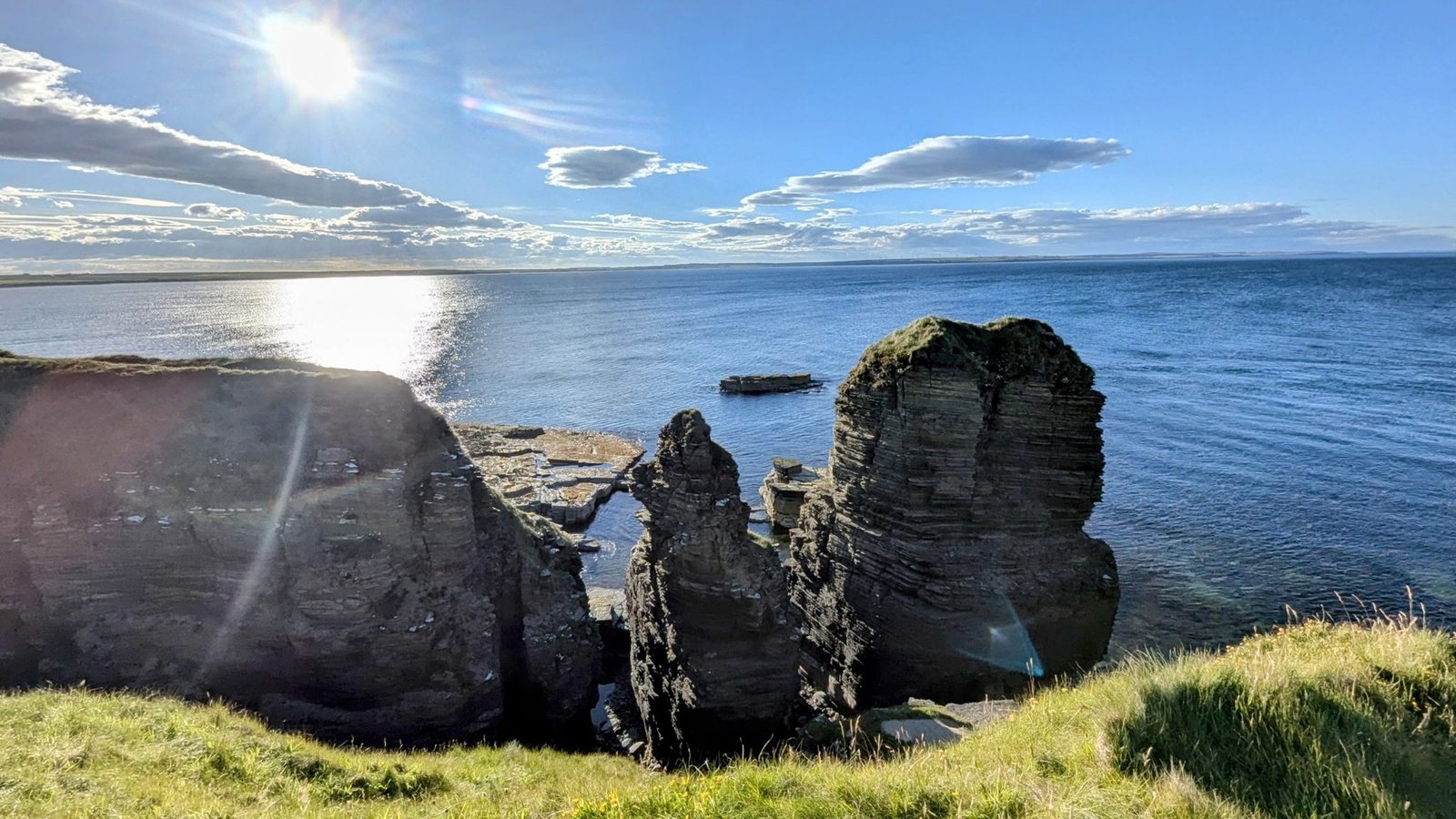
- The sea stacks and cliffs of Noss Head — flagstone stacks and clear water, superb at golden hour.
- Noss Head Lighthouse — a Stevenson light of 1849 out on the point.
Best time to visit
Golden hour is the one — this is an evening castle, catching the low northern sun beautifully (in June that’s very late; spring/autumn sunsets are easier). It’s an exposed headland, so pick a settled evening and bring a layer. The open coast keeps midges away.
Getting there, parking & overnighting
- Park at the Noss Head lighthouse car park (free), then walk out to the castle — around 10–15 minutes across the headland.
- 🌙 Overnight — and it’s a stunner. The Noss Head car park is one of our favourite overnight stops on the whole east coast: quiet, level, and with those huge sea-and-castle views right outside the window. We wild-camped here in the 594 and woke up to the castle at first light — hard to beat. Do it responsibly: arrive late, leave early, leave no trace, and don’t block the lighthouse access or the path to the castle. (As ever, Scotland’s Outdoor Access Code really covers tents rather than motorhomes, so clifftop van-nights are a courtesy-and-common-sense thing.)
- Nearest services: Wick, 3 miles, for fuel, food and shops.
- 🚐 Vehicle: minor road out to Noss Head; fine for cars, campervans and mid-size motorhomes like our 594 — big rigs should check turning/space.
Reality notes
- ⚠️ Serious drops: this is an unfenced cliff ruin with deep gullies and sheer edges. Stunning, but genuinely dangerous — keep well back, mind children and dogs, and don’t climb on the walls.
- 🌉 The bridge & steps can be slippery when wet.
- 🐕 Dogs: on a lead — cliffs, sheep and drops.
- 🦟 Midges: low — open, breezy headland.
- 🏰 Respect it: scheduled monument, lovingly stabilised by volunteers — take only photos.