
Linlithgow: Mary Queen of Scots’ Birthplace on a Loch
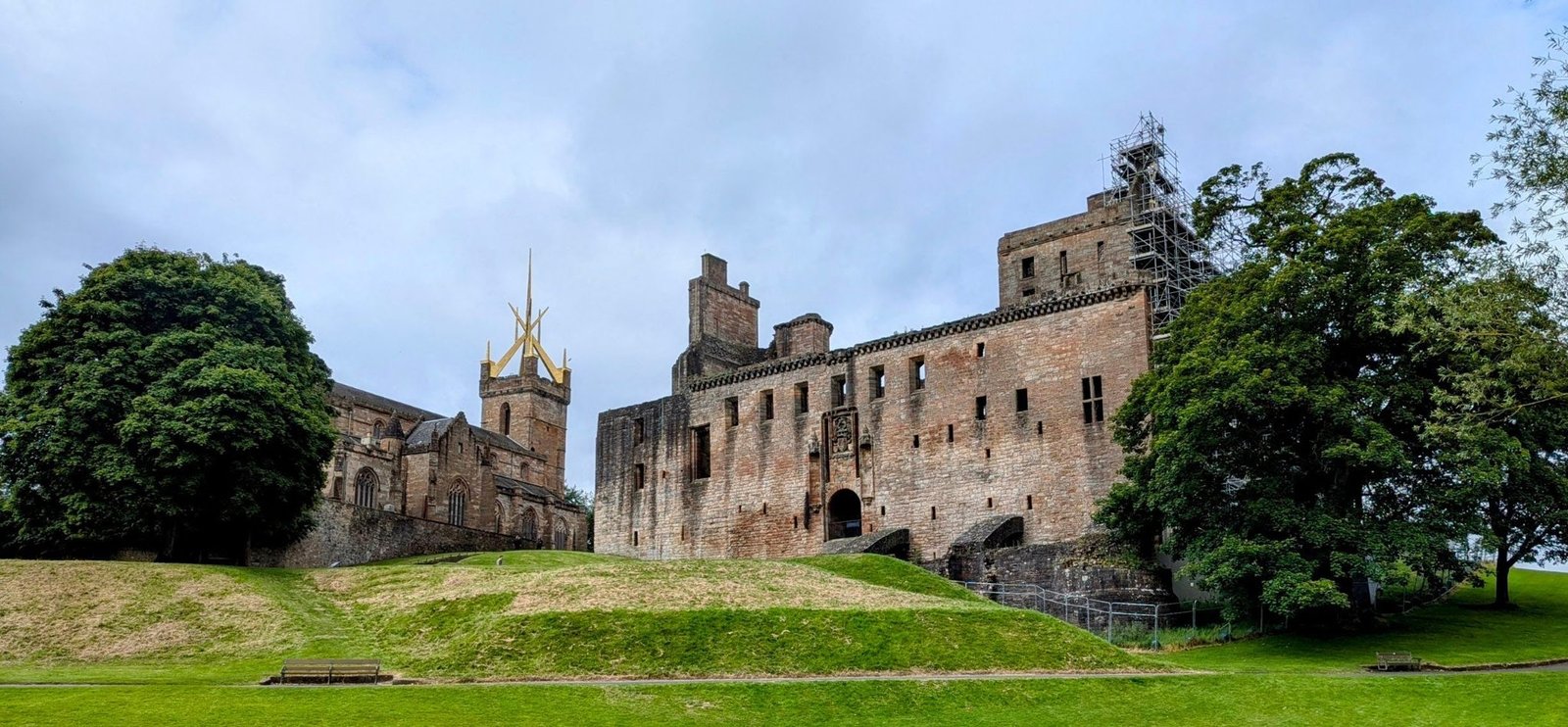
Overview — a royal ruin on the water
Linlithgow is one of those places that stops you in your tracks. Right in the middle of a busy West Lothian town, on a green mound above a loch, stand the roofless walls of one of the grandest royal palaces in Scotland — the birthplace of Mary, Queen of Scots. Beside it rises the medieval church of St Michael’s, crowned with an extraordinary modern golden spire. Wrap a loch-side walk, a historic High Street and good coffee around all that, and you’ve got a near-perfect day out — and it’s an easy hop from Edinburgh.
Where it is (and where on the route)
Linlithgow sits in West Lothian, midway between Edinburgh (~20 miles east) and Falkirk/Stirling to the west. On the Grand Tour it’s Stage 2, part of the run between Edinburgh, the Forth and Stirling. Handily, it has excellent train links (see Getting There) — genuinely one of the easiest historic day-trips in central Scotland.
Linlithgow Palace — birthplace of a queen
For the Stewart kings and queens, Linlithgow Palace was a favourite home — a pleasure palace as much as a fortress, built around a great courtyard on the loch shore. James V was born here in 1512, and, most famously, so was Mary, Queen of Scots, in 1542.
At the heart of the courtyard stands the beautiful carved King’s Fountain, commissioned by James V around 1538 and reckoned to be the oldest surviving fountain in Britain — it once ran with wine for royal celebrations. Around it rise the ruined ranges of the royal apartments, the Great Hall and the chapel, riddled with turnpike stairs, deep window seats and views out over the loch.
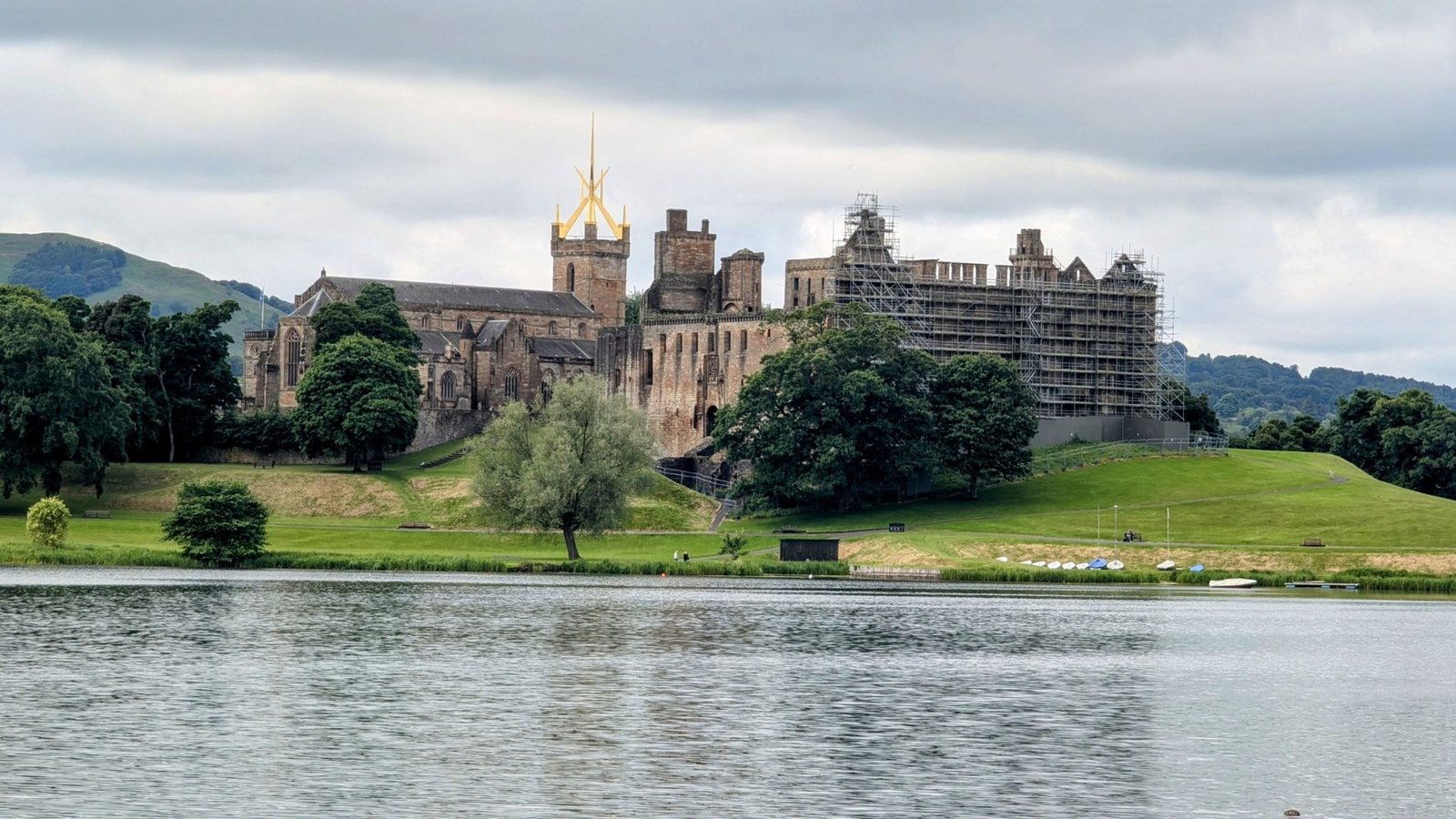
Its golden age ended abruptly: in 1746, during the Jacobite rising, government troops quartered in the palace, and fire gutted it. It’s been a magnificent ruin ever since, now cared for by Historic Environment Scotland.
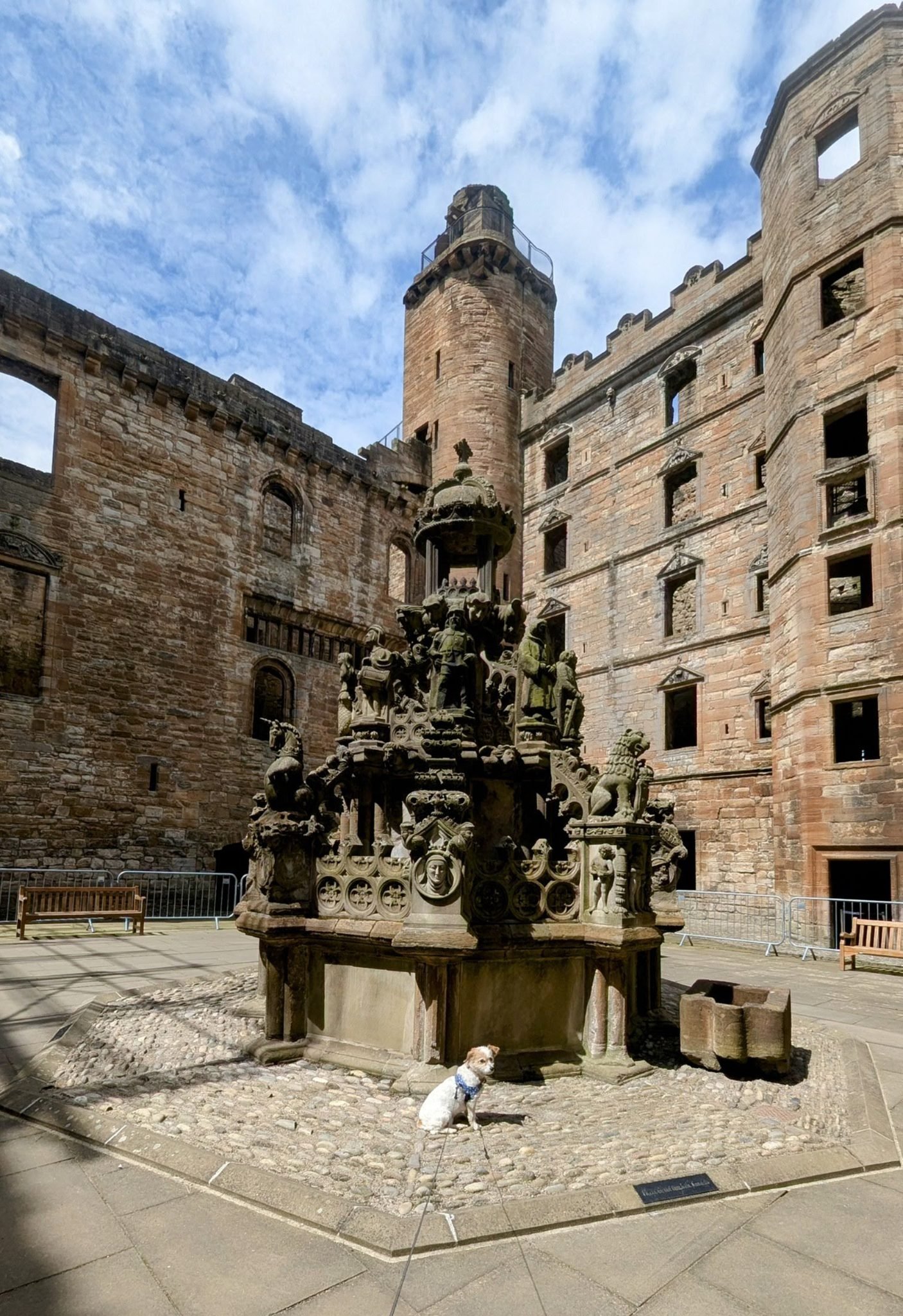
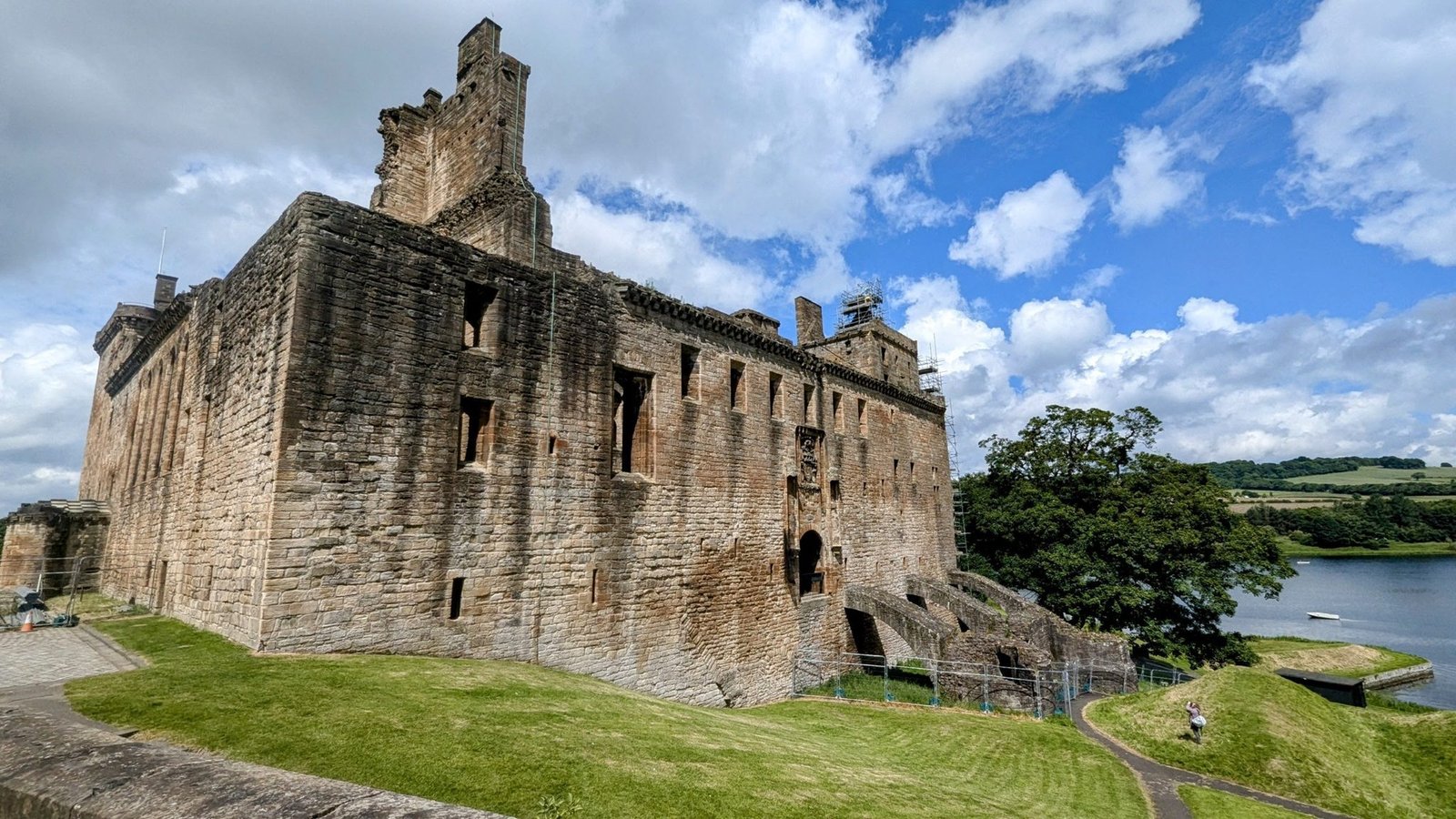
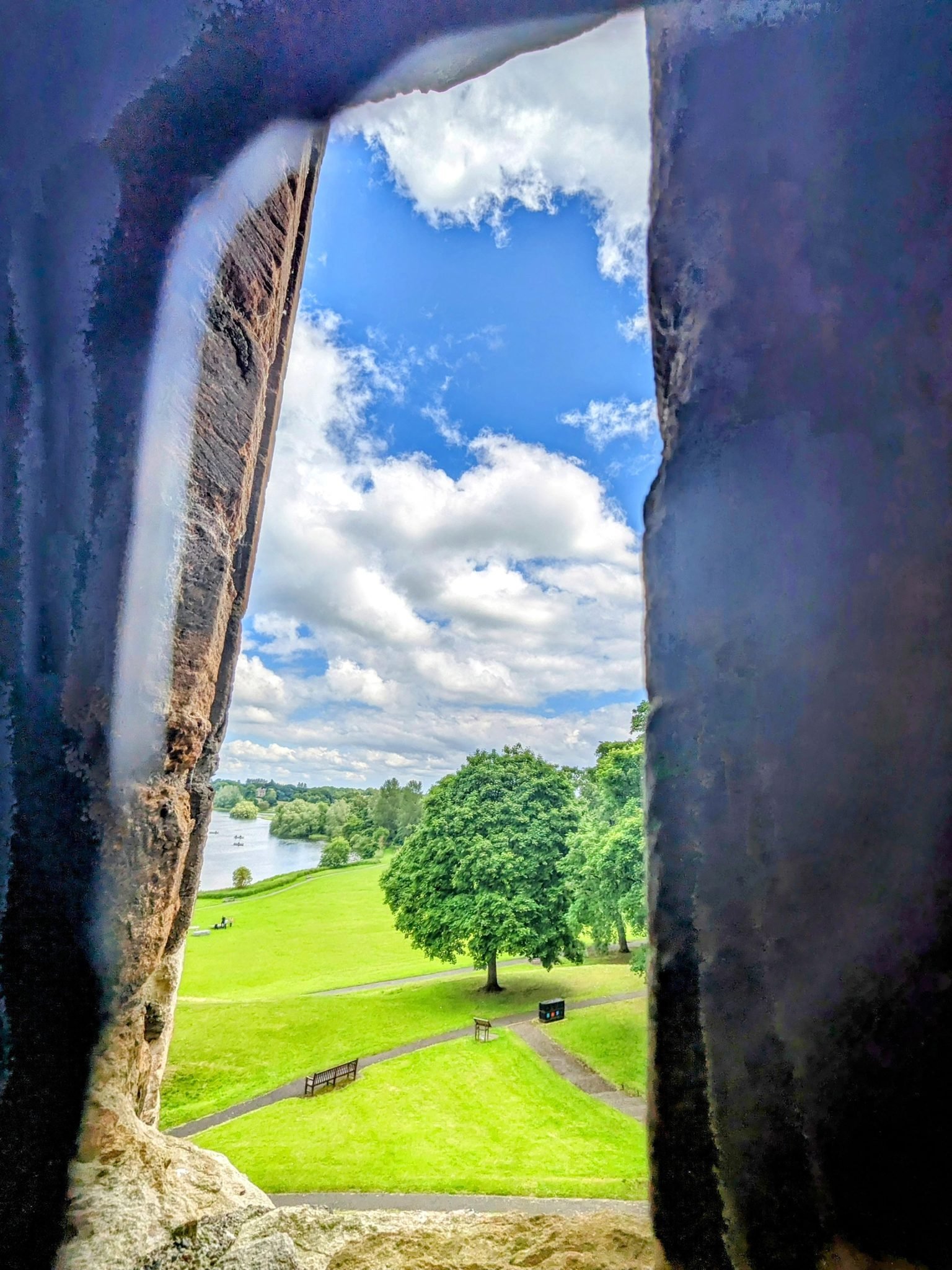
⚠️ Check access before you go: like several Historic Environment Scotland castles, Linlithgow Palace has had masonry safety works and periods of restricted or partial access (you’ll see it in some of our photos). Check the HES website for current opening before travelling.
St Michael’s Church — the crowned kirk
Right beside the palace stands St Michael’s Parish Church, one of the largest and finest medieval parish churches in Scotland, where Scottish royalty once worshipped. Its most striking feature is modern: the old stone crown steeple was removed long ago, and in 1964 it was replaced by a bold aluminium “crown of thorns” spire that catches the light gold above the town. Inside, it’s all soaring Gothic arches and calm.
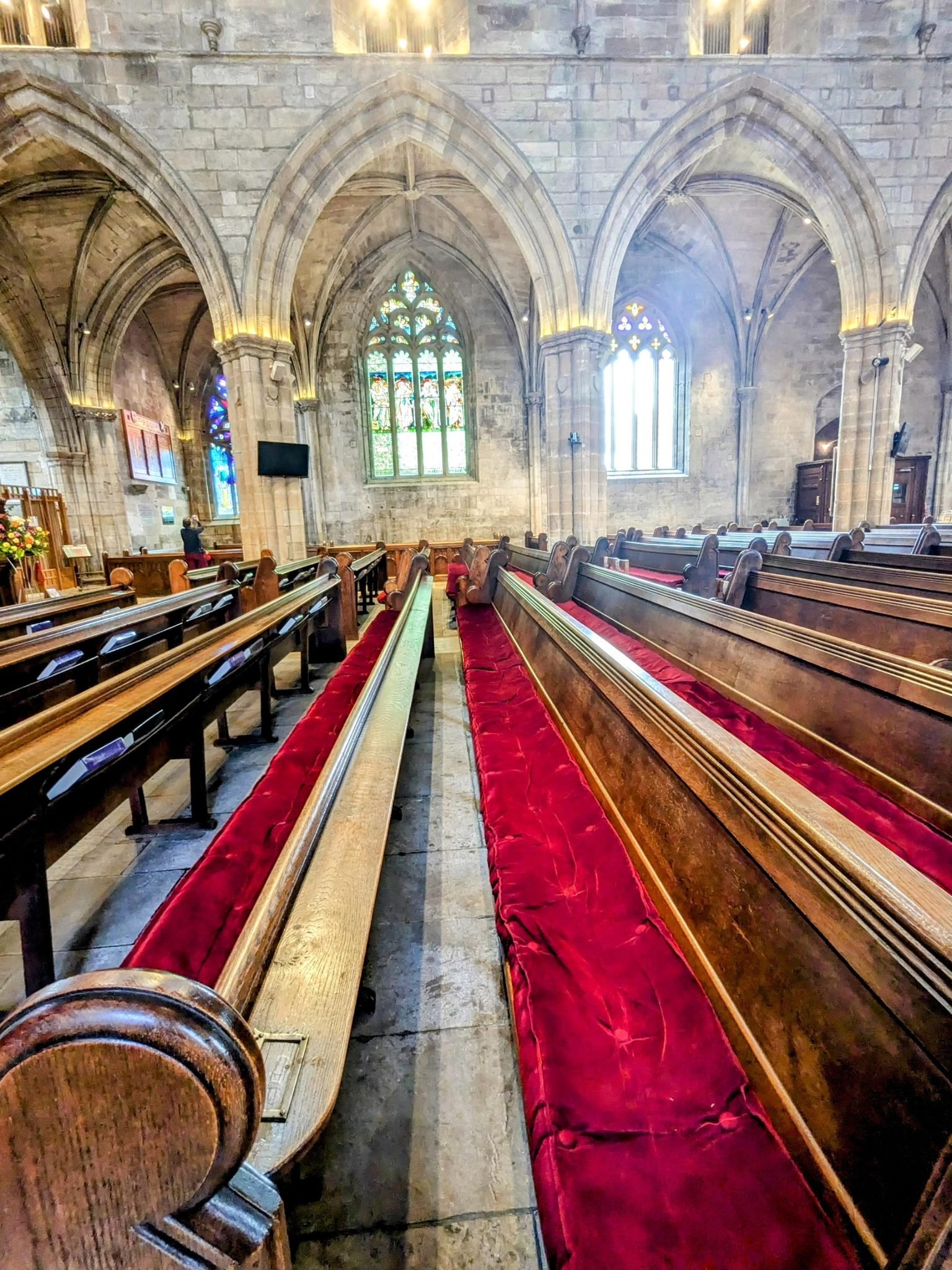
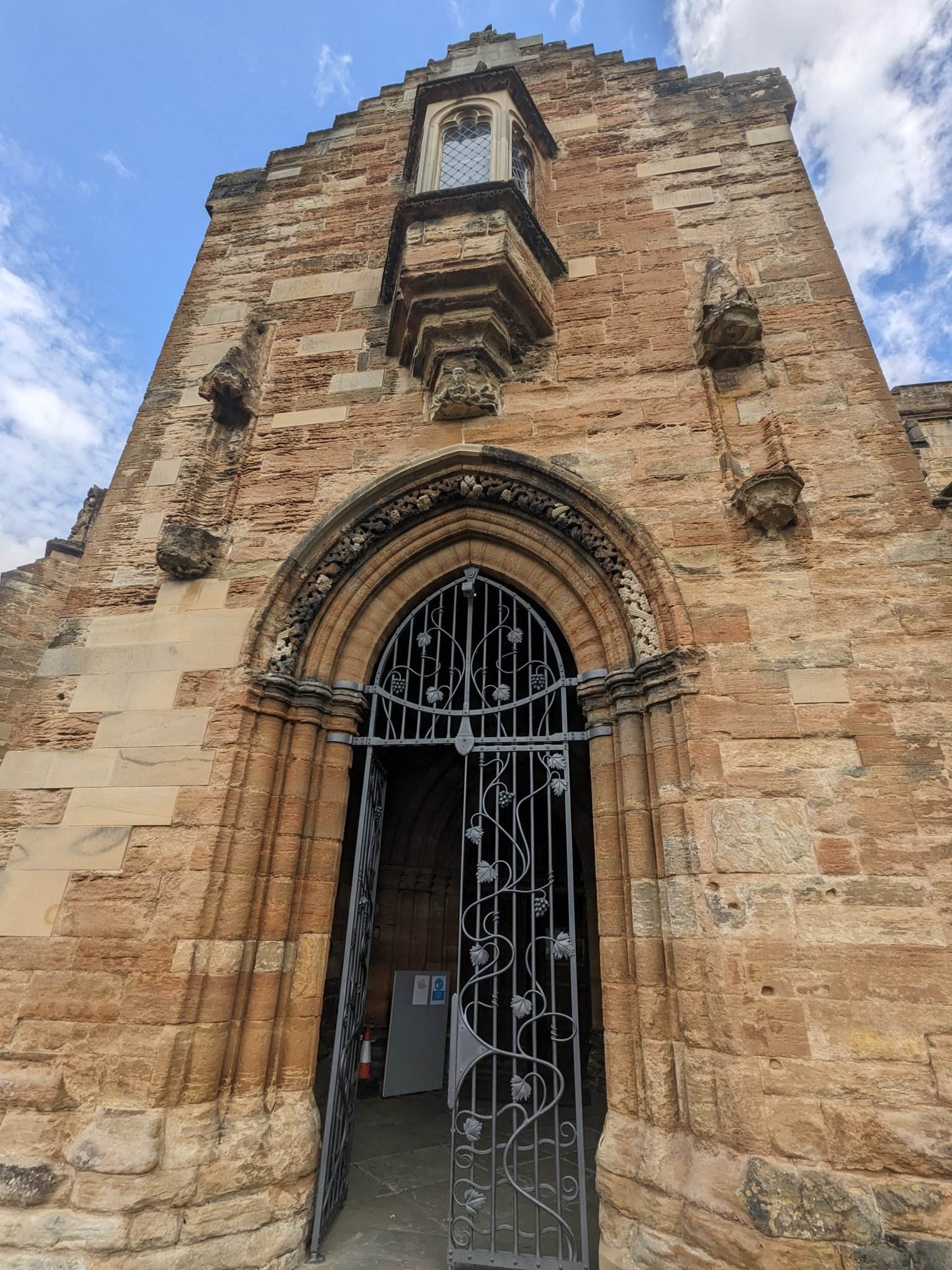
The Loch & the Peel — the best walk in town
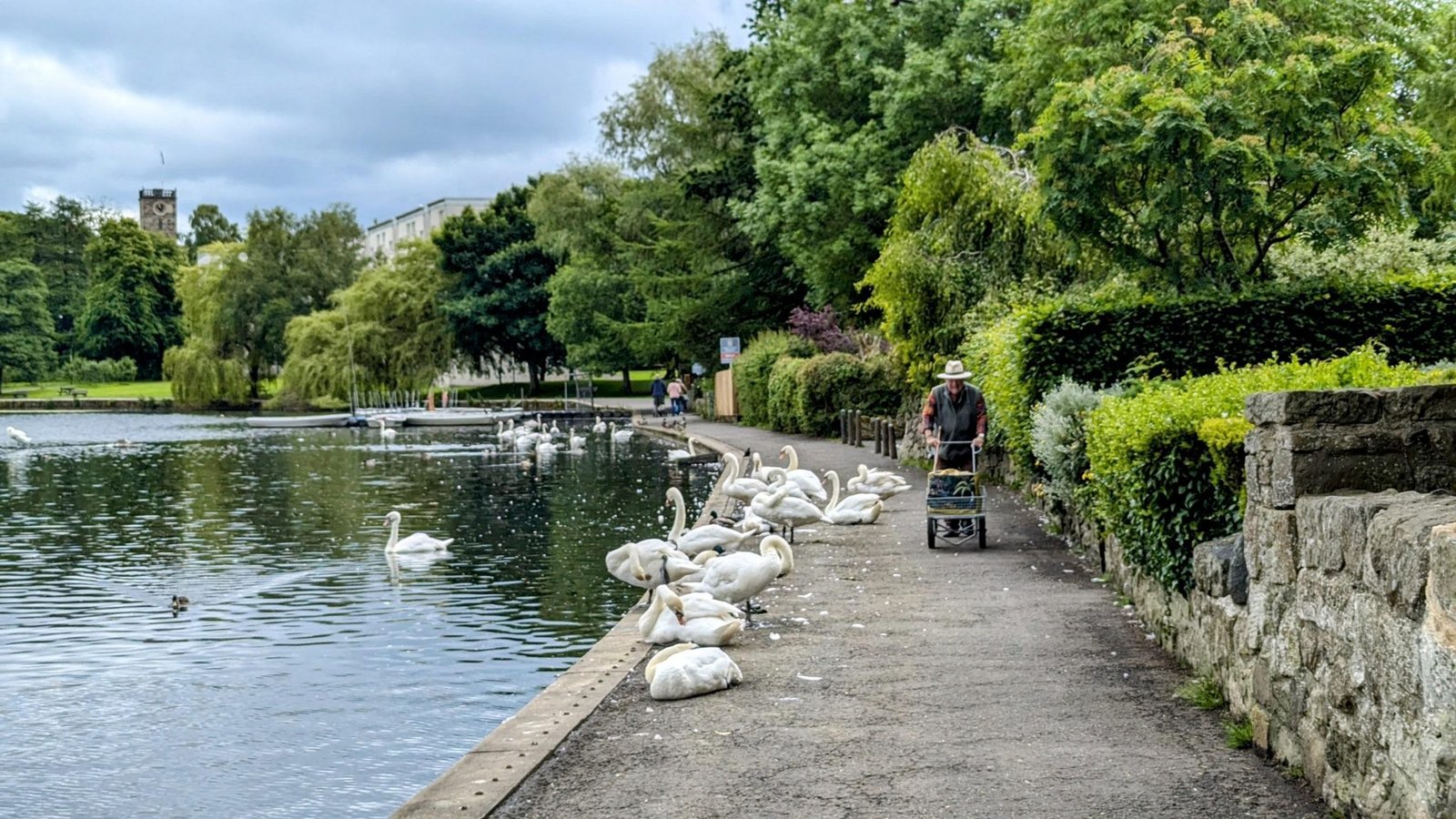
The palace and church sit in the Peel, the parkland ringing Linlithgow Loch — and the walk around the loch is the finest thing to do here, for free. You get ever-changing views of the palace reflected in the water, masses of swans and waterfowl, and a proper bit of nature in the middle of town.
🚶 The walk around the loch — do this. The full circuit of Linlithgow Loch is roughly 2–2.5 miles and takes about an hour at an easy pace. It’s mostly flat and on good paths, so it suits families, dogs and (mostly) pushchairs. Go round either way — the reward is the palace reflected in the water from every angle, swans and geese all the way, and long views to the Bathgate Hills. Pack a coffee from the High Street and make a morning of it. (A short stretch can get muddy after rain — decent shoes if it’s been wet. Kevin — confirm your route/time with the dog.)
The town & the “Black Bitch”
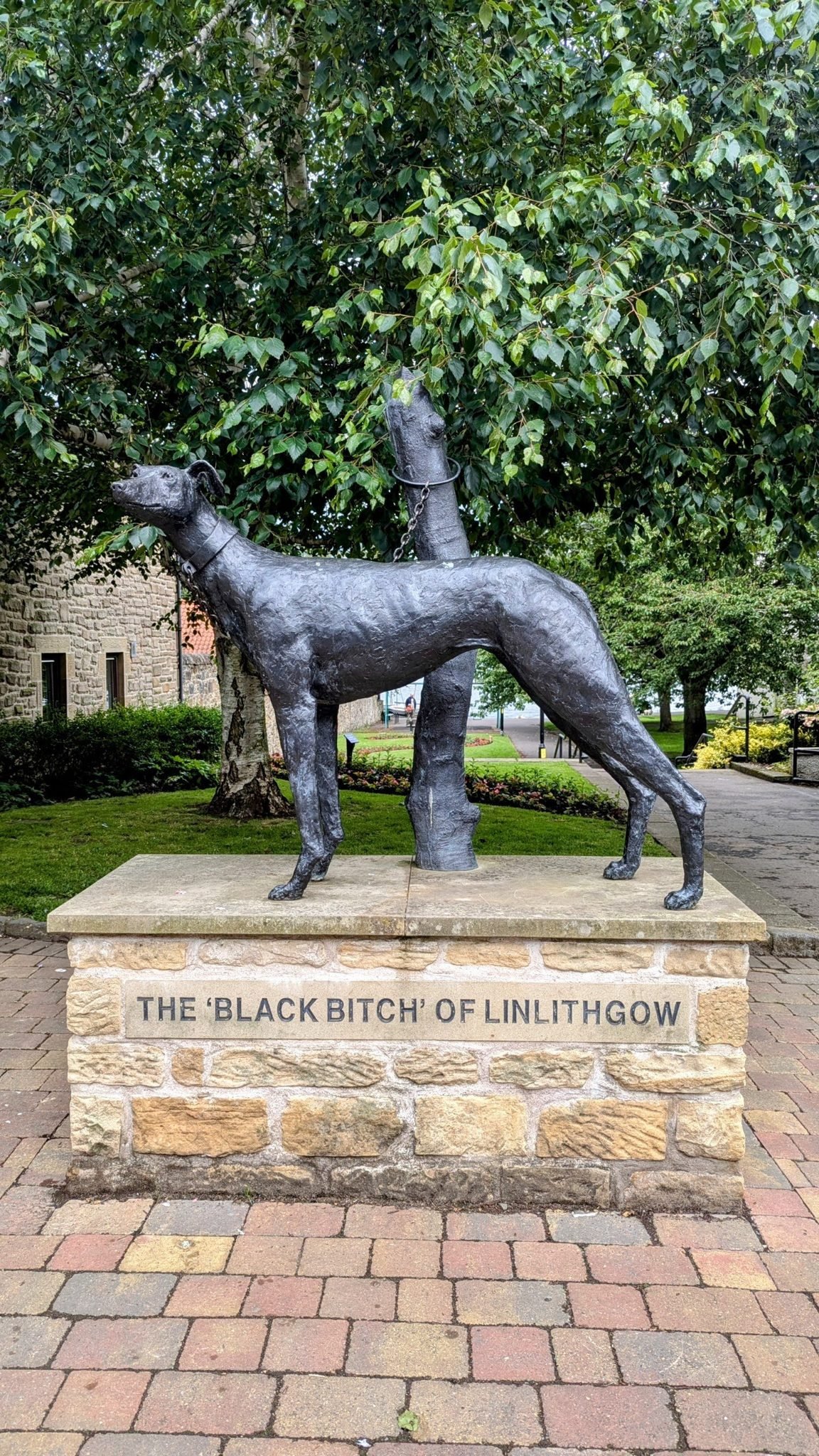
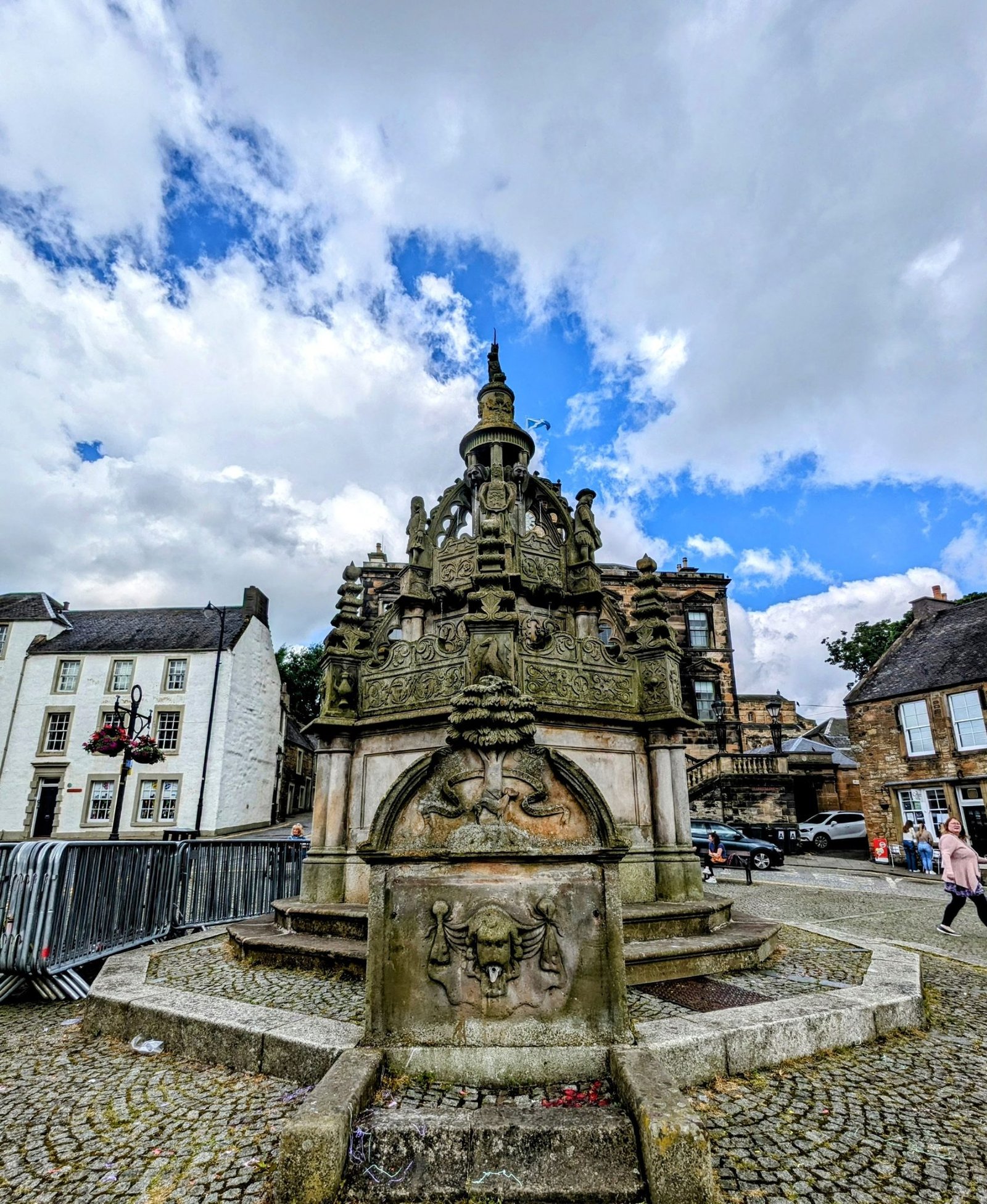
Linlithgow is a handsome royal burgh with a long historic High Street, centred on The Cross and its ornate carved Cross Well. And it has one of Scotland’s more memorable town emblems: the “Black Bitch.” The town’s ancient coat of arms shows a black greyhound bitch — from the legend of a loyal hound that swam to an island in the loch to feed her banished master. Locals wear the name with pride, and a fine statue of the Black Bitch stands in the town.
Coffee & lunch
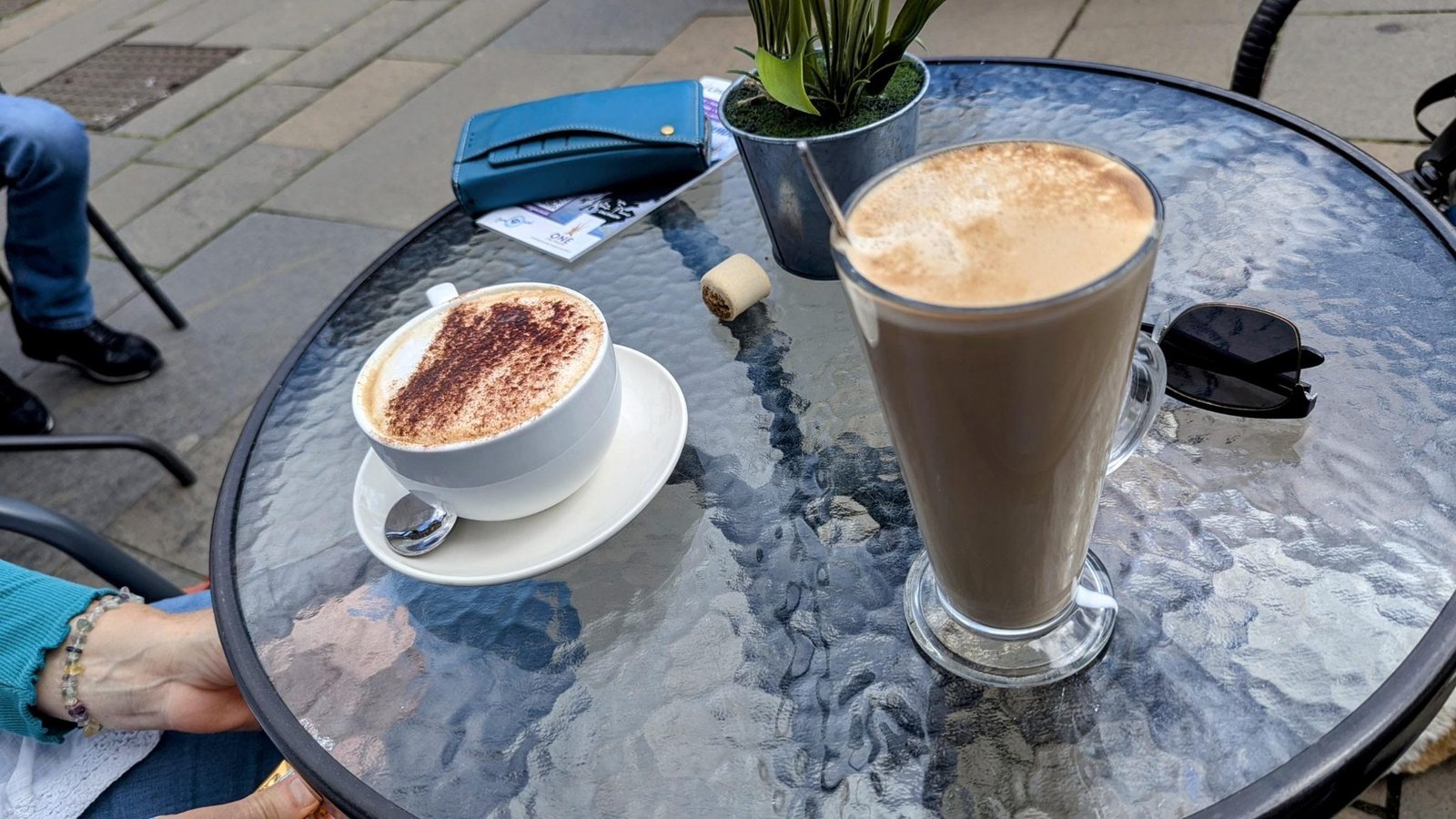
Linlithgow’s High Street has a good run of cafés and coffee shops — an easy place to refuel after the loch walk or the palace. (Kevin — name your favourites and I’ll build them in.)
The Union Canal
Linlithgow also sits on the Union Canal, with the Linlithgow Canal Centre (a small museum and short boat trips) — and the towpath connects, eventually, to the Falkirk Wheel. A lovely gentle add-on for walkers and cyclists. (No canal photos this visit — one for next time.)
Getting there & around
- 🚆 Trains — genuinely good: Linlithgow is on the main Edinburgh–Glasgow line, with fast, frequent services and the station a short walk from the palace. (A refreshing contrast to some Fife towns — here, take the train.)
- 🚌 Buses: regular services along the M9 corridor.
- 🚗 Parking: town car parks near the Cross and the Peel; busy at weekends.
- 🚐 Motorhome: it’s a day-trip town rather than an overnight for us — use the day car parks; nearest scenic overnights are out toward Beecraigs / the Forth.
Nearby
- Blackness Castle — the “ship that never sailed,” a dramatic Forth-side fortress (and Outlander‘s “Fort William”), ~4 miles north.
- The House of the Binns — historic Dalyell family home.
- Beecraigs Country Park — woods, a loch and trails in the Bathgate Hills.
- Cairnpapple Hill — a major prehistoric henge and burial site with huge views.
- The Falkirk Wheel & The Kelpies — engineering icons, a short drive west.
Best time to visit
Year-round — the loch walk and town are lovely in any season, and St Michael’s is weather-proof. Spring/summer for the palace, the swans and the best light on the water. Always check palace opening first (see the access note above).
Reality notes
- 🏰 Palace access: check HES for current opening — masonry works have caused closures.
- 🦢 Wildlife: loads of swans/waterfowl on the loch — don’t feed bread; keep dogs under control near nesting birds.
- 🐕 Dogs: great for the loch loop and town on a lead (the palace/church have their own rules).
- 🚆 Car-free friendly: one of the best rail day-trips in central Scotland.
- 🦟 Midges: low — town and open loch.