
Dunfermline: Scotland’s Ancient Capital & the Resting Place of Kings
Overview — a wee city with an enormous history
Dunfermline doesn’t shout about itself, but few places in Scotland pack more history into a short walk. This was the ancient capital of Scotland — the seat of kings long before Edinburgh took the crown — and it’s the burial place of Robert the Bruce himself. It’s also the birthplace of Andrew Carnegie, the poor weaver’s son who became the richest man in the world and gave much of it away, and of a king (Charles I). Wrapped around all that is Pittencrieff Park, a glorious wooded glen and gardens, and a town full of good coffee.
It’s practically on our doorstep, so we know it well — and it’s a place we send everyone. In 2022 it was finally, and rightly, made a city.
Where it is (and where on the route)
Dunfermline sits in west Fife, just north of the Firth of Forth and the bridges — about 40 minutes from Edinburgh and barely down the road from our central-belt base. On the Grand Tour it’s Stage 4A, the start of the eastern fork into the Kingdom of Fife. As a base, it’s superb: motorways and the Forth crossings put a huge chunk of Scotland within a day-trip.
The history — a resting place of kings
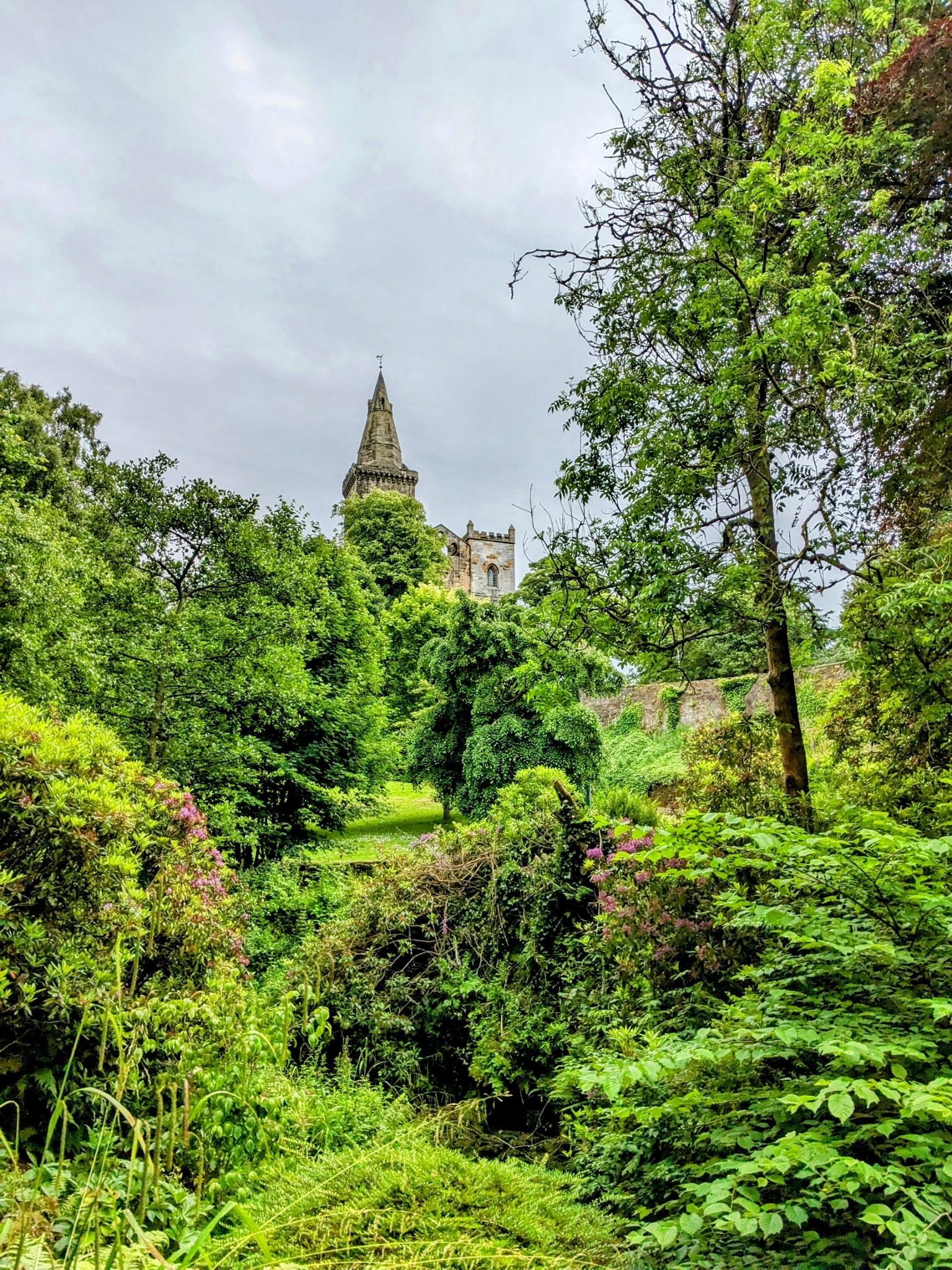
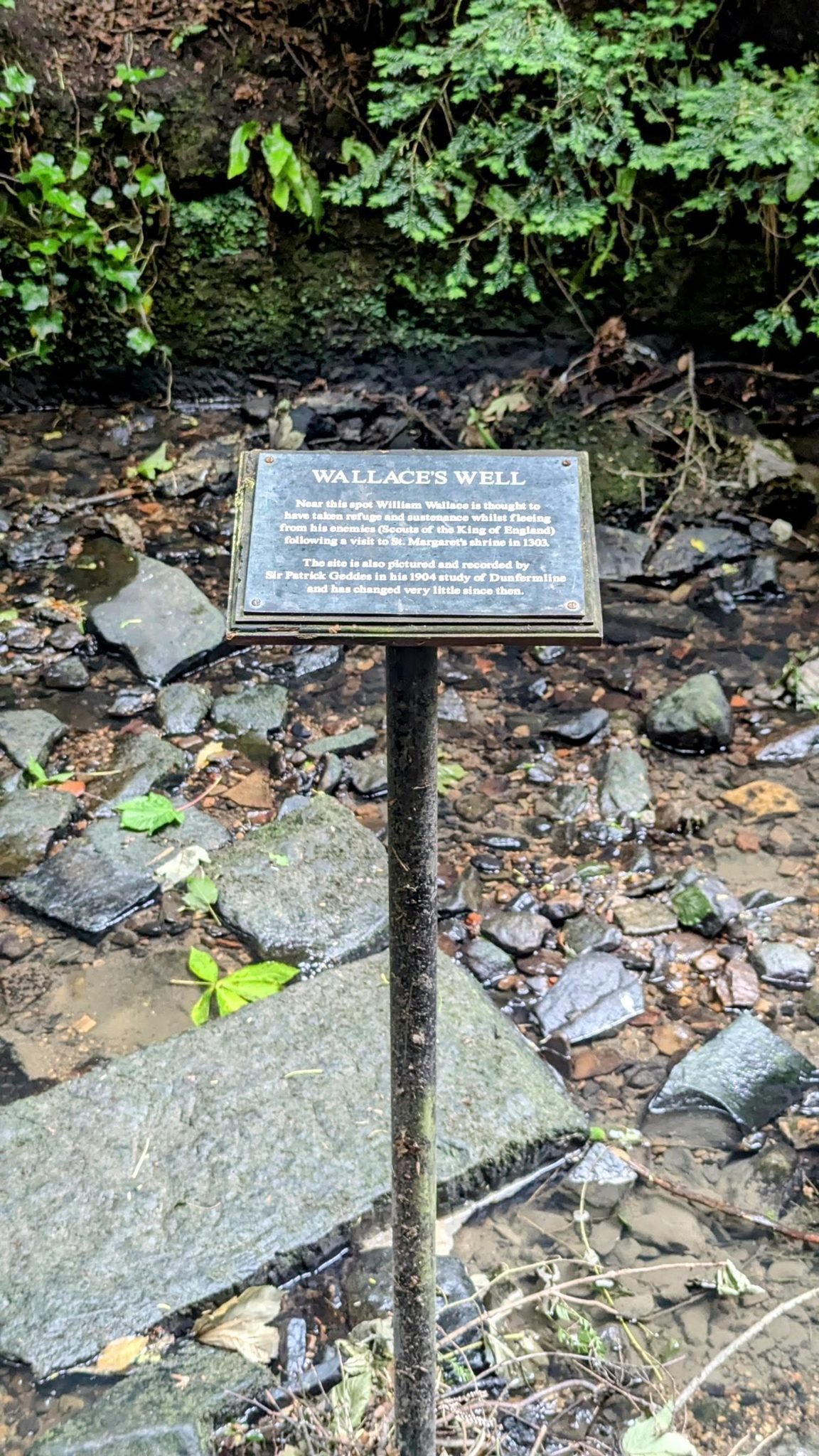
Dunfermline’s story begins with King Malcolm III (Canmore), who had his tower stronghold here in the 11th century (its remains still stand in the Glen), and his queen, the pious Margaret — later Saint Margaret — who founded a priory. Their son David I raised it into the great Benedictine Dunfermline Abbey.
For centuries this was the spiritual and royal heart of Scotland, and many Scottish kings and queens are buried here — Malcolm and Margaret, David I, and, most famously, Robert the Bruce, laid to rest in 1329 (his heart went to Melrose; the rest of him lies here). When the abbey church was rebuilt in the 1800s they spelled it out in stone: the words “KING ROBERT THE BRUCE” run right around the top of the tower.
Next to the abbey stand the ruins of Dunfermline Palace, a royal residence and the birthplace of Charles I in 1600 — the last monarch to be born in Scotland. Below the town you can still visit St Margaret’s Cave, the queen’s place of private prayer.
(We’ve explored the Abbey itself — inside and out — and had a good wander round the park. The one big thing still on our own list is the Carnegie Birthplace Museum, so treat that as “go and see” until we’ve been and can report back properly.)
Pittencrieff Park — “the Glen”
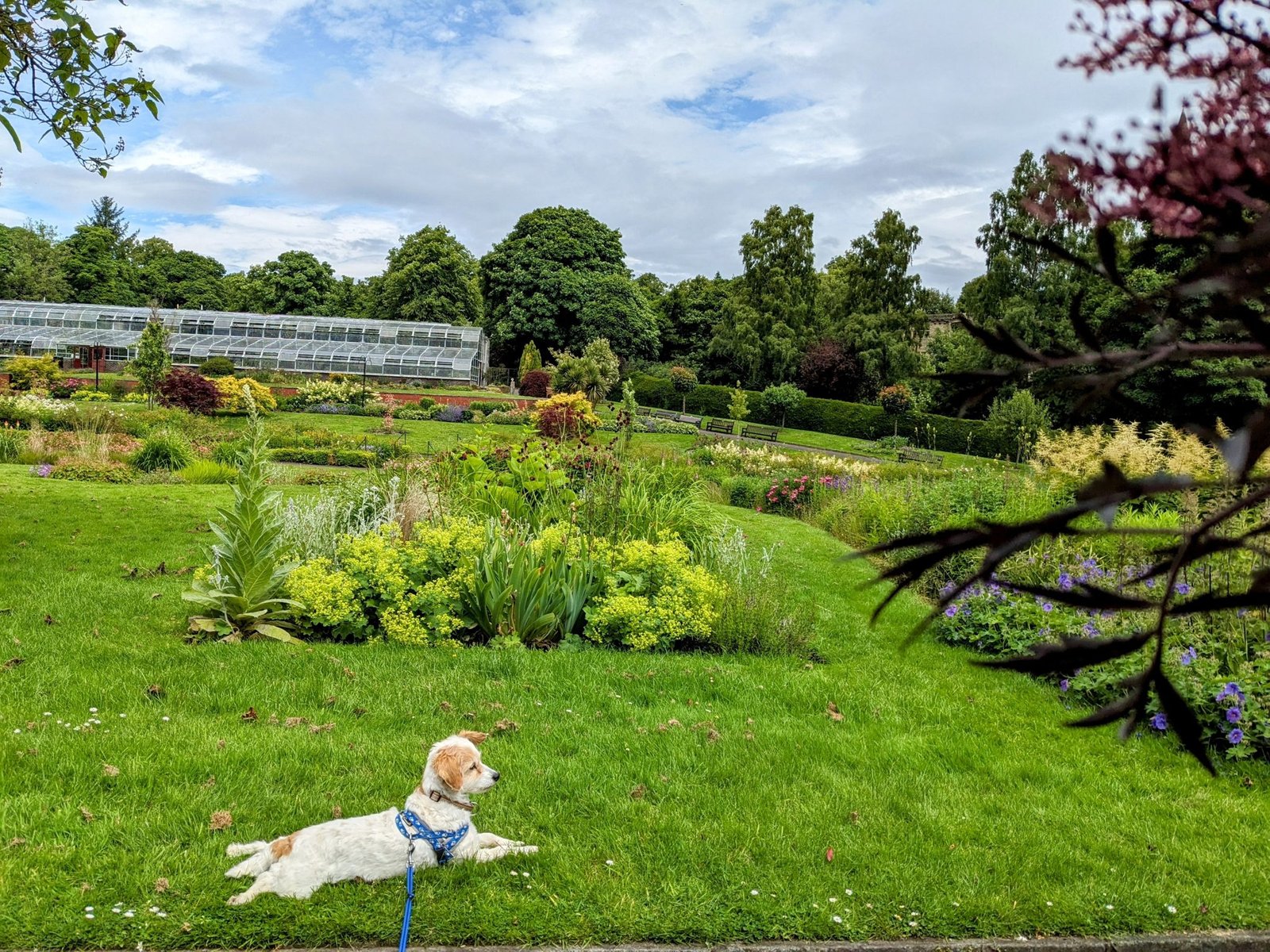
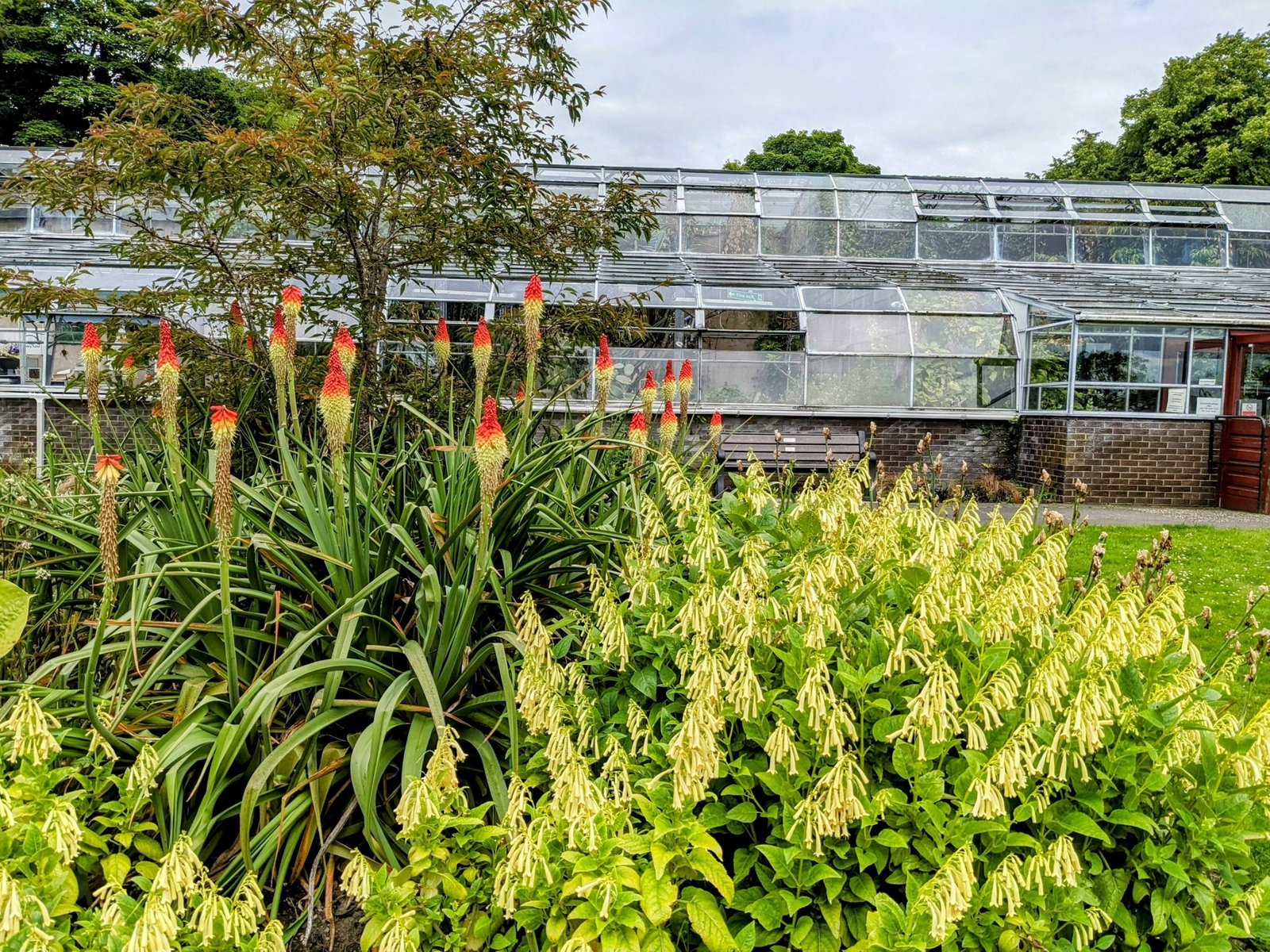
The green heart of Dunfermline is Pittencrieff Park, known to everyone as the Glen — a deep, lush wooded gorge and a set of glorious gardens and glasshouses. It came to the town through its most famous son: in 1903, Andrew Carnegie bought the estate and gave it to the people of Dunfermline — a pointed gesture, since as a poor boy he’d been barred from the private grounds.
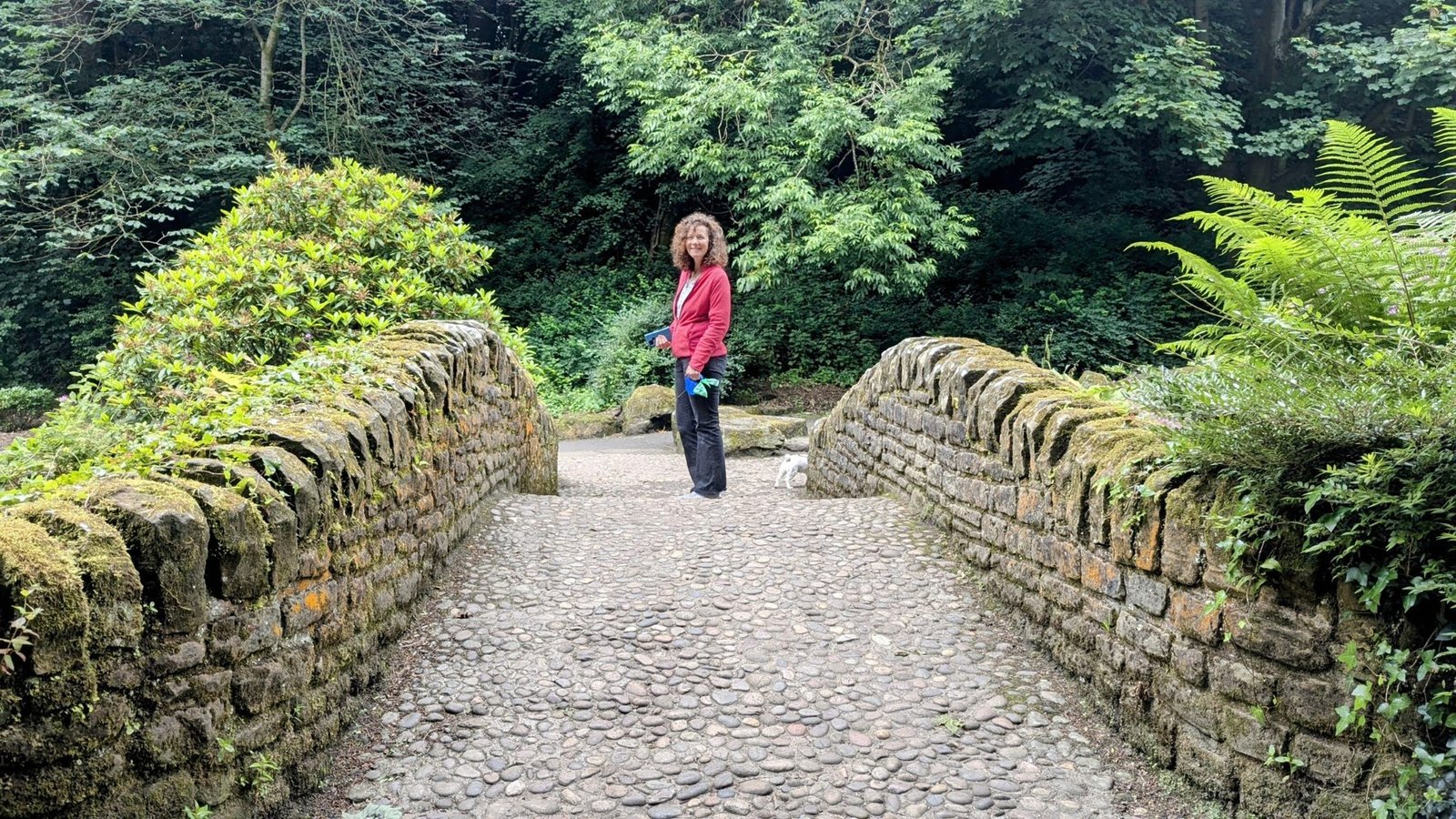
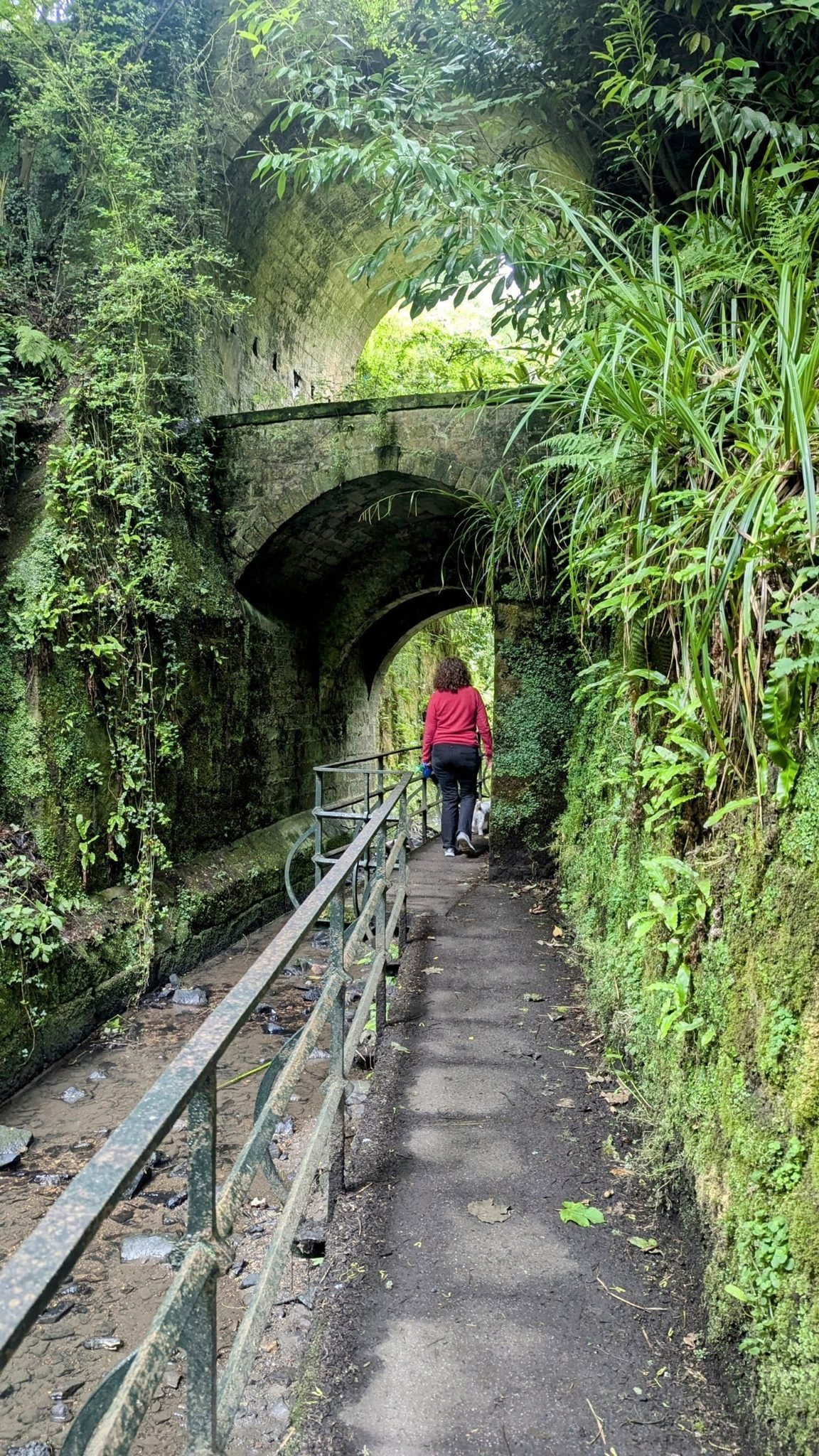
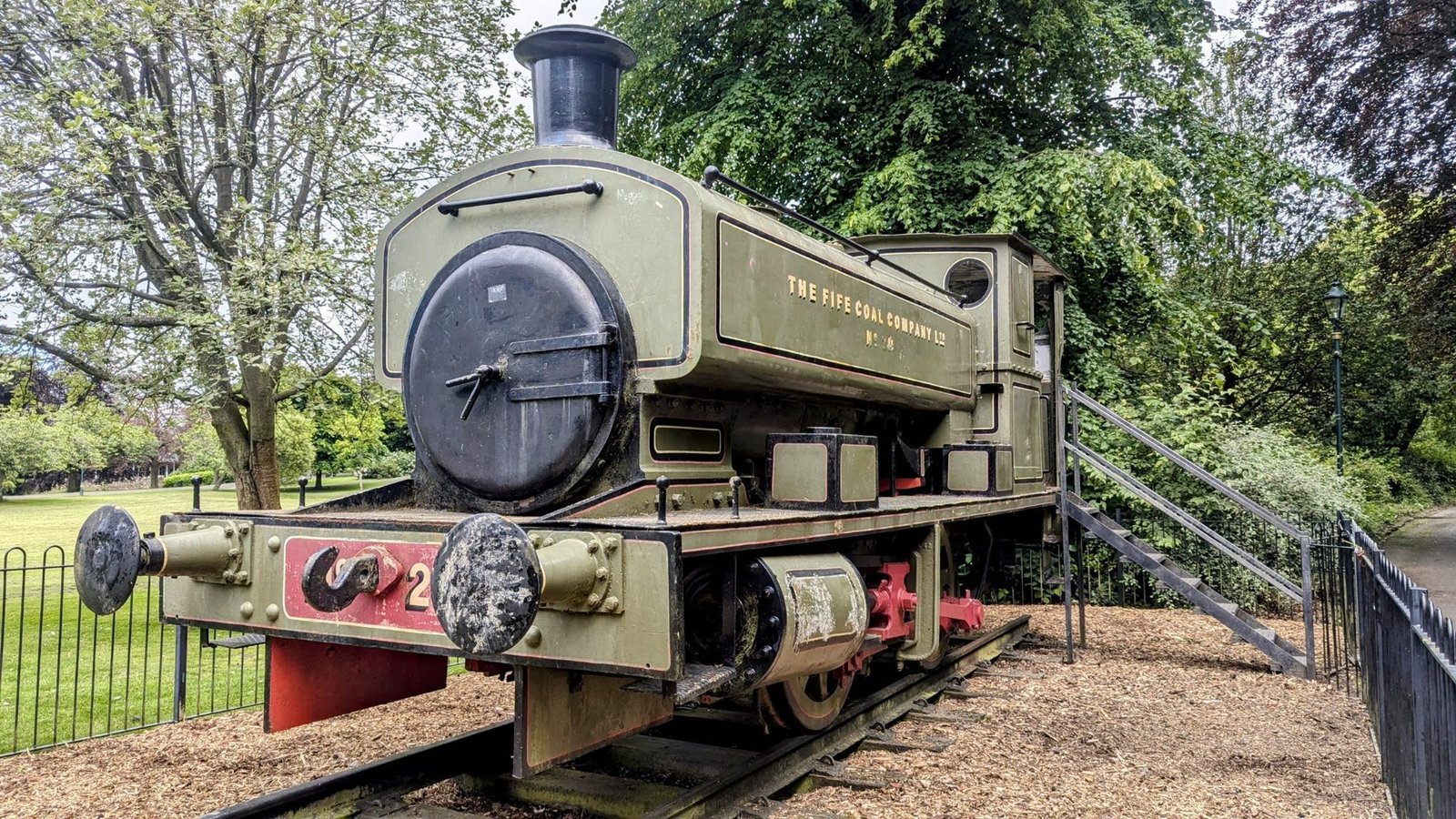
It’s a wonderful place to wander: winding glen paths and old stone bridges, formal borders, tropical glasshouses, the free-roaming peacocks the park is famous for, Pittencrieff House (a small museum), the remains of Malcolm Canmore’s Tower, and even a preserved Fife Coal Company steam locomotive for the kids. Dogs love it (ours did).
The Pittsburgh connection (yes, really — twice)
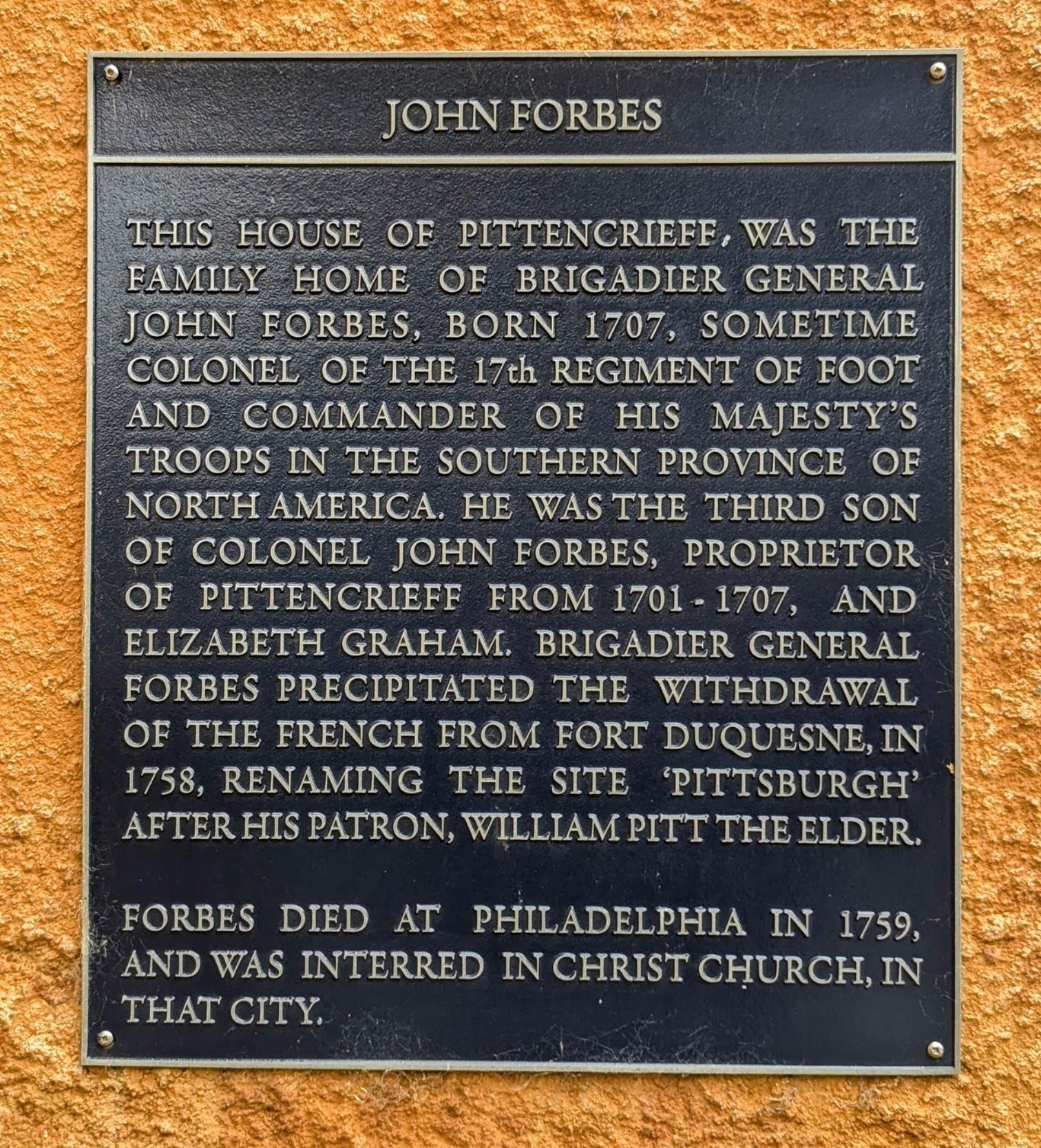
Here’s a nugget most visitors miss. A plaque in the park records that Pittencrieff House was the family home of Brigadier General John Forbes (born 1707), who in 1758 led the British capture of Fort Duquesne in America and renamed the settlement “Pittsburgh” after his patron, William Pitt the Elder.
And the twist: over a century later, Dunfermline’s own Andrew Carnegie built the greatest steel empire on earth in that very city, Pittsburgh. So this one small Fife town named Pittsburgh and later made its fortune there. You couldn’t make it up.
Andrew Carnegie — the local boy who changed the world
Dunfermline is proud of Andrew Carnegie, born here in a weaver’s cottage in 1835, who emigrated to America and became the richest man in the world through steel — then gave nearly all of it away. The Andrew Carnegie Birthplace Museum tells the story, and the town has the world’s very first Carnegie library (1883) — the first of thousands he funded across the globe. The Glen was his gift; so was much of the civic fabric of the town.
Coffee & the town
For a small city, Dunfermline is well set up for coffee. The popular go-tos are the big names — Starbucks, Costa and Caffè Nero — all in the walkable town centre and ideal after a loop of the Glen. If you’re arriving by car, there’s also a good Costa out at Halbeath retail park on the edge of town (right by the Park & Ride — see below).
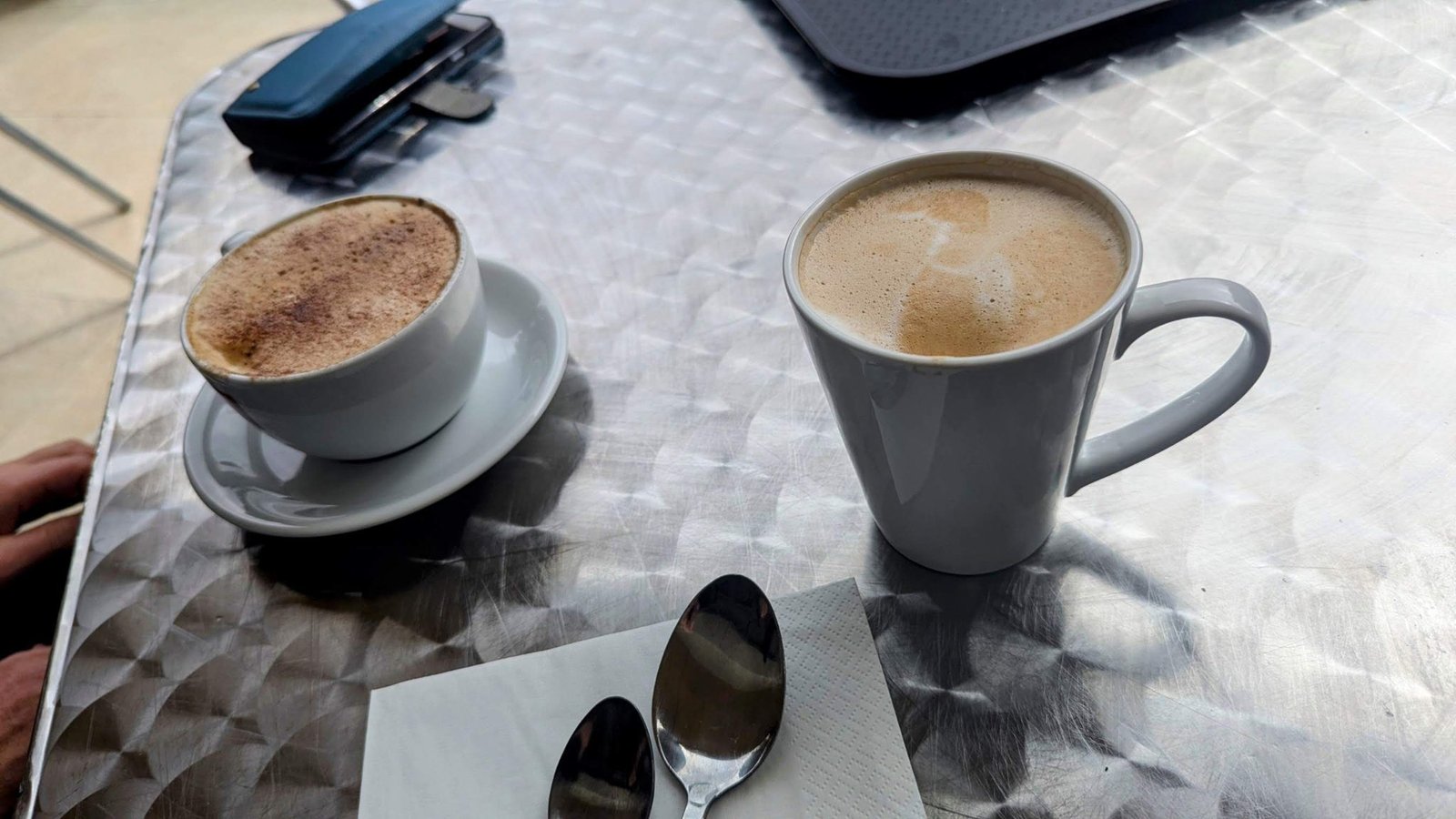
Scottish Outposts note: [Kevin — just confirm the third chain is Caffè Nero and this bit’s done.]
Getting there & around
- 🚌 Buses: Dunfermline’s bus station is a major hub, with services reaching large parts of Scotland — genuinely useful if you’re car-free or resting the motorhome.
- 🅿️🚌 Halbeath Park & Ride — our top Scottish Outposts tip: on the edge of town by the M90, this big park-and-ride is a brilliant place to leave the car or motorhome and hop an express coach to almost anywhere in Scotland — Edinburgh, Glasgow, Perth, Dundee and beyond. Perfect for a day in the city (or Edinburgh) without the driving and parking hassle. There’s a Costa right there, too.
- 🚆 Trains: there is a station (on the Fife Circle to Edinburgh), but — honestly — the rail service isn’t great: limited and slow compared to the buses. We’d point you at the bus.
- 🚲 Cycling — the Alloa–Dunfermline circle: one of our favourite local rides — a ~50km loop, out on an old railway line and back along the Forth coast, taking in Culross for a coffee on the way home. Mostly flat and traffic-free; it now has its own Scottish Outposts page.
- 🚗 Day-visiting: it’s a proper town with town car parks — easy to reach off the M90 and the Forth crossings. More a base/day-trip than an overnight stop for us (it’s home turf), but a great launchpad.
Nearby — brilliant places on the doorstep
Dunfermline makes a superb base for west Fife and beyond:
- Culross — the impossibly pretty 17th-century burgh (and Outlander filming location).
- North Queensferry & the Forth Bridges — walk beneath the three great bridges; Deep Sea World for the kids.
- Aberdour — castle, silver sands and the Fife Coastal Path.
- Loch Leven — castle island (where Mary Queen of Scots was imprisoned) and a lovely traffic-free loop.
- Limekilns & Charlestown — quiet Forth-side villages.
Best time to visit
Year-round — the Abbey, museums and glasshouses cover the wet days, and the Glen is lovely in every season (spectacular in autumn). Summer brings the gardens and peacocks to their best.
Reality notes
- 🐕 Dogs: the Glen is a brilliant dog walk (leads near the peacocks and roads).
- 🚌 Car-free friendly: the bus hub makes this an easy no-car day out.
- ♿ Access: the Glen has steep paths and steps in places; the upper gardens are gentler.
- 🅿️ Parking: town car parks; busy on market/event days.
- 🦟 Midges: low — it’s a town.