
Glenbarr Abbey: The Gothic House That Was Never an Abbey
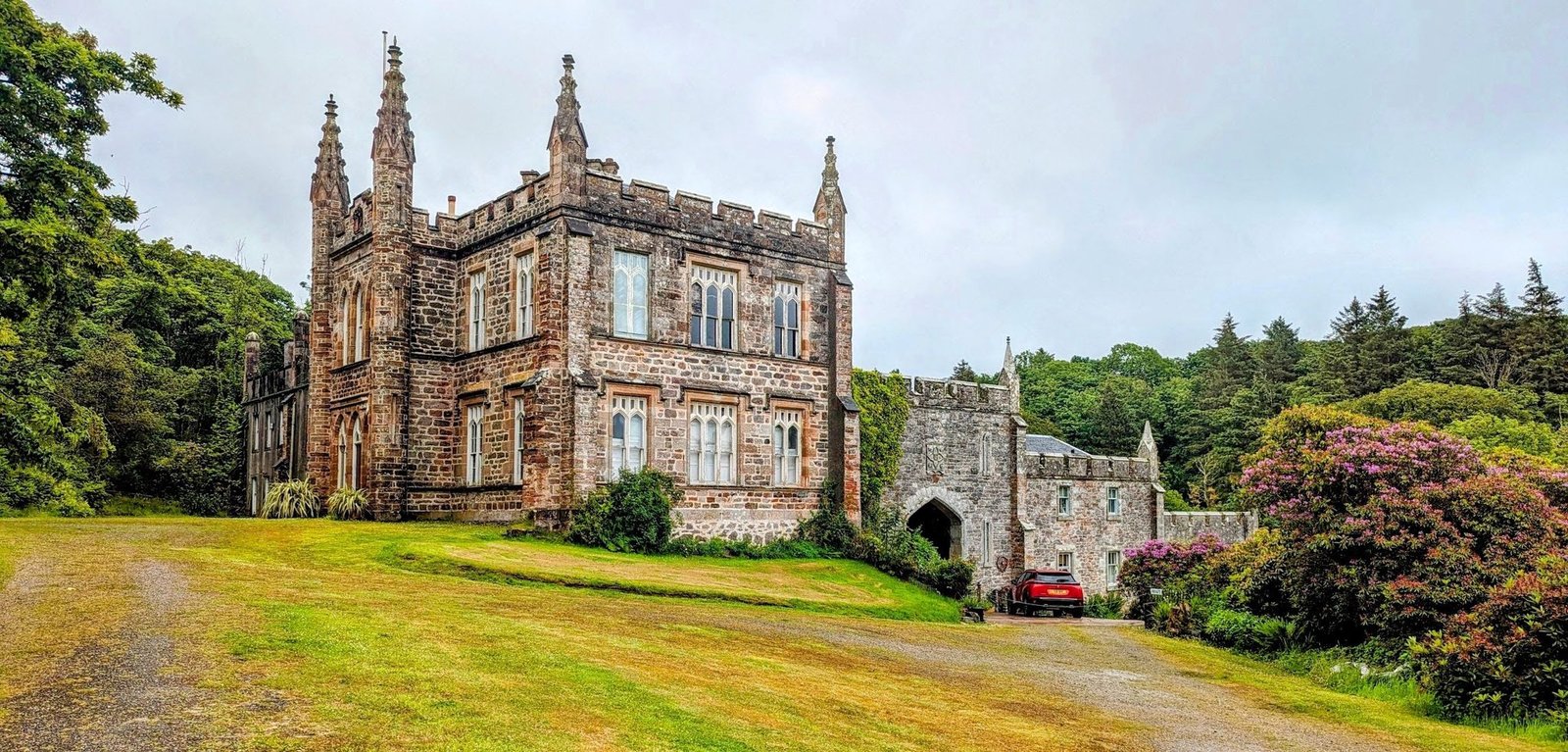
Overview — a fairytale pile in the Kintyre woods
Tucked into wooded, overgrown grounds on the west coast of Kintyre, Glenbarr Abbey looks exactly like the sort of place a Gothic novel would be set: crenellated towers, spiky pinnacles, pointed windows and a tangle of rhododendrons closing in around it. It’s the historic seat of Clan Macalister, and — despite the name — it was never a religious abbey at all.
We came across it on the Kintyre coast run and couldn’t resist a look. It’s a genuinely atmospheric, little-known spot — though, as of our visit, one you admire rather than tour (see below).
Where it is (and where on the route)
Glenbarr Abbey sits just inland of the village of Glenbarr, on the A83 down the west coast of Kintyre, between Tarbert and Campbeltown. That places it firmly in Argyll — on Stage 5 (Kintyre) of the Argyll Coastal Route.
The history (sourced)
- Not an abbey. The “Abbey” name is pure early-1800s romance — houses of the period were often given lofty Gothic titles to match their new pointed-arch makeovers. Glenbarr has always been a private residence, not a monastery.
- An 18th-century Macalister house. It’s an 18th-century residence associated with the Macalister of Glenbarr family; Col. Matthew Macalister, 1st Laird of Glenbarr, is named as its purchaser/builder. (Sources differ slightly on the exact origin — some trace a house here to Angus Macalister around 1742 — so we’re leaving the precise founding date open rather than pick one.)
- The Gothic makeover. The Georgian house was later given its dramatic Gothic-Revival alterations and west wing, attributed on stylistic grounds to the noted Scottish architect James Gillespie Graham (early 19th century).
- Home of Clan Macalister. For generations it was the seat of the Macalisters of Glenbarr, and in more recent times it opened as the Glenbarr Abbey Visitor Centre / Clan Macalister Centre, displaying clan history, family heirlooms and Victoriana.
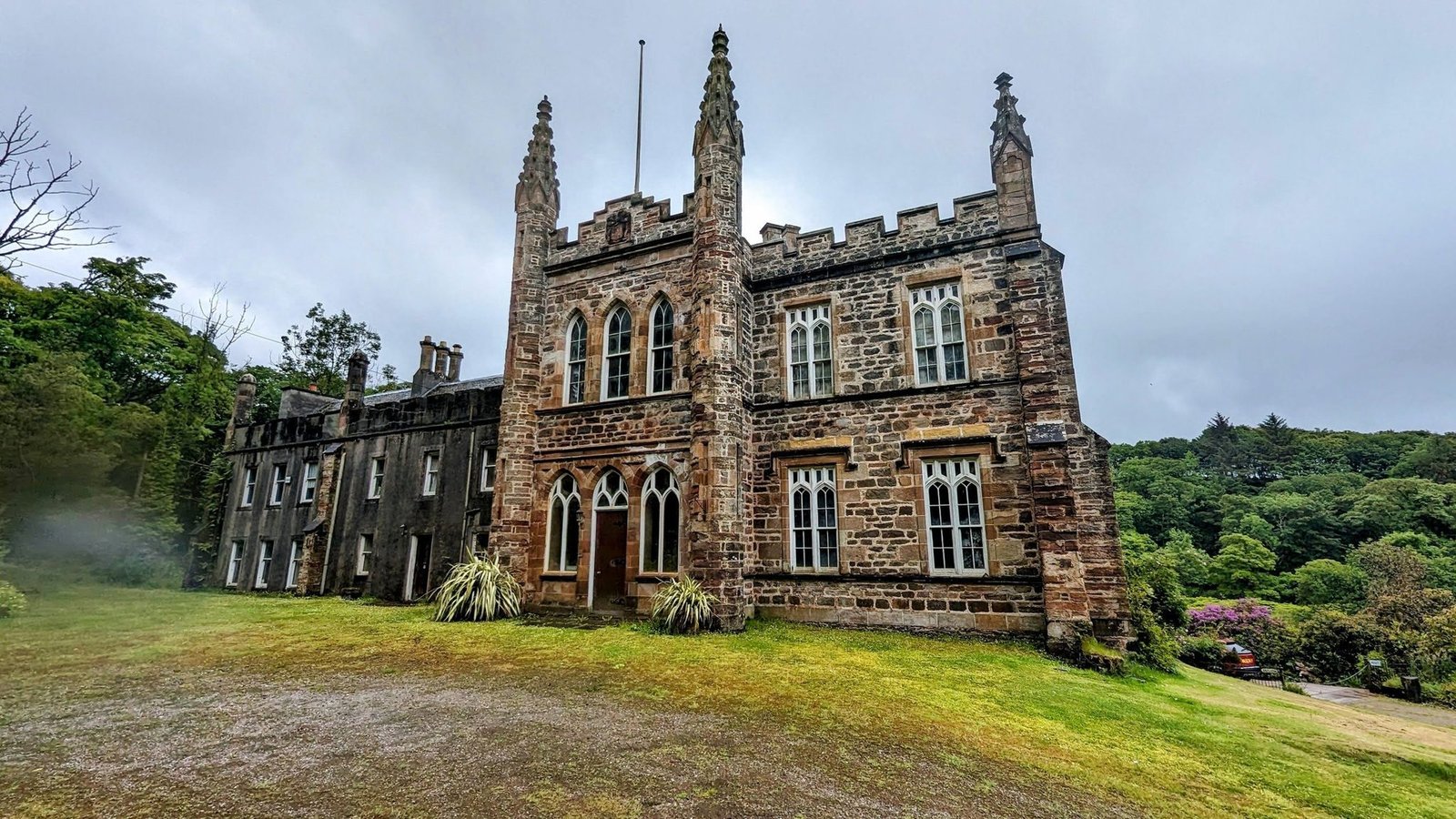
Visiting today — please check first ⚠️
Be aware: Glenbarr Abbey is no longer open to the public (confirmed by us). It’s closed for the foreseeable future, awaiting funding for major repairs — it’s on the Buildings at Risk Register, with a clan-led “revival” effort underway. So for now it’s a look-from-the-grounds curiosity rather than a visitor attraction — exactly as we found it.
Before you plan a stop, check the current status (the Clan Macalister channels below) in case the revival project has reopened it.
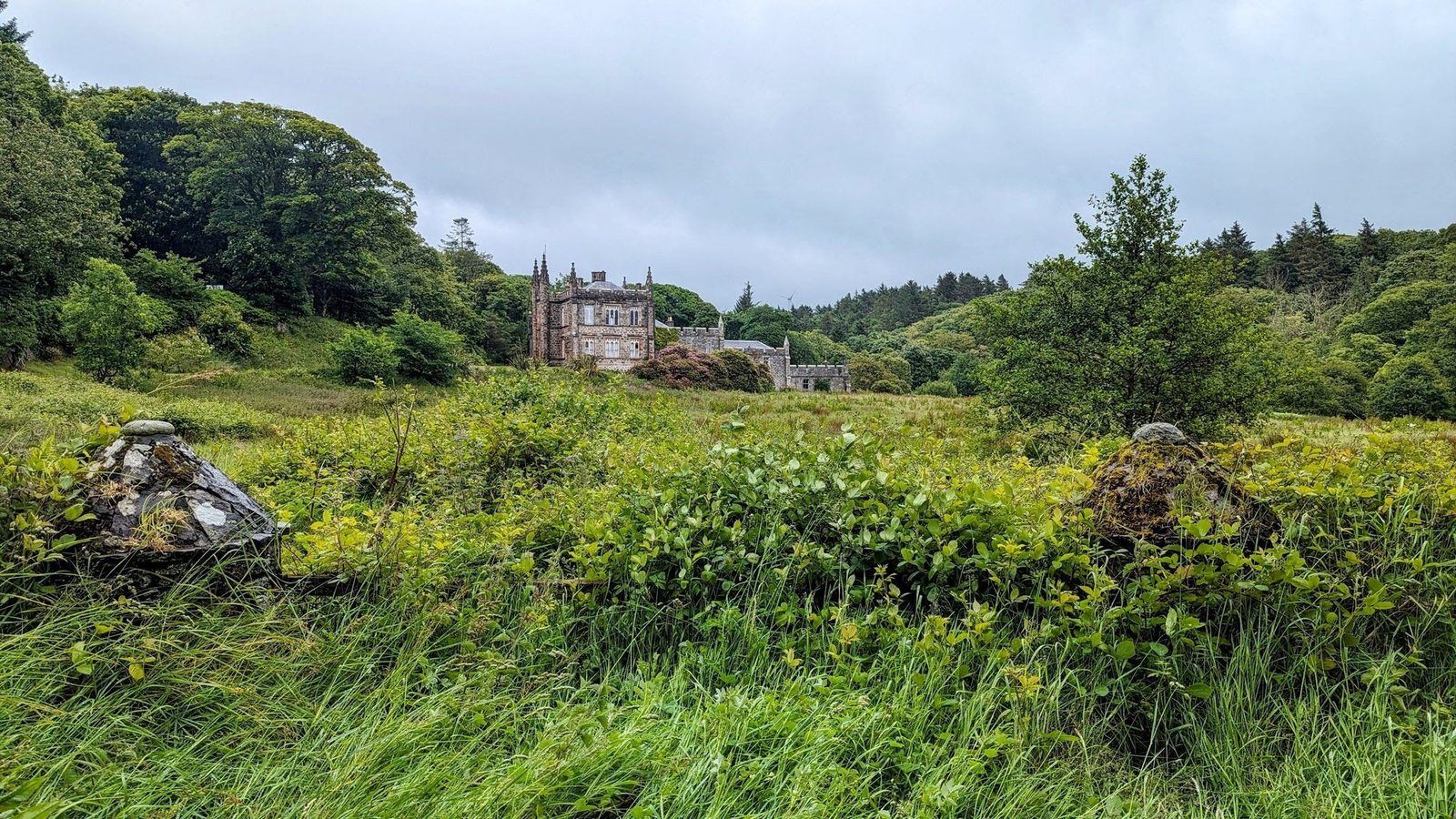
Reality notes
- ⚠️ Currently closed — check before making a special trip; it may be view-from-outside only.
- 🏡 Private property — admire respectfully; don’t intrude on the house.
- 🛣️ On the A83 — an easy pause on the Kintyre coast run.
- 🌿 Overgrown grounds — atmospheric, but wear decent footwear if it’s wet.
Combine it with (Kintyre — provisional)
[Kevin knows Kintyre first-hand — this will be led by your material. Glenbarr sits on the A83 west-Kintyre run toward Campbeltown; tell me what else you did down here and I’ll build the Kintyre stage properly.]