
Puck’s Glen: Scotland’s Most Breathtaking Fairy-Gorge Walk, Near Dunoon
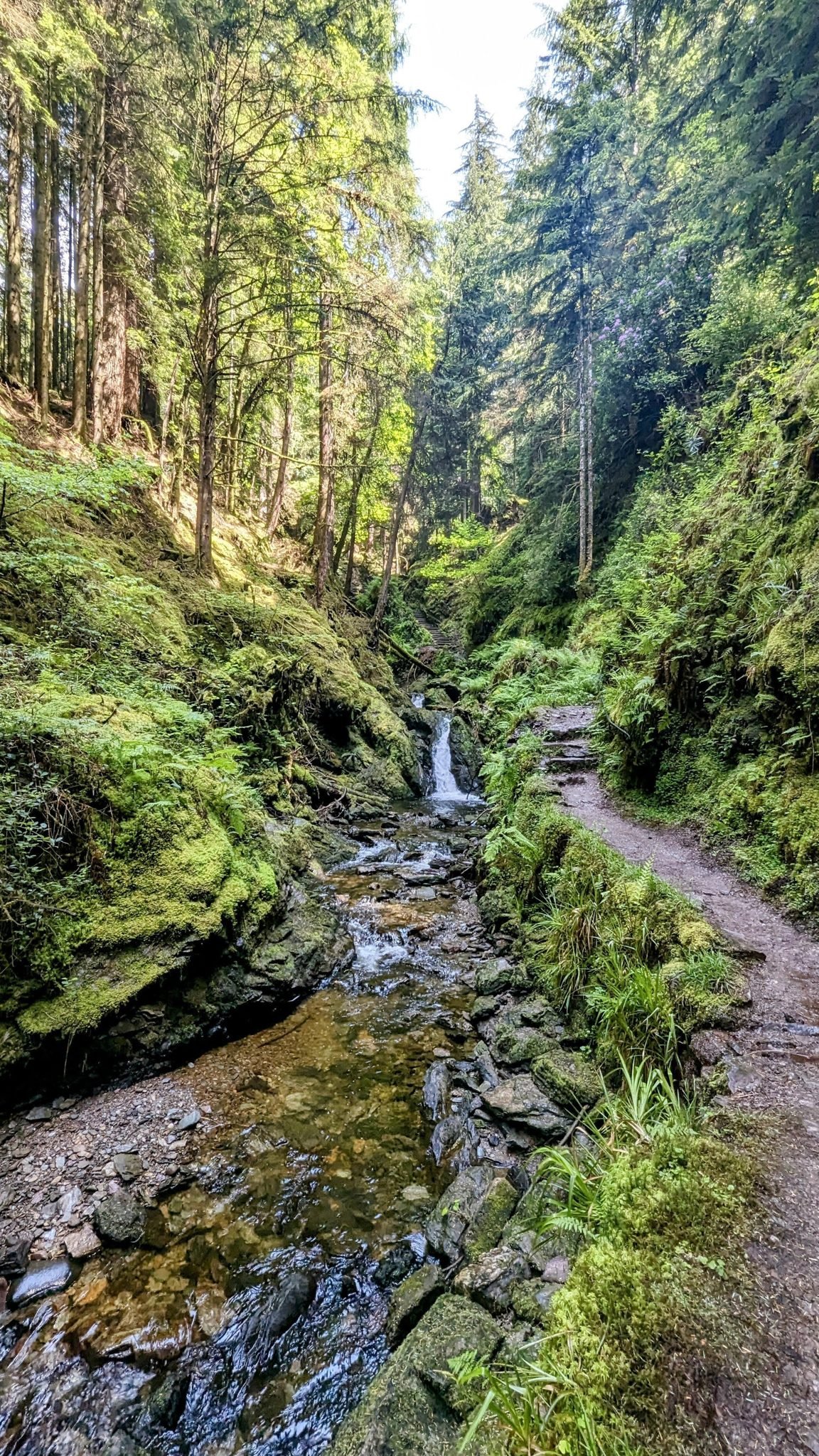
Overview — a genuine “wow” walk
Some places over-promise. Puck’s Glen does the opposite — a modest little car park on a forest road, and then a walk so lush and dramatic it stops people in their tracks. It’s a short gorge walk in Argyll Forest Park on the Cowal peninsula, where a burn tumbles down a deep, mossy, fern-draped ravine in a series of waterfalls and pools, and the path threads up it on stone steps, footbridges and boardwalks, crossing and recrossing the water beneath towering conifers.
It’s one of our favourite short walks in all of Scotland — genuinely, jaw-droppingly beautiful, and manageable for most people in an hour or so. If you’re anywhere near Dunoon, go.
Where it is (and where on the route)
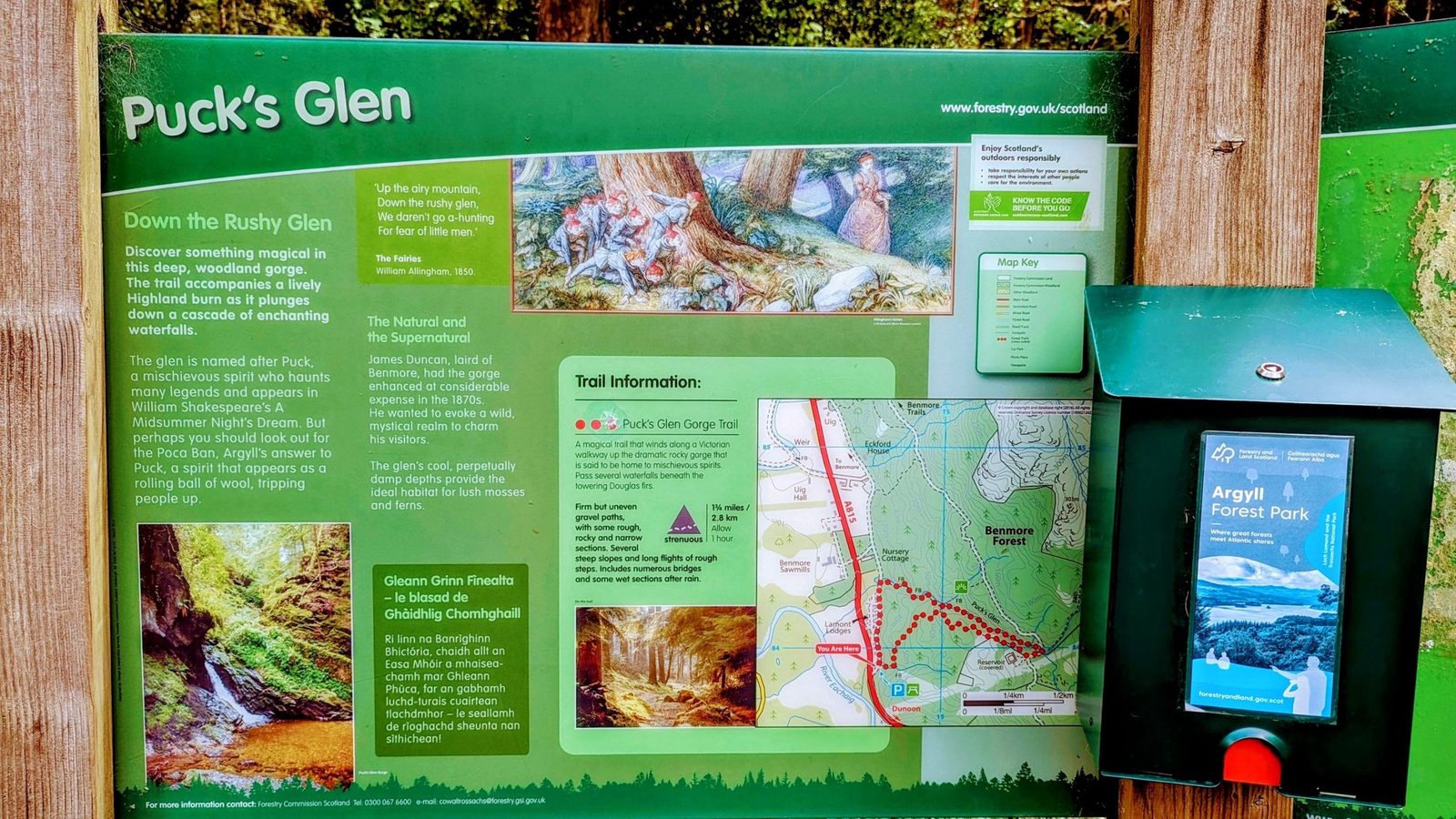
Puck’s Glen sits on the A815 in Cowal, between Benmore and Loch Eck, about 7 miles north of Dunoon — part of Stage 1 (Cowal) of the Argyll Coastal Route. The Puck’s Glen car park is signposted right on the A815 (there’s a signpost at the roadside, and interpretation boards for Argyll Forest Park and the glen itself where the trail begins).
It’s a very natural pairing with Benmore Botanic Garden (its famous redwood avenue is just down the road) and Dunoon & Cowal.
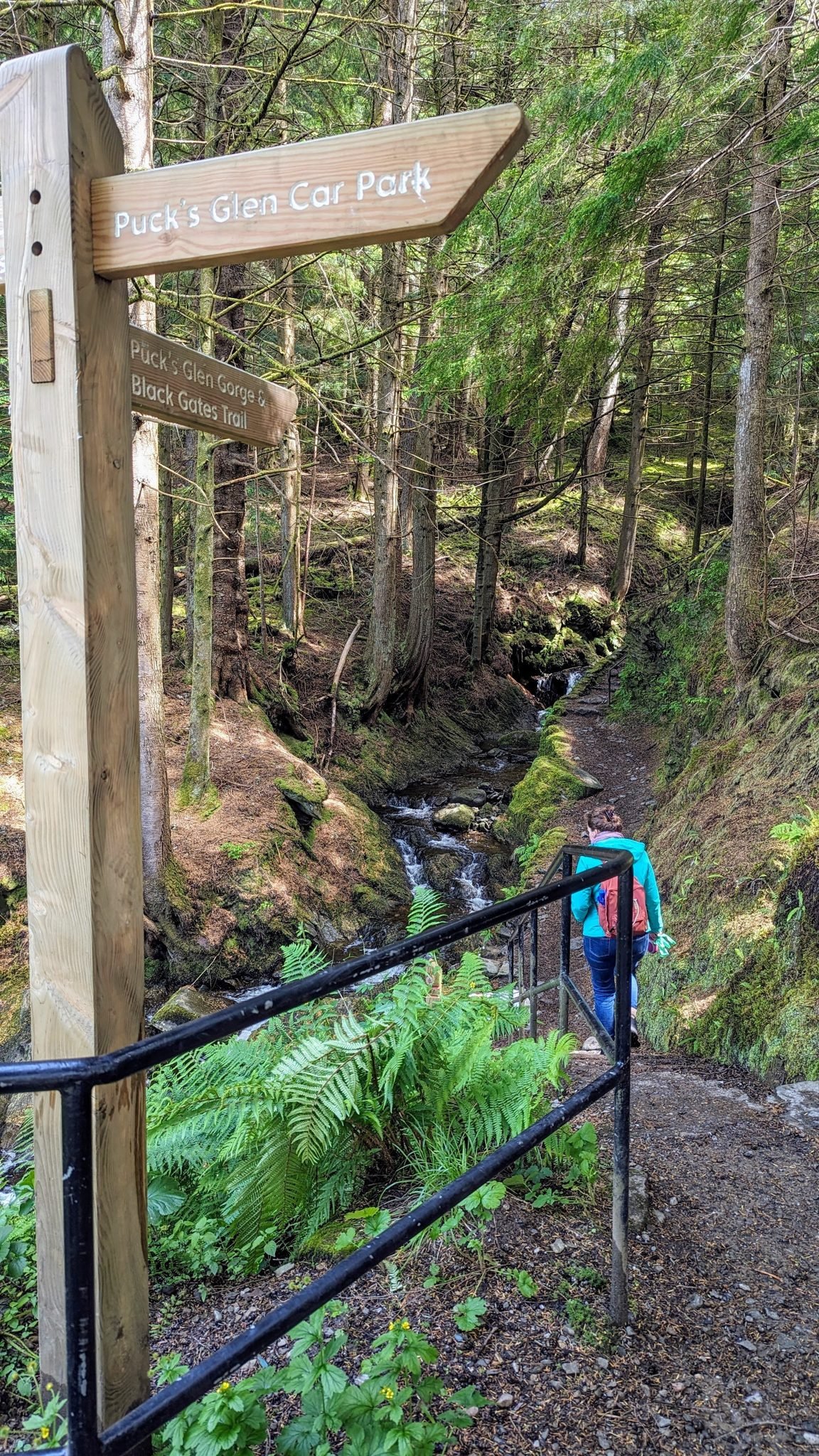
The gorge walk — stone steps, footbridges & waterfalls
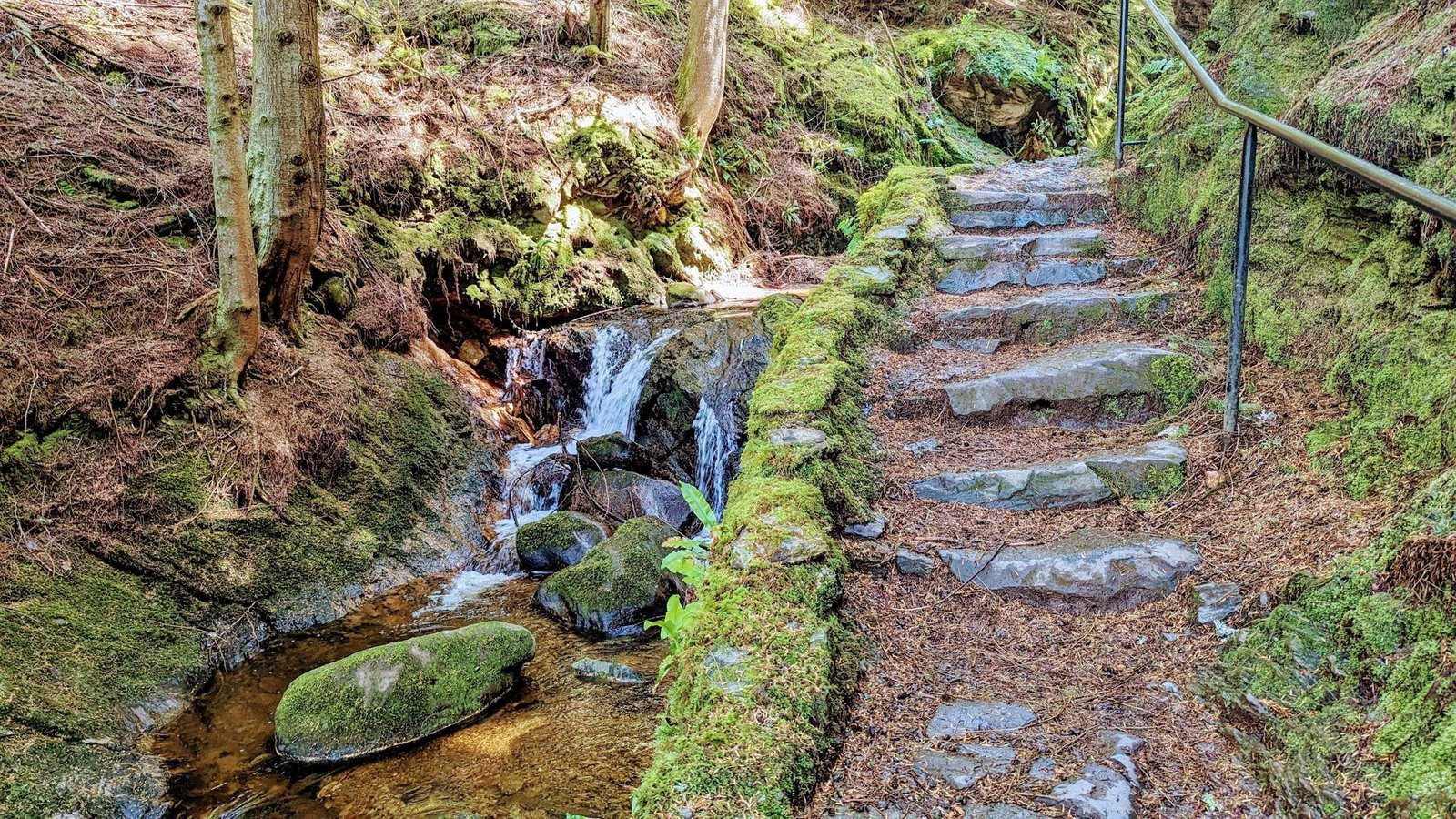
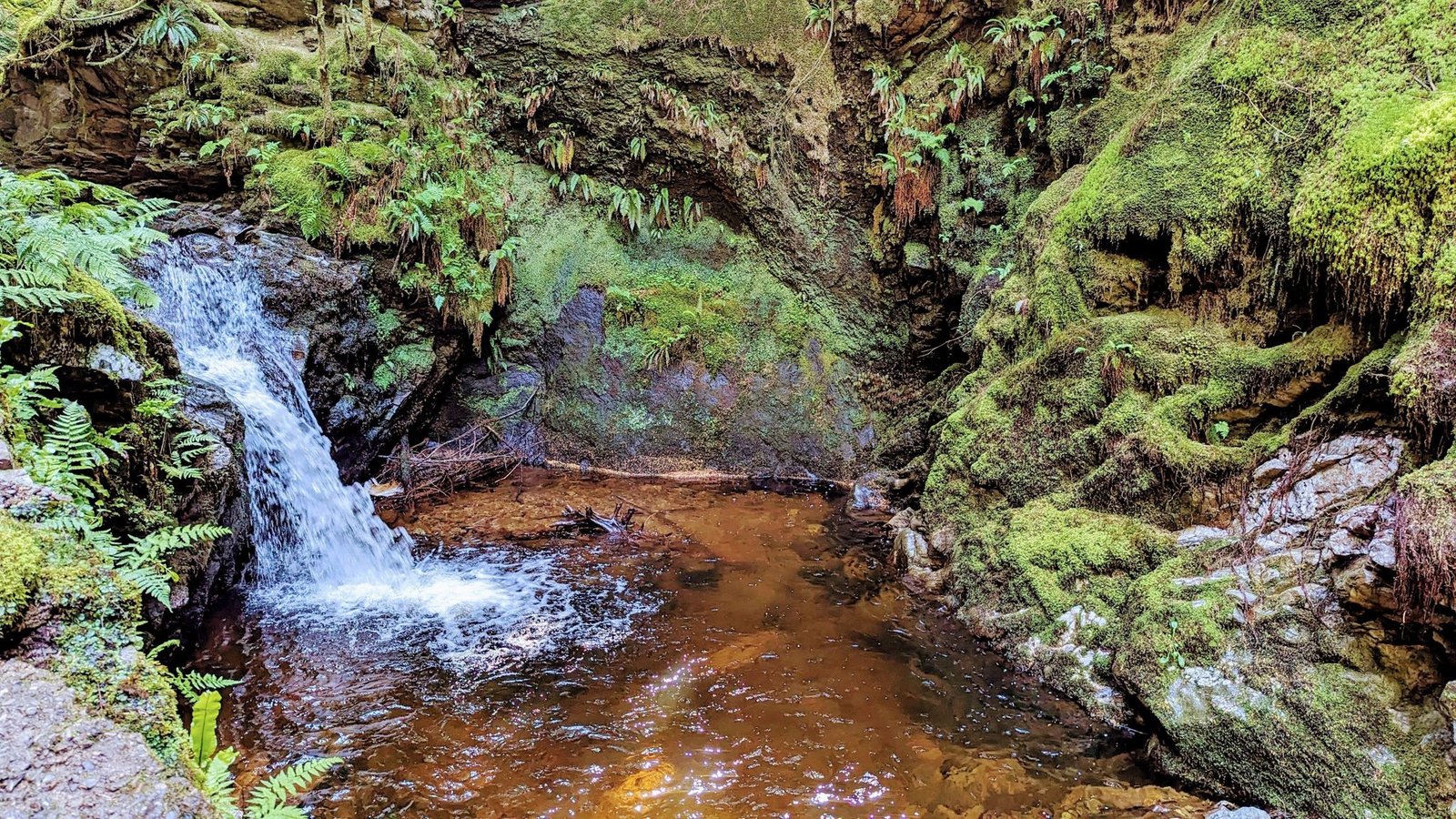
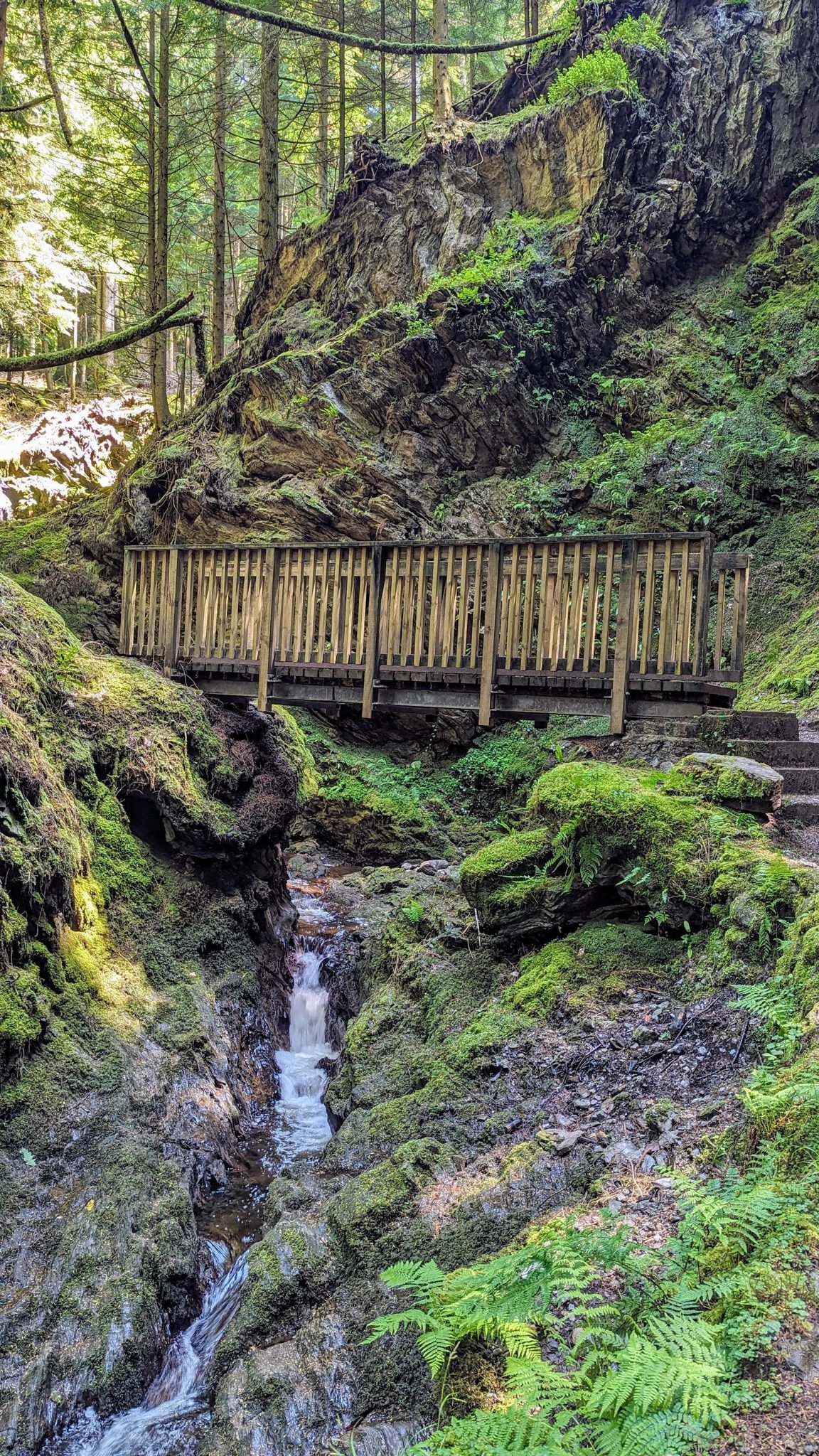
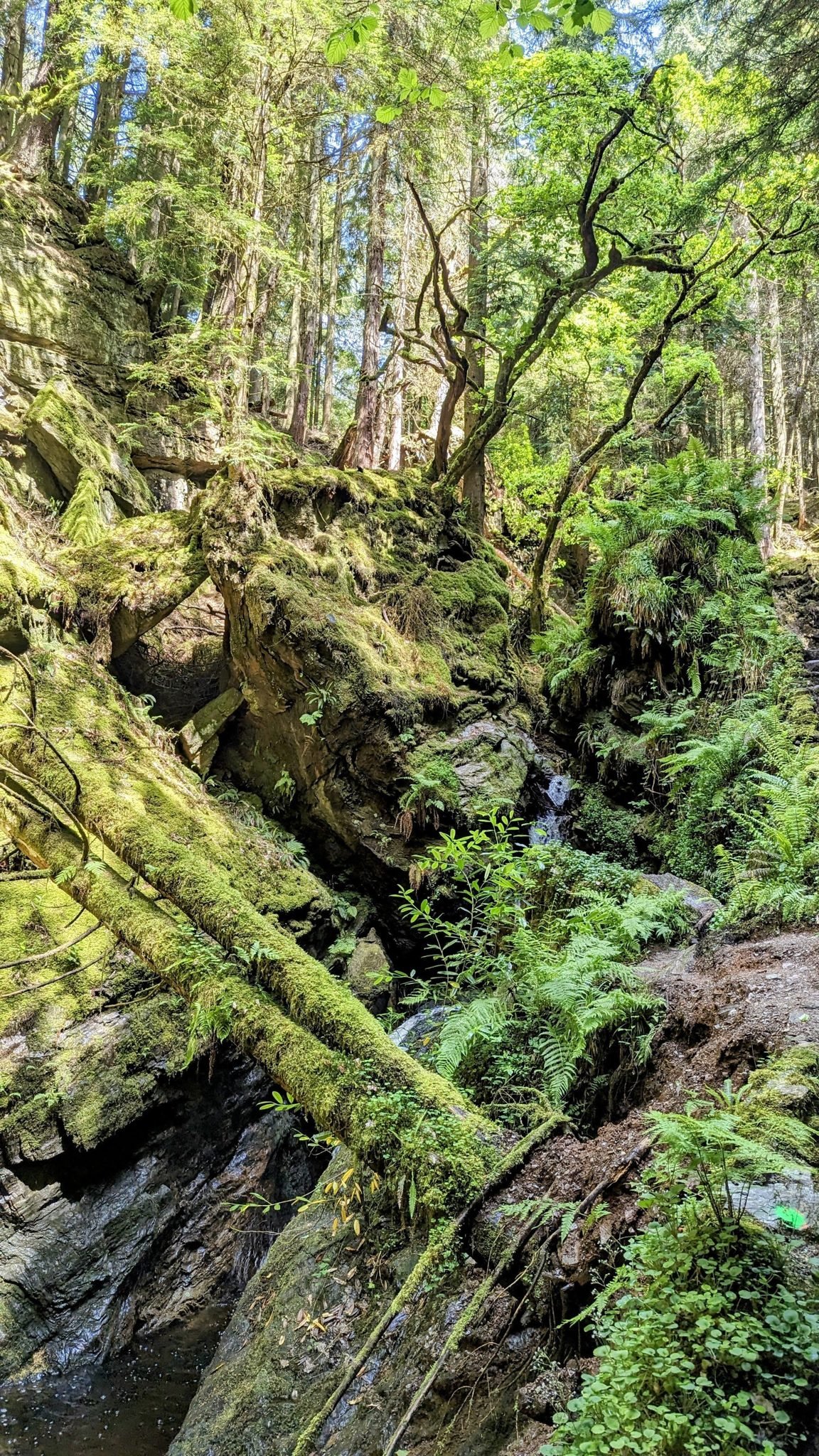
The walk everyone comes for is the lower gorge: you drop into the ravine and follow the Eas Mòr burn upstream, the path clinging to the sides on stone steps and slabs, wooden footbridges and boardwalks, and the odd handrail where it’s steep. The rock is thick with moss and ferns, the light goes green and cathedral-like, and there’s a waterfall or pool around almost every corner — including one lovely fall dropping into an iron-tinted amber pool.
It’s not long — the lower gorge loop is roughly 1.5 miles / around an hour at a gentle pace — but it’s wall-to-wall beautiful. You come back either the way you came or on the forest road above to make a loop (the board at the start shows the options, and there are longer waymarked trails here too if you want more).
The giant trees
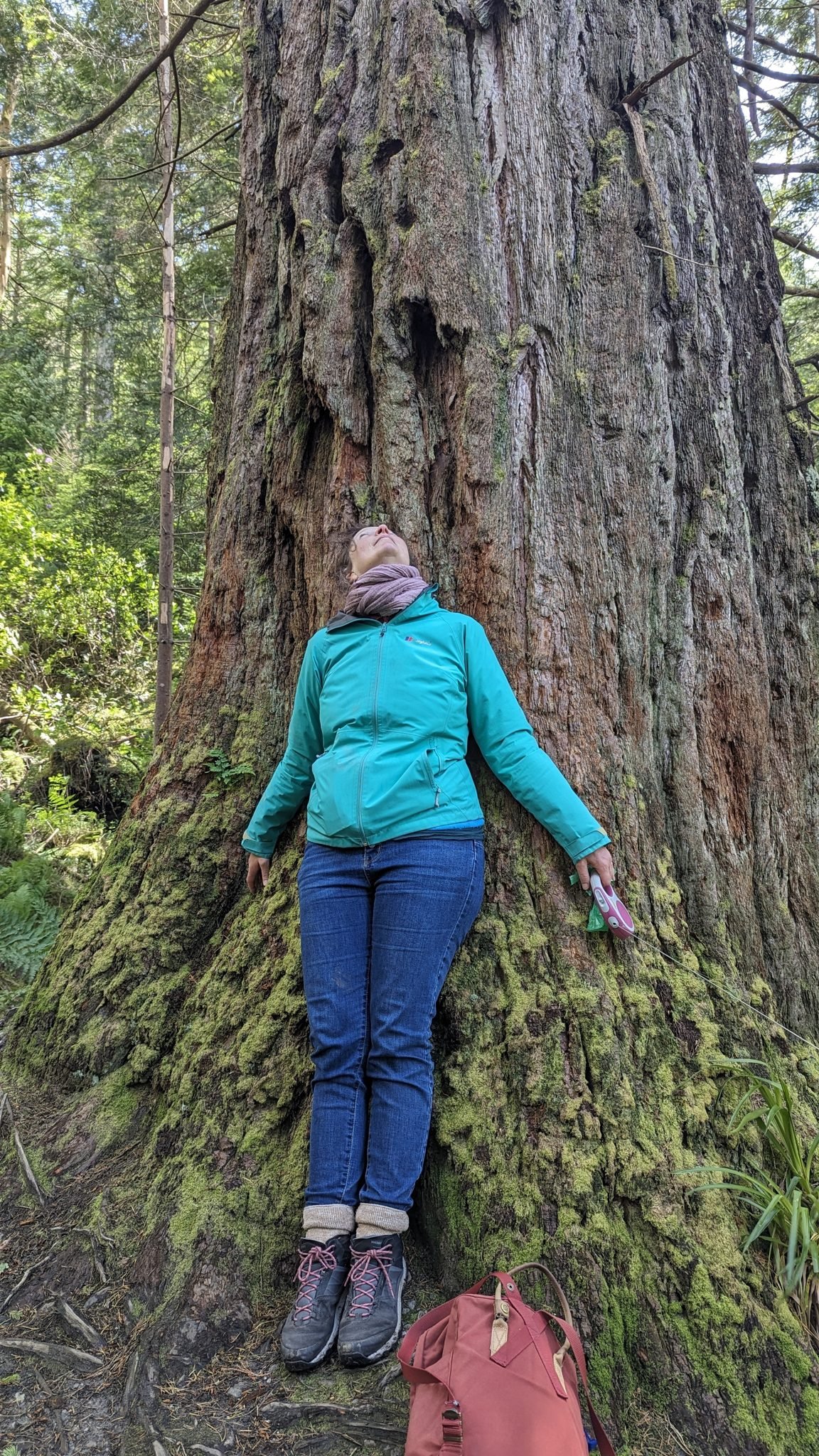
Down near the start and the car park, keep looking up: this corner of Argyll is “big tree country,” and Puck’s Glen has some giant Douglas firs soaring overhead (Benmore’s celebrated redwood avenue is just along the road). They’re the kind of trees you instinctively go and stand next to — as we did.
A little history (sourced)
Puck’s Glen isn’t purely wild — it’s a Victorian “designed” gorge walk, laid out in the 1870s as an ornamental fairy-glen walk when this ground was part of the Benmore estate (owned then by the businessman James Duncan, who planted much of the forest here). The paths, steps and bridges have been rebuilt many times since, and the glen — named for Puck, the sprite from Shakespeare’s A Midsummer Night’s Dream — is now looked after by Forestry and Land Scotland as part of Argyll Forest Park. (Sourced below — Kevin, no first-hand history claimed here.)
Parking & practicalities
- 🅿️ Parking: the Puck’s Glen car park, signposted on the A815 — a small forest car park (day use; it can fill on fine weekends — arrive earlier). [Kevin — confirm: this was a day stop for us, not an overnight? I’ve written it as day parking.]
- 🥾 Underfoot: stone steps, slabs, bridges and boardwalks — often wet and slippery (it’s a waterfall gorge). Proper footwear; not suitable for buggies or wheelchairs, and care with young children near drops.
- ⏱️ Time: allow about an hour for the lower gorge loop; longer if you take the forest trails.
- 🦟 Midges: a damp, sheltered glen — midgey on still summer days, so repellent in season.
- 🐕 Dogs: great walk for dogs (watch them on the steps and near the water).
🗺️ Map — the Puck’s Glen walk (from GPS)
Our recorded track from the photos (5 June 2024): from the car park on the A815, down into the gorge and up the burn past the waterfalls, and back by the big trees.
Best time to visit
Any time it’s rained recently — the waterfalls are the whole point, and this is one walk where a wet week makes it better. Late spring to autumn for greenery and long light; the moss and ferns are at their most vivid after rain. Just expect midges on still summer days and a slippery path.
Combine it with
- Benmore Botanic Garden — the redwood avenue and mountainside gardens, minutes south on the A815.
- Dunoon & Cowal — the wider peninsula (the parent page).
- Tighnabruaich & the Kyles of Bute — quiet west Cowal, for wild-camping and cycling.
- Loch Eck — the long freshwater loch just north.
Reality notes
- 🥾 Path: stone steps, bridges, boardwalks — slippery when wet (usually is). Boots, and care near drops.
- 🅿️ Parking: small forest car park on the A815 — fills on nice weekends.
- ♿ Access: not buggy/wheelchair accessible (steps and steep sections).
- 🦟 Midges: real on still summer days.
- 🐕 Dogs: brilliant, on a lead near the steps/water.
Sources
- On-site: Argyll Forest Park and Puck’s Glen interpretation boards, and the car-park signpost (Kevin’s photos)
- Puck’s Glen — Forestry and Land Scotland
- Benmore & the Younger estate history — Royal Botanic Garden Edinburgh (Benmore)